In the UK this month austerity has revealed itself to be in the mode of naked class war. Monday began with welfare reforms, the introduction of the notorious bedroom tax and reductions in the access to Legal Aid. These attacks will be followed in the coming weeks by the replacing of disability living allowance with a personal independence payment policed by Atos, the reduction in the 50p tax rate (providing tax cuts to the rich) and the introduction of the controversial Universal Credit scheme. Combined with other aspects of late capitalism (from food prices to housing shortages) the reality of life in austerity Britain is uglier than it has been for some time.
With textbook ideological manoeuvring these assaults have been accompanied by a rhetoric designed to divide the working classes between “workers and shirkers.” To the chorus of the right wing press, statements, such as this one by Liam Fox or this from Iain Duncan Smith, ultimately aim to crush the possibility of an organized resistance. Most revealing this week has been efforts by the right wing to frame the horrific Philpott manslaughter as a result of ‘benefit dependency.’ Almost beyond belief, this story’s beginnings in the Daily Mail and right wing blogs were reinforced yesterday with this statement from the grubbiest man on earth: Chancellor of the Exchequer George Osborne.
Barbaric Sport: A Global Plague — Marc Perelman
Perelman’s book takes a subversive look at sport and global sporting events such as the Olympics to reveal their darker side. He argues that sport has become an instrument of political control and a vehicle for capitalist monoculture. This timely polemic offers refreshing reading to those looking for an antidote to this summer’s Olympian frenzy.
Cities Under Siege: The New Military Urbanism — Stephen Graham
This authoritative study examines the rapid and dangerous spread and normalization of surveillance and state policing in western cities and warzones alike under the guise of national security. As such it provides an unsettling and provocative insight into the global backdrop of the rising costs and militarization of London’s Olympic Games security operation.
A New Kind of Bleak: Journeys through Urban Britain— Owen Hatherley
Hatherley’s critical tour of Britain’s urban centres incorporates the latest and most high profile attempt at regeneration offering a carefully considered indictment of the architectural and social failures of Stratford’s Olympic sites.
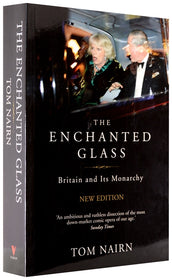
The Scotsman has published an extract from the new edition of The Enchanted Glass: Britain and Its Monarchy, the acclaimed dissection of Britain's relationship with its monarchy, by the foremost historian of nationalism Tom Nairn. In the extract, Nairn discusses the idea of a "Republican Monarchy":
The term appears self-contradictory, and yet nothing else corresponds to what may be emerging right now, following the decisive SNP victory in the Scottish Parliamentary election. There will be a referendum on Scottish independence quite soon, and Premier Alex Salmond has repeatedly made it clear he does not want outright republicanism to be part of the bid. The future envisaged is therefore one of statehood equality over the former United Kingdom, in which a crowned head of state will remain, as the symbol of partnership and good will, established social and personal relations, and the historic closeness derived from 1688. It should also change and probably moderate the "surrogacy" mentioned earlier, through which English national identity has been transmuted into an adulatory obsession with royalty. One way the English have avoided "little England" (the country on its own) has been the curiously amplified elevation of a regal family dynasty described in this book, informally shared by the peripheral countries. A formal agreement between the periphery and the core-majority, by contrast, could include the acceptance of monarchy in a spirit different from what has so far prevailed. In effect, the replacement of "enchantment" and emotionality by a straightforward calculation of joint benefits and their costs.
Visit the Scotsman to read the extract in full.
Discussions occur on book pages throughout the site. The most recent discussions about the works of Tom Nairn are listed below.