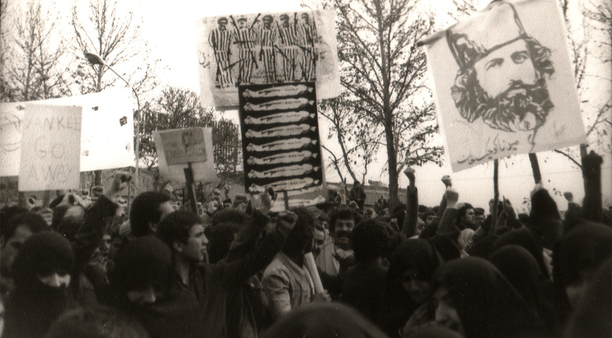
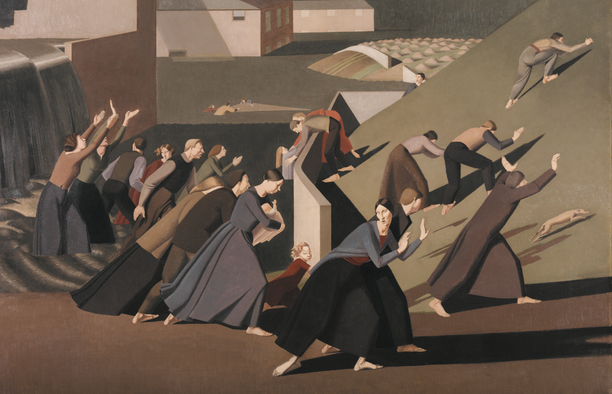
Springtime gathers stories of protest from across Europe and the Arab world, which brought a diverse student population together with activists through a savvy use of social media.
With J30 fresh on our minds, on Saturday 2 July, Clare Solomon will discuss new forms of resistance and the current threat to the future of education with Nina Power and Tyler Perkin.
For your chance to win a ticket, send an email to enquiries@verso.co.uk with ‘Springtime at Southbank' in the subject line, and your full name.
For more information on the event, which is part of this year's London Literature Festival, visit the Southbank Centre website.
David Dawkins interviews Clare Solomon, co-editor of Springtime, for Dazed Digital. They discuss the thinking and theory behind the front lines of the student rebellions.
DD: Were you worried about making what was quite a kinetic period of time into a book, something that is by its very nature a stationary object?
Clare Solomon: All books are a snapshot of history in one-way or another. I hope Springtime will inspire others to reconsider how they perceive the student protests, or add alternative perspectives to get a deeper understanding. And, more than that, it is always necessary for us to record our own history as a 'taking note', as the Italian revolutionary Gramsci said, 'of actual events, seen as moments of a process of inner liberation and self-expression'. Otherwise we may only get to hear the voices of those in power. It is the self-expression of these new shoots that was most important for this book...
Natalie Hanman reviews Springtime for the Guardian. Suggesting that the narrative of the November 2010 student protests was overtaken by voices of the establishment, she points to Springtime and openDemocracy's Fight Back! as books that focus on what the actual "lived reality of what was happening." Hanman notes that both books reveal "the protests to be not mindless, but mindful; a considered rebellion against the global neoliberal financial deal that has been struck.a considered rebellion against the global neoliberal financial deal that has been struck."
Echoing Springtime's declaration that the book is "a chronicle, but not just a chronicle. It is the formulation of an experience ... to develop alternatives that challenge the priorities of capitalist society," Hanman focuses on the links of solidarity among the voices presented.
Counterfire recently published an excerpt of Susan Matthews' contribution to Springtime. Matthews' son Alfie Meadows has recently been charged with violent disorder during the December protests along with ten other protesters. These charges are seen by many as an attempt to stop the right to protest, and have been criticised by John McDonnell MP as "outrageously disproportionate and demonstrate the decline that has taken place in the protection of civil liberties in this country" imploring that "those arrested must be defended and supported by us all." The call for support is echoed by Susan Matthew's focus on Blake's 'Albion Rose' ...
In a review of Springtime for Morning Star, Alex Miller describes the book as
[An] excellent and attractively produced volume ... a collection of mainly short pieces on the wave of student radicalism that began to surge through Britain in the autumn and winter of last year.
It contains illuminating eyewitness testimony from the London demonstrations including a piece by Jody McIntyre, the disabled activist thrown out of his wheelchair by police, and many useful and informative pieces exposing the utter hollowness of the neo liberal rationale for attacking publicly funded education.
These are well represented among the many inspiring illustrations in the volume. Police batons aimed at Goethe's Faust and Spinoza's Ethics just about sums up the vandalism visited on our culture by the likes of Cameron, Clegg, Berlusconi and Sarkozy.
As Claire Solomon puts it in the opening essay, instead of the death of education we have seen the birth of a movement.
Visit Morning Star to read the review in full.