Following recent events across the globe, it is no surprise that reviewers of David Harvey’s Rebel Cities continue to easily locate the book in its contemporary context and commend its undeniable relevance. Writing in the Financial Times, Edwin Heathcote states that this latest work produced by Harvey, whom he hails as having always been “a consistent and intelligent voice on the left,” could not be better timed:
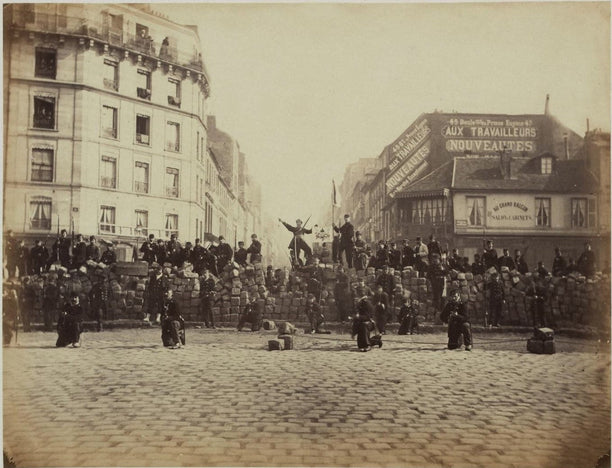
In the past couple of years the squares and streets of the city have re- emerged in the most dramatic manner imaginable as a forum for public protest. From Cairo to Athens, from Madrid’s “Indignados” to America’s Occupy Wall Street movement and right up to the recently removed protesters outside St Paul’s Cathedral in London, urban centres all over the world have resonated with the chants of those who feel economically and politically disempowered.
Visit the Financial Times to read the review in full.
Benjamin Kunkel has written a lengthy article on David Harvey for the London Review of Books. Nominally a joint review of his recent books The Enigma of Capital and A Companion to Marx's Capital, it engages with Harvey's entire body of work, and especially his seminal The Limits to Capital.
Over recent decades, the landmarks of Marxian economic thinking include Ernest Mandel's Late Capitalism (1972), David Harvey's Limits to Capital (1982), Giovanni Arrighi's Long 20th Century (1994) and Robert Brenner's Economics of Global Turbulence (2006), all expressly concerned with the grinding tectonics and punctual quakes of capitalist crisis. Yet little trace of this literature, by Marx or his successors, has surfaced even among the more open-minded practitioners of what might be called the bourgeois theorisation of the current crisis.
In a new review of David Harvey's A Companion to Marx's Capital, entitled "A guide for the journey through Capital," Aaron Hess observes,
Today, the bosses and bankers of the world are doing everything they can to make workers pay for the greatest economic crisis since the 1930s. But a new resistance to capitalist austerity is growing. David Harvey has given us a valuable guide to understanding Marx's analysis in Capital, which remains an indispensable weapon for those who want to understand capitalism—the better to overthrow it.
Visit SocialistWorker.org to read the review in full.
In a short review of A Companion to Marx's Capital for Choice, Michael Perelman declares "no short review can do justice to this outstanding book."
Unlike most books on Capital, which tend to begin with a predetermined interpretation and then find suitable quotations to back it up, Harvey (CUNY Graduate Center) has produced a companion to guide readers through the thicket of Marx's great work—the social science equivalent of Finnegans Wake. Along the way, Harvey carefully helps readers understand what Marx is doing. Marx is using a particular term; why is he doing it? Marx seems to be going on a tangent; why? Many readers who pick up this book expecting to find a potted version of Capital are likely to be drawn to reading the original. To Harvey's credit, his own interpretation slides off to the background, allowing readers to form their own opinions, except for his correct insistence that Marx's categories must be seen in terms of social relations. At times, the presentation can be challenging, but the richness of this book will make readers forgive any bumps in the road. No short review can do justice to this outstanding book ... Essential.
Visit davidharvey.org to access David Harvey's Capital lectures online.