David Harvey writes on feral capitalism and the UK riots:
"Nihilistic and feral teenagers" the Daily Mail called them: the crazy youths from all walks of life who raced around the streets mindlessly and desperately hurling bricks, stones and bottles at the cops while looting here and setting bonfires there, leading the authorities on a merry chase of catch-as-catch-can as they tweeted their way from one strategic target to another.
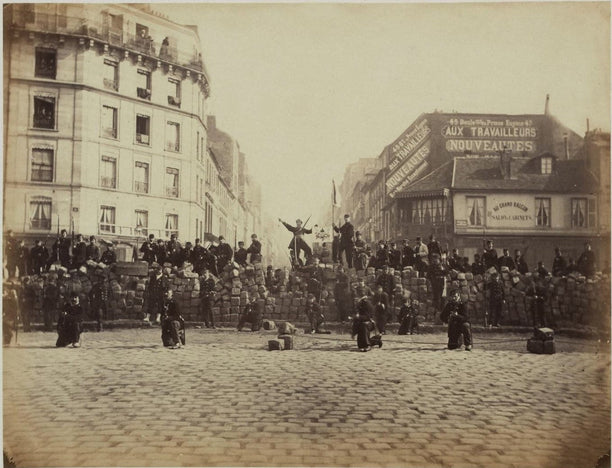
The word "feral" pulled me up short. It reminded me of how the communards in Paris in 1871 were depicted as wild animals, as hyenas, that deserved to be (and often were) summarily executed in the name of the sanctity of private property, morality, religion, and the family...
But the problem is that we live in a society where capitalism itself has become rampantly feral. Feral politicians cheat on their expenses, feral bankers plunder the public purse for all its worth, CEOs, hedge fund operators and private equity geniuses loot the world of wealth, telephone and credit card companies load mysterious charges on everyone's bills, shopkeepers price gouge, and, at the drop of a hat swindlers and scam artists get to practice three-card monte right up into the highest echelons of the corporate and political world.
Terry Eagleton defends Marx's legacy in the Chronicle of Higher Education, answering many of the usual tropes and explaining why the financial crises have prompted a resurgence of interest in the questions raised by Marx's thought:
The truth is that Marx was no more responsible for the monstrous oppression of the communist world than Jesus was responsible for the Inquisition. For one thing, Marx would have scorned the idea that socialism could take root in desperately impoverished, chronically backward societies like Russia and China. If it did, then the result would simply be what he called "generalized scarcity," by which he means that everyone would now be deprived, not just the poor. It would mean a recycling of "the old filthy business"—or, in less tasteful translation, "the same old crap." Marxism is a theory of how well-heeled capitalist nations might use their immense resources to achieve justice and prosperity for their people. It is not a program by which nations bereft of material resources, a flourishing civic culture, a democratic heritage, a well-evolved technology, enlightened liberal traditions, and a skilled, educated work force might catapult themselves into the modern age ...
There is a sense in which the whole of Marx's writing boils down to several embarrassing questions: Why is it that the capitalist West has accumulated more resources than human history has ever witnessed, yet appears powerless to overcome poverty, starvation, exploitation, and inequality? What are the mechanisms by which affluence for a minority seems to breed hardship and indignity for the many? Why does private wealth seem to go hand in hand with public squalor? Is it, as the good-hearted liberal reformist suggests, that we have simply not got around to mopping up these pockets of human misery, but shall do so in the fullness of time? Or is it more plausible to maintain that there is something in the nature of capitalism itself which generates deprivation and inequality, as surely as Charlie Sheen generates gossip? ...
In a piece for the Winter 2011 issue of Radical History Review, David Harvey argues that the real problem demanding our attention is private property, not the commons itself.