Out in the UK this month, Quentin Tarantino's Django Unchained and Steven Speilberg's Lincoln has energized interest in a period of American history defined by race. Rather than make our own critiques or slap downs, we present these books to fill the gaps left by Hollywood.
We are black, it is true, but tell us, gentlemen, you who are so judicious, what is the law that says that the black man must belong to and be the property of the white man? ... Yes, gentleman, we are free like you, and it is only by your avarice and our ignorance that anyone is still held in slavery up to this day, and we can neither see nor find the right that you pretend to have over us ... We are your equals then, by natural right, and if nature pleases itself to diversify colours within the human race, it is not a crime to be born black nor an advantage to be white.
This excerpt is from a letter written in July 1792 by the leaders of the revolution of Haitian slaves. The letter has been republished in the collection of writings of the black leader Toussaint L'Overture, The Haitian Revolution, which includes also the correspondence between him and Napoleon Bonaparte. In the late eighteenth century, Toussaint L'Overture and his supporters established the first black republic in the world.
In the United Kingdom, October is Black History Month. The celebration was originally introduced in 1926 on the initiative of Carter G. Woodson, the editor of the Journal of Negro History. In 2007, no fewer than 6,000 events were held in the UK as part of its programme. Here are some key Verso titles past and present that are relevant to the study and celebration of African and Caribbean history.
The November/December issue of the New Left Review has been released, and includes the following essays:
Mike Davis: Spring Confronts Winter
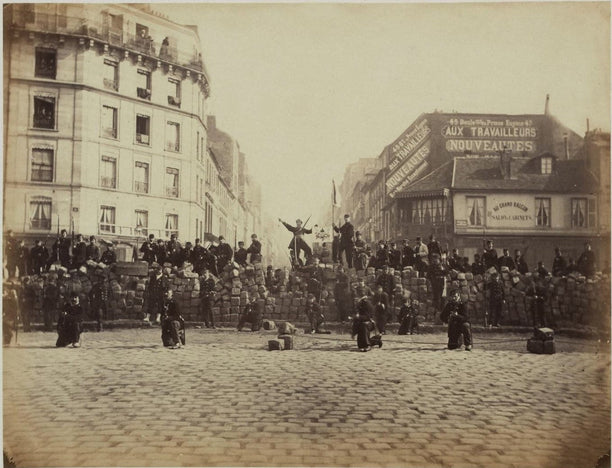
Against a backdrop of world economic slump, what forces will shape the outcome of contests between a raddled system and its emergent challengers? Mike Davis examines echoes of past rebellions in 2011's global upsurge of protest.
Mike Davis is author of Planet of Slums.
Robin Blackburn: Crisis 2.0
Internationally, austerity measures have resulted in unemployment, stagnation, the imposition of technocracies, the destruction of welfare systems and a collapse in global demand. Robin Blackburn outlines some radical transitional policy responses that could address the underlying causes of the financial crisis.
Robin Blackburn is the author of Age Shock: How Finance is Failing Us and The American Crucible.
Perry Anderson: Magri's Farewell
Perry Anderson looks back upon the life and work of Lucio Magri, the Italian revolutionary and writer who died last year. An incisive critic of the PCI from both inside and outside of the Party, Anderson traces Magri's unique synthesis of theory and popular struggle from the Hungarian Revolt to the Iraq War, including his last work, The Tailor of Ulm.
Visit the New Left Review website to read the essays in full (subscribers only)