There are Reds under the bed. Or in the academies. Or worse: about to spill into the streets. So warns Alan Johnson in World Affairs, the esteemed Washington-based international affairs journal. Tracing the rising profile of a group of authors such as Alain Badiou, Bruno Bosteels and Slavoj Žižek and the popularity of their books, the columnist outlines what he sees as a nascent threat lurking in the incendiary words of Terry Eagleton and Toni Negri.

After the Occupy Wall Street "People's Library" was brutally dismantled by the police, Paolo Mossetti of Through Europe asked some of his favourite writers, activists, and academics to help him compile a list of books that would recreate, though only virtually, the library's shelves.
Here is the third part, with contributions from Gar Alperovitz, Mike Davis, Enrico Donaggio, Ann Ferguson, Shabnam Hashmi, John Holloway, Sandro Mezzadra, Douglas Rushkoff, Felix Stalder.
The fourth part of the reading list will be online next week.
From Antonio Negri's new foreword to The Unseen by Nanni Balestrini
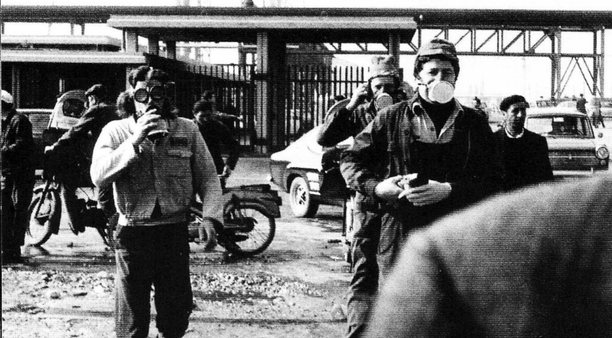
Nanni Balestrini's book tells of unseen actors in the class struggle between the 1970s and '80s, particularly in northern Italy, and inside the jails of the Realm. These subjects are invisible because they are elusive, mutating beings in the act of metamorphosis. But what can we say about them today (and also about this novel) if not that rather than being an old, outdated story this is now very much of the present moment, one caught sight of at that time and followed in the course of its unfolding? The republication of The Unseen therefore has the advantage today of telling us about proletarian subjects whose class nature has finally been revealed: the unseen individual of yesterday is the proletarian of today, the immaterial worker, the cognitive precariat, the new figure of the worker as social labour power in the movements of the multitude. Those poor wretches did it, they managed to get through a revolution in the composition of labour and a ferocious political repression and to struggle on from the factories to society and (still productive) from society to the jail (still fighting back). And now where will they go? The elite of the working-class movement who betrayed and dragged the unseen into prison now look around, fearful and unable to build a politics, afraid of losing out if they do not resume contact with that age-old movement of transformation; but that elite will never win! Indeed, regardless of this betrayal by the working-class movement (which has been so serious, especially in Italy), the unseen have gone forward. In the '80s, they were organizing prison revolts and the first autonomous social centres in the cities; in the '90s they organized the Panther movement; in the late '90s they turned into Zapatistas and tute bianche, the anti-globalization movement and everything else that has happened and will happen.
Marx Reloaded is a documentary on the political relevancy of the economic and political philosophy of Karl Marx in the light of the global financial crisis, featuring insight and interviews from such figures as Slavoj Zizek, Antonio Negri, Jacques Rancière and Peter Sloterdijk. As the film hits cinemas next week, we asked its director, Jason Barker, a few questions.