Following recent events across the globe, it is no surprise that reviewers of David Harvey’s Rebel Cities continue to easily locate the book in its contemporary context and commend its undeniable relevance. Writing in the Financial Times, Edwin Heathcote states that this latest work produced by Harvey, whom he hails as having always been “a consistent and intelligent voice on the left,” could not be better timed:
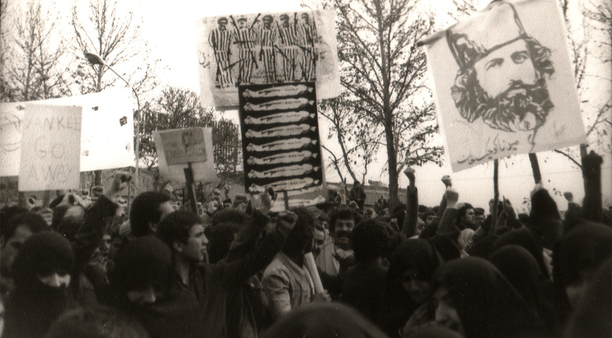
In the past couple of years the squares and streets of the city have re- emerged in the most dramatic manner imaginable as a forum for public protest. From Cairo to Athens, from Madrid’s “Indignados” to America’s Occupy Wall Street movement and right up to the recently removed protesters outside St Paul’s Cathedral in London, urban centres all over the world have resonated with the chants of those who feel economically and politically disempowered.
Visit the Financial Times to read the review in full.
What of the Olympic site itself? Everything is dominated by the ArcelorMittal Orbit, a shocking pink entrail laterally curved around an observation tower, famously commissioned by Boris Johnson in the toilets of a fundraising dinner from steel magnate Lakshmi Mittal, who provided the metal in return for the monument being named after him. There’s a faintly sick irony in this ex-industrial zone being overlooked by an edifice dedicated to a prolific downsizer and asset-stripper of factories, but that aside, there are buildings to enjoy, if you can keep from your mind the town-planning abortion that has been wreaked upon Stratford.
Owen Hatherley's new travelogue through the grim thoroughfares of contemporary urban planning is raising both hackles and high praise from across the mainstream media.
Reviewing A New Kind of Bleak for Time Out, Euan Ferguson praises Hatherley's "typically acerbic and witty arguments" on the ideological landscape that have shaped our urban environments, from the unrealised potential of post-war planning to the clumsy market-driven regeneration of Blairism:
Hatherley's an engaging, fearless and startlingly intelligent polemicist, one unashamed to talk about class and capitalism and the importance of state provision. We need a writer like him now more than ever, an uncompromising voice from the left: the purpose of his search for the real Britain is not to take the piss or exhume fake nostalgia but to ask questions for which there are no easy answer.
Inspired by Patrick Keiller's The Robinson Institute, currently on show at the Tate Britain, we present Verso's guide to political walking. We also draw influence from Will Self's Guardian article in which he pronounces that "walking is political" and suggests that the "contemporary flâneur" can be one "who seeks equality of access, freedom of movement and the dissolution of corporate and state control."
1. Wanderlust - Rebecca Solnit
The first general history of walking, Rebecca Solnit's book finds a profound relationship between walking and thinking, walking and culture, and argues for the necessity of preserving the time and space in which to walk in an ever more automobile-dependent and accelerated world.
2. Savage Messiah - Laura Oldfield Ford
Savage Messiah collects Laura Oldfield Ford's black and white, cut 'n' paste, punk fanzines that document her drift through London's margins. Illustrated with haunting line drawings of forgotten people and places, Oldfield Ford records the beauty and anger at the city's edges.
Despite their divergent starting points, Owen Hatherley, writing for the Guardian, and Edwin Heathcote, architecture editor for the Financial Times, find common ground in their appreciation of David Harvey's new book on the politics of the urban environment, Rebel Cities: From the Right to the City to the Urban Revolution.