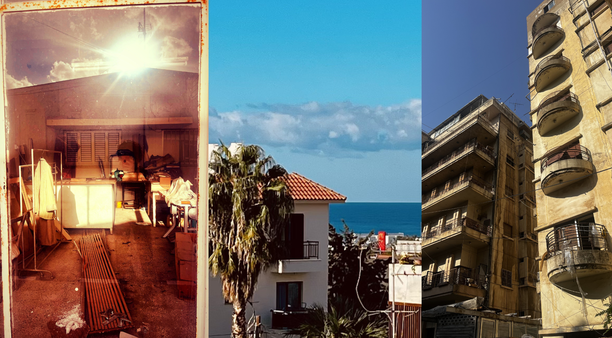
Laura Oldfield Ford's Savage Messiah is reviewed for domus by Owen Hatherley. Hatherley describes it as a "self-published montage of fragmentary memoir, revolutionary fantasy and startlingly raw architectural draughtsmanship." In Hatherley's eyes, Ford's artworks are
pervaded alternately with ghostly, overgrown renderings of the harsh, sublime social architecture of the 1960s, especially well represented in Oldfield Ford's native West Yorkshire and adoptive East London.
As the year draws to a close, newspapers have been asking the great and the good which books have most impressed them in 2011. Here we have collected the Verso books that were featured.
In the New Statesman, Guardian and Observer Books of the Year round ups, Hari Kunzru selected two Verso books as standing out from other books published this year. He explained the appeal of the titles to the New Statesman:
Hari Kunzru
With the Occupy movement gaining ground throughout the world, McKenzie Wark's smart overview of the situationist movement, The Beach Beneath the Street: the Everyday Life and Glorious Times of the Situationist International, feels particularly timely. For years, Laura Oldfield Ford, who is very influenced by situationism, has produced a fanzine, based on her derives around London, with words and beautiful, confrontational line drawings of the city's forgotten people and neglected places. Now, Savage Messiah has been collected in book form. It is a wake-up call to anyone who can only see modern cities through the lens of gentrification.
In the Guardian feature on the Best Books of 2011, a number of Verso titles were selected by those asked.
Eric Hobsbawm
Among the 2011 books that came my way I particularly welcomed Owen Jones's Chavs, a passionate and well-documented denunciation of the upper-class contempt for the proles that has recently become so visible in the British class system.
John Lanchester
I loved two very different books of criticism...[one was] Owen Hatherley's furiously pro-Modernist A Guide to the New Ruins of Britain
Pankaj Mishra
Liberalism: A Counter-History by Domenico Losurdo stimulatingly uncovers the contradictions of an ideology that is much too self-righteously invoked.
Ahdaf Soueif
I'm reading Chris Harman's A People's History of the World. It's really helpful to zoom out from time to time when you're living massive events at very close quarters.
Owen Hatherley condemns the governement reaction to the riots as "brutal," undemocratic and illegal. In an article for the Guardian, the author of A Guide to the New Ruins of Great Britain discusses controversial proposals to evict rioters' families from their homes, which have already implemented by Wandsworth council, with many other councils preparing to follow suit.
Hatherley argues that such a response is ideologically motivated and designed to accord with previously existing agendas on social housing and benefit cuts.
The coalition sets time limits on council tenancies and freezes the already meagre levels of social housebuilding; Labour councils embark on massive demolition programmes of large estates and their replacement with developer-led mixed private and supposedly affordable estates. Both have much the same effect - removing the "undeserving" poor from highly profitable inner-city sites.
One of the most succinct and intelligent descriptions of 'urban regeneration' was a film by Jonathan Meades called On the Brandwagon. It begins with the 1981 riots in Liverpool, a city whose population had halved and whose dockyards had closed down, then moves through the government's attempts to put a sticking plaster over the wound. First, ineptly, through the Garden Festivals bestowed on the city, alongside the first 'enterprise zone' version of Regeneration; then more dramatically through New Labour's abortive attempt to turn our chaotic, suburban-urban cities into places more akin to, say, Paris, that riot-free model of social peace. The middle-class return to the cities, adaptive re-use, luxury apartment blocks, Mitterandian Lottery-funded grands projets, loft conversions in the factories whose closure brought about the main problem in the first place. The film ends in Salford Quays, its gleaming titanium a ram-raid's distance from some of the poorest places in Western Europe. The likely result? 'There will be no riots within the ring-road'.
We've long congratulated ourselves, in London, of the fact that we have no banlieue. We applauded ourselves especially smugly when zoned, segregated Paris rioted a few years ago. It's not like it's untrue - give or take the odd exception (a Thamesmead, a Chelmlsey Wood) our poverty is not concentrated in peripheral housing estates. Edinburgh might wall off its poor in Muirhouse or Leith, and Oxford might try not to think about Blackbird Leys, but in London, Manchester/Salford, Liverpool, Birmingham, Bristol, Nottingham—the cities that erupted on Monday 8th August—the rich live, by and large, next to the poor: £1,000,000 Georgian terraces next to estates with some of the deepest poverty in the EU. We're so pleased with this that we've even extended the principle to how we plan the trickledown dribble of social housing built over the last two decades, those Housing Association schemes where the deserving poor are 'pepper-potted' with stockbrokers. We've learnt about 'spatial segregation', so we do things differently now. Someone commenting on James Meek's great London Review of Books article on parallel Hackneys mentioned China Miéville's recent science fiction novel The City and The City, where two cities literally do occupy the same space, with all inhabitants acting as if they don't. Miéville set it in Eastern Europe, but the inspiration is surely London.
The longlists for this year's Orwell Prize, Britain's most prestigious prize for political writing, were announced yesterday evening at a special event in London
Verso is delighted to have two books on the longlist for the book prize. Congratulations to John A. Hall (for Ernest Gellner: An Intellectual Biography) and Owen Hatherley (for A Guide to the New Ruins of Great Britain), and also to Meltdown author, Paul Mason, who was longlisted for his blog on BBC Newsnight, Idle Scrawl.
Director of the prize, Jean Seaton, said about the nominated books: ‘These books show that political writing can be tender or chilling, furious or forensic, magisterial - or very funny. The whole range of political life is distilled into tremendous prose in these books.' In his commentary about the blogging prize, he suggests, ‘Blogging is evolving under our eyes, its purposes shifting. Public service watchdog? Clever reporting from new spaces in the political process? Telling it like it is in uncomfortable places? Different blogs are all of those and other things: it's an increasingly sophisticated world.'