Activists, authors, trade-unionists and students from across Europe have launched a call for a reconfiguration of European social policy in order to reclaim the true democratic meaning of the European project:
Now, in the midst of the crisis of finance, markets and bureaucracies, we must commence to practice an egalitarian, peaceful, green and democratic Europe. We must reclaim the dignity of Europeans and our fellow world citizens.
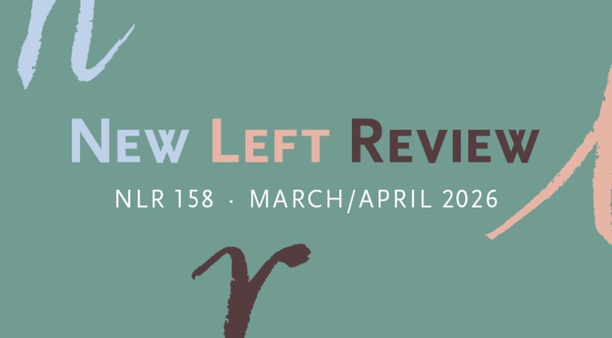
The November/December issue of the New Left Review has been released, and includes the following essays:
Mike Davis: Spring Confronts Winter
Against a backdrop of world economic slump, what forces will shape the outcome of contests between a raddled system and its emergent challengers? Mike Davis examines echoes of past rebellions in 2011's global upsurge of protest.
Mike Davis is author of Planet of Slums.
Robin Blackburn: Crisis 2.0
Internationally, austerity measures have resulted in unemployment, stagnation, the imposition of technocracies, the destruction of welfare systems and a collapse in global demand. Robin Blackburn outlines some radical transitional policy responses that could address the underlying causes of the financial crisis.
Robin Blackburn is the author of Age Shock: How Finance is Failing Us and The American Crucible.
Perry Anderson: Magri's Farewell
Perry Anderson looks back upon the life and work of Lucio Magri, the Italian revolutionary and writer who died last year. An incisive critic of the PCI from both inside and outside of the Party, Anderson traces Magri's unique synthesis of theory and popular struggle from the Hungarian Revolt to the Iraq War, including his last work, The Tailor of Ulm.
Visit the New Left Review website to read the essays in full (subscribers only)
In today's Guardian, Donald Sassoon remembers Lucio Magri, the author of The Tailor of Ulm: Communism in the Twentieth Century, who sadly passed away last week. In Sassoon's words, Magri was "was a veteran of the Italian new left of the 1960s and 70s." One of his hallmarks was to be "a born dissident ... strong on principles and unwilling to submit to discipline." In his youth, Magri joined the Christian Democrats, but adhering to its left-wing fringe.
In 1958, he decided to move to the Communist Party, where he "quickly became part of a group of young communist radicals who included Rossana Rossanda and Luciana Castellina." Together, in June 1969 they created the journal il manifesto, which was "was a great success - too great for the Communist party leadership," to the point that Magri and the others were expelled. Following their expulsion, however, the manifesto dissidents did not stop to search a dialogue with the PCI:
they never ceased to regard the PCI as the only political structure that could take the country in an anti-capitalist direction. Unlike many of the other radical parties springing up, they saw themselves as a ginger group rather than as the vanguard of the revolution.
By Luciana Castellina
It is not easy for me to write about the death of Lucio Magri: we were not just fellow travellers in our political journeys for more than half a century, but we were also partners (although a very long time ago). And yet I write, as the comrades of il manifesto have asked, because Lucio was out of politics for so many years, and many people contacted me to know what he was doing, where he was.
In an age when politics is all about image, he had been out of the scene. He had already renounced re-election in Parliament in 1994, he no longer wrote in newspapers and only occasionally agreed to take part in public events. The youngest—those who were born when the PCI was about to be disbanded and the PDUP no longer existed—might never have heard of him, if not from their parents.
by Valentino Parlato
It was a long time ago that Lucio Magri first told us that he wanted to take his life. We talked to him and tried to persuade him not to, because we needed him, his intelligence and his commitment. We did not succeed. His decision was a highly rational one. At almost 80 years old, the loss of his partner Mara had been devastating for him. The general context also did not help. Lucio made his choice in extreme rationality (and when he made a choice he never changed his mind) and did what he had decided to. Suicide is a basic freedom for the individual. Those who are masters of themselves, as all human beings are, can legitimately and morally set out to bring their life to an end.