Arundhati Roy, interviewed for the Independent, speaks about the 'Maoist rebels' fighting India's internal colonization, and why their resistance is legitimate:
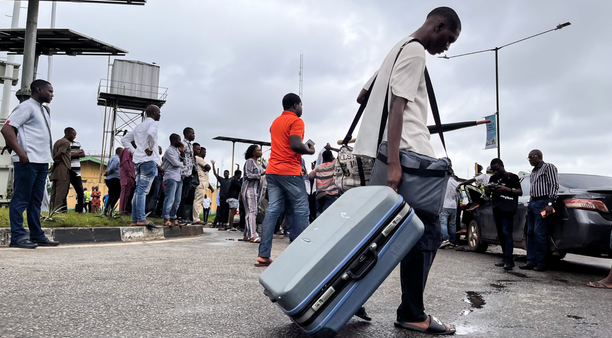
Today India is going down the same path travelled centuries back by the European colonial powers: identifying sources of strategic minerals, driving off the people living on top of them, extracting the iron ore, the bauxite and so on, and using it to industrialise and grow rich. The difference is that India has no Australia or Latin America it can plunder. Instead, as Roy says, "It is colonising itself, turning upon its own poor to extract raw materials."
Centuries after the plunder of mineral resources began, some people living in countries like ours began to understand the horrors that had been committed along the way: the indigenous peoples massacred, their traditions erased, the survivors reduced to penury. But by then, remorse came cheap: the damage had been done, the great fortunes made.
But in India all this is happening now, in real time. As a result, remorse is far more expensive: if sincerely meant, it could really throw a spanner in the happiness machine...
A politics of encounter explodes when moments collide, when affinity takes hold. How, then, can the intensity of the encounter be sustained, how can it be harmonized with an authentic politics of transformation, one that endures over the long haul?
Andy Merrifield raises some crucial questions in 'Crowd politics: Or, "Here Comes Everybody?"' for protesters of the Occupy Everywhere movement. Merrifield's piece, published in the latest issue of New Left Review, is a timely investigation of the on-line and off-line "politics of the encounter" in twenty-first century urban landscapes.
Naomi Klein and Bill McKibben, author of the introduction to I'm with the Bears — a collection of short stories by world-class novelists envisioning the terrors of impending climate change — have written an article for The Daily Beast on the green cronyism scandals putting the environment and Obama's reputation at stake.
The Solyndra solar panel manufacturer loan controversy is getting a great deal of attention in the US due to allegations that the Obama administration may have unduly influenced the loan. However, Klein and McKibben argue in this article that "there's a far, far bigger Obama cronyism scandal breaking—and in this case, there's still time for the president to step in and stop it."
The Occupy Wall Street movement - for now it is a movement - is the most important political happening in the United States since the uprisings in 1968, whose direct descendant or continuation it is.
Why it started in the United States when it did - and not three days, three months, three years earlier or later - we'll never know for sure. The conditions were there: acutely increasing economic pain not only for the truly poverty-stricken but for an ever-growing segment of the working poor (otherwise known as the "middle class"); incredible exaggeration (exploitation, greed) of the wealthiest 1% of the U.S. population ("Wall Street"); the example of angry upsurges around the world (the "Arab spring," the Spanish indignados, the Chilean students, the Wisconsin trade unions, and a long list of others). It doesn't really matter what the spark was that ignited the fire. It started.
In Stage one - the first few days - the movement was a handful of audacious, mostly young, persons who were trying to demonstrate. The press ignored them totally. Then some stupid police captains thought that a bit of brutality would end the demonstrations. They were caught on film and the film went viral on YouTube.
Paul Mason's Meltdown: The End of the Age of Greed reported from the frontlines of the 2008 financial crash, from Wall Street and other centres of capitalism. Mason, anticipating the social consequences of the economic meltdown, wrote in 2010 that "The future ... depends on the complex interplay between the interests of die-hard political elites and the interests of the salariat,the urban youth,the manual working class and the elderly." Read more in an extract here. His blogpost Twenty Reasons Why It's Kicking Off Everywhere, written in the wake of the Arab Spring in February 2011, identified the social, economic and technological factors in the wave of social unrest, the first being the emergence of "a new sociological type: the graduate with no future".
OccupyLSX at St. Paul's Cathedral, which started the occupation on Saturday 15 October, prompted Mason to add to his original analysis after "nine months of political paralysis. And people have begun to feel the economic permafrost setting in." Observing the impulse to occupy public space, Mason suggests that it is
driven by two things: first it is - as I wrote in the 20 reasons - a meme. It is an effective action that is transmitting itself independent of any democratic structures and party political hierarchies: if you camp somewhere, the press turn up and you can get an instant hit of wellbeing by, however briefly and tenuously, living the dream of a communal, negotiated existence.
Second, because this communal, negotiated, networked life already exists in people's heads as a result of the rapid adoption of social networks and networked lifestyles. As Manuel Castells, one of the first sociologists of the internet, said: the more autonomous and rebellious a person's attitudes are, the more they use the internet; the more they use the internet, the more autonomous their lifestyle becomes.