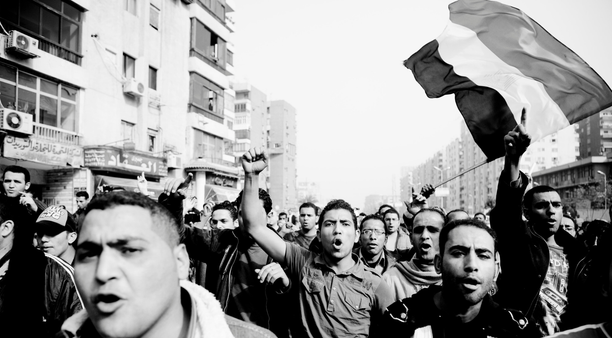
You've probably heard it said a dozen times today: "It's like 28 Days Later out there." Every thirty seconds, there's a new riot zone. I've rarely known the capital to be this wound up. It's kicked off in East Ham, then Whitechapel, then Ealing Broadway (really?), then Waltham Forest... It's kicked off in Croydon, then Birmingham, then (just a rumour so far) Bradford... The banlieues of Britain are erupting in mass civil unrest. (Lenin's Tomb)
Tariq Ali, writing on the London Review of Books blog, asks the questions mainly absent from much of last night's coverage:
Why is it that the same areas always erupt first, whatever the cause? Pure accident? Might it have something to do with race and class and institutionalised poverty and the sheer grimness of everyday life? The coalition politicians (including new New Labour, who might well sign up to a national government if the recession continues apace) with their petrified ideologies can't say that because all three parties are equally responsible for the crisis. They made the mess.
Richard Gott was on BBC Radio 4's Today programme on Friday to discuss his forthcoming book, Britain's Empire: Resistance, Repression and Revolt with Kwasi Kwarteng, Conservative MP and author of Ghosts of Empire.
Kwarteng's book argues that the operation of the British empire was not systematic or centrally run, but haphazard, random and guided much more by local conditions and individual administrators idiosyncrasies than by Whitehall.
There's only a few days left to get your entries in for the Verso-Church of London short film competition.
The competition was launched in May and asks people to respond to the ideas of Slavoj Žižek's Living in the End Times with a short film of up to one minute. See the original brief here.
We've had minute-long masterpieces from all over the world including Italy, Tokyo, Slovenia and Rio de Janeiro.
But, it's not over yet. With an extended deadline of July 30, there's still time to shoot, edit and render a philosophical
short for our topical brief. Simply check out the Žižek brief guidelines and send us your entry via a video-hosting website like YouTube or Vimeo by the end of the month.
To inspire you, here are a couple of the amazing entries we've already received:
The Institute of Education, part of the University of London, refused to host the conversation between Slavoj Žižek and Julian Assange, which eventually took place at the Troxy in East London on 2nd July.
The Institute initially expressed strong interest in hosting the event, and starting to make logistical arrangements, before having a sudden change of heart. In an email the head of conferences wrote:
An email...informed Frontline: "There are ongoing issues concerning wi-fi access and the provision of a bar for your visitors, the first of which I feel may be too difficult to resolve at our end.
"This - and the fact that the meeting's subject is of a nature which may attract considerable controversy - obliges me to inform you at this stage in the proceedings that we cannot offer hire of the Logan Hall on this occasion."
If you missed the livestream of the conversation between Slavoj Žižek, Amy Goodman and Julian Assange on Saturday 2nd July, you can watch the video here.
Thousands of people watched it live around the world. The hashtags #fcwiki and #zizek were both trending on twitter (Žižek was trending above Hannah Montana at one stage!). The event was filmed and streamed by Democracy Now!, and on various other sites including The Nation and michaelmoore.com.
Assange was interesting on the relationship between the liberal and right-wing media, and the potential for harnessing the more negative elements of the media to get information into the public domain. He noted that Fox News had showed far more than CNN of the notorious footage of a US helicopter attacking Iraqi civilians in 2007.
Assange also spoke candidly about Bradley Manning and his own extradition hearing. Startlingly, he also revealed that Daniel Ellsberg had told him that the New York Times had had many of the Pentagon Papers a month before he leaked them.
On the charges of terrorism against Assange, Žižek said that Assange was "a terrorist" in the same way that Indian independence leader Mahatma Gandhi was.