The New Left Project's Maeve McKeown interviews Clare Solomon, editor of Springtime: The New Student Rebellions, about the rebirth of the student movement, her role in the book, and the global impact of student activism.
What was the purpose of the book?
Anybody that saw any of the media portrayal of the student protests last year may take away from that a certain vision either of what the protests were about or how they were carried out. Therefore I think it's important that we record history in our own voices in an attempt to cut through the media bias. So the purpose of the book was to try to bring as many different perspectives and topics together ensuring that all political persuasions were covered, different ages and a gender balance to highlight and to celebrate how magnificent the protests were.
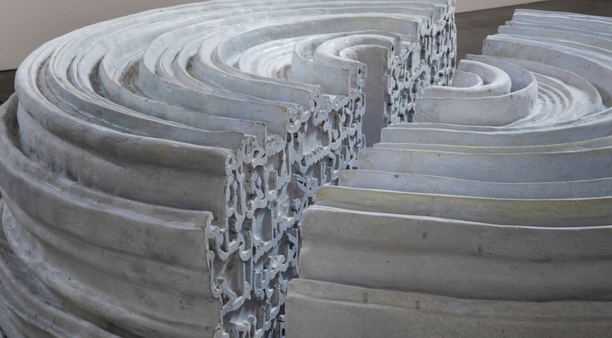
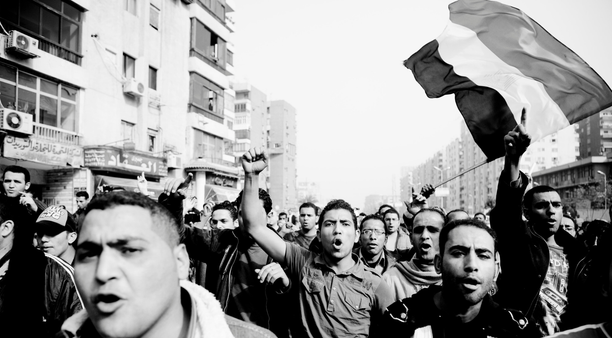
In a recent feature for Mute, David Morris puts artist Alfredo Jaar, with whom Verso collaborated for his Marx Lounge at the Liverpool Biennial and the cover of The Emancipated Spectator, and author of Infinitely Demanding, Simon Critchley in dialogue. They discuss art, philosophy, and their responses to the recent spectacles of violence, destruction and hope, in particular the revolts of the Arab world and the naturo-nuclear disaster in Japan. The conversation will be on-going.
The longlists for this year's Orwell Prize, Britain's most prestigious prize for political writing, were announced yesterday evening at a special event in London
Verso is delighted to have two books on the longlist for the book prize. Congratulations to John A. Hall (for Ernest Gellner: An Intellectual Biography) and Owen Hatherley (for A Guide to the New Ruins of Great Britain), and also to Meltdown author, Paul Mason, who was longlisted for his blog on BBC Newsnight, Idle Scrawl.
Director of the prize, Jean Seaton, said about the nominated books: ‘These books show that political writing can be tender or chilling, furious or forensic, magisterial - or very funny. The whole range of political life is distilled into tremendous prose in these books.' In his commentary about the blogging prize, he suggests, ‘Blogging is evolving under our eyes, its purposes shifting. Public service watchdog? Clever reporting from new spaces in the political process? Telling it like it is in uncomfortable places? Different blogs are all of those and other things: it's an increasingly sophisticated world.'
In an article for The London Library Magazine, Shaun Whiteside, translator of Wu Ming's novel Manituana, counters the predicted demise of the linguist and imminent redundancy of the translator made by a recent caller to Radio Four's Any Answers. Insisting that there is more to the literary situation than Babelshot addicted iPhone users understand, Whiteside has detected a shift in the prestige of the role of the translator in the world of books:
I can't remember the world of literary translation ever being quite as confident and outgoing as it is right now - translation prizes attracting a lot of public attention, a rising generation of translators who aren't afraid of the spotlight, endless and lively public discussions. One might be forgiven for thinking that a law had been passed making it compulsory to read Scandinavian crime fiction on public transport. Even the Queen's speech last Christmas was about a translation, the King James Bible, which has, of course, just celebrated its 400th birthday.
Translation is also an art of constant negotiation, a demonstrably imperfect one, that attempts to convey the sense and the mood, the timbre and texture, of a piece of writing from one language to another. Different languages have different histories, of course, different references, different music. And that is where the mystery of translation comes in... As a translator one seeks to inhabit the author's voice, and when it works the effect is almost alchemical, the essence of the voice persisting through its transmutation.
In a recent interview with the Guardian's Aida Edemariam, Clare Solomon, former President of the University of London Union and co-editor of Springtime: The New Student Rebellions, discusses her vision for the upcoming March for the Alternative on this Saturday 26 March.
Following her defeat for "re-election as president of the University of London Union to Vratislav "Vraj" Domalip, a young man whose manifesto is a clear echo of the stance of Porter and the NUS," Solomon attests that the future of the student movement presents both a challenge and an opportunity:
"[T]his is the just the beginning - it is not the end. The movement isn't about me - it's about all those students who have protested about the government's plans. It is all about 26 March now. It's not just about education - it's about what sort of society do we want?"
In the lead-up to the what is anticipated as the largest protest yet, Solomon
has spent the past few weeks planning big demo breakfasts, organising rooms for briefings by stewards and for rehearsals by musicians, she has been talking to Scotland Yard about the route, and suggesting non-violent direct actions. On Thursday morning she put her name to a bid to turn Trafalgar Square into Tahrir Square - that is to occupy it for as long as it takes to get the required response from the government.