Fredric Jameson on Star Wars
From The Cultural Turn: Selected Writings on the Postmodern, 1983-1998 by Fredric Jameson.

Taken from The Cultural Turn: Selected Writings on the Postmodern, 1983-1998 by Fredric Jameson. See all our books by Jameson here.
Supposing I suggested that Star Wars is also a nostalgia film. What could that mean? I presume we can agree that this is not a historical film about our own intergalactic past. Let me put it somewhat differently: one of the most important cultural experiences of the generations that grew up from the '30s to the '50s was the Saturday afternoon serial of the Buck Rogers type - alien villains, true American heroes, heroines in distress, the death ray or the doomsday box, and the cliffhanger at the end whose miraculous resolution was to be witnessed next Saturday afternoon. Star Wars reinvents this experience in the form of a pastiche: that is, there is no longer any point to a parody of such serials since they are long extinct. Star Wars, far from being a pointless satire of such now dead forms, satisfies a deep (might I even say repressed?) longing to experience them again: it is a complex object in which on some first level children and adolescents can take the adventures straight, while the adult public is able to gratify a deeper and more properly nostalgic desire to return to that older period and to live its strange old aesthetic artefacts through once again. This film is thus metonymically a historical or nostalgia film: unlike American Graffiti, it does not reinvent & picture of the past in its lived totality; rather, by reinventing the feel and shape of characteristic art objects of an older period (the serials), it seeks to reawaken a sense of the past associated with those objects. Raiders of the Lost Ark, meanwhile, occupies an intermediary position here: on some level it is about the '30s and '40s, but in reality it too conveys that period metonymically through its own characteristic adventure stories (which art no longer ours).
[book-strip index="1" style="buy"]
Further writing from Fredric Jameson:
[book-strip index="2" style="buy"]
Book strip #1
-
 30% off
The Cultural Turn
Book strip #2
-
 30% off
The Years of Theory
-
 30% off
Inventions of a Present
-
 30% off
Postmodernism
-
 30% off
Late Marxism
-
 30% off
Archaeologies of the Future
-
 30% off
Fables of Aggression
-
 30% off
Ideologies of Theory
-
 30% off
Valences of the Dialectic
-
 30% off
Brecht and Method
-
 30% off
A Singular Modernity
-
 30% off
Representing 'Capital'
-
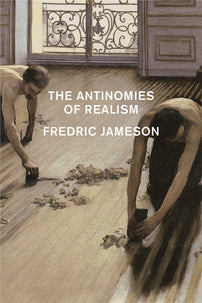 30% off
The Antinomies of Realism
-
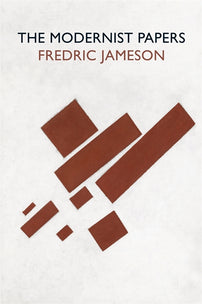 30% off
The Modernist Papers
-
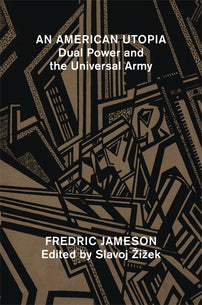 30% off
An American Utopia
-
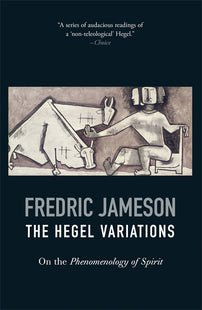 30% off
The Hegel Variations
-
 30% off
The Ancients and the Postmoderns
-
 30% off
Allegory and Ideology
-
 30% off
The Benjamin Files
-
 30% off
Raymond Chandler
