An Invisible Underground River: On Left-Wing Melancholia
Michael Löwy reviews Enzo Traverso’s Left-Wing Melancholia. This article from Viento Sur was translated by David Broder.
Michael Löwy reviews Enzo Traverso’s Left-Wing Melancholia. This article from Viento Sur was translated by David Broder.
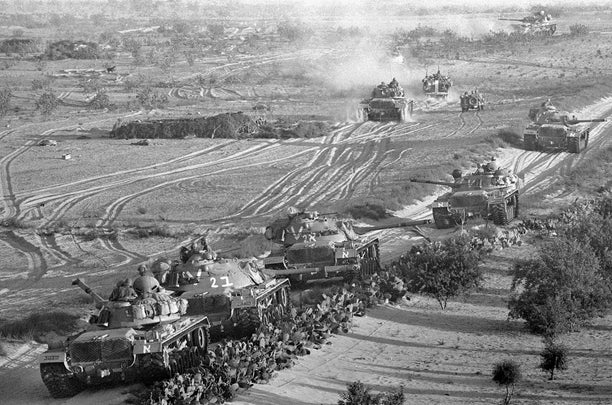
Last week marked the fiftieth anniversary of the Six-Day War, in which the Israeli military occupied the West Bank, Gaza Strip, Sinai Peninsula and Golan Heights. In a strikingly illustrated essay for the Funambulist blog, Léopold Lambert reconstructs eleven crucial moments from the pivotal war.
Click here to read on.
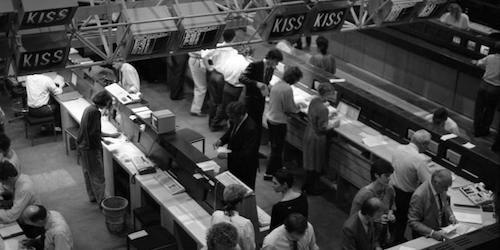
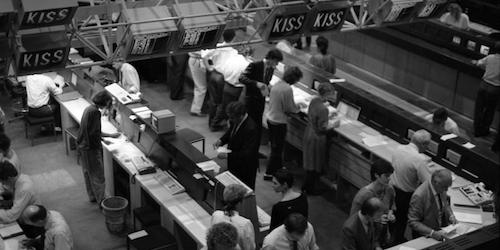
Capital could not just abolish the gains of the postwar period. It was necessary to preserve social peace. The "trick" in the 1970s consisted of using inflation to defuse the emerging conflict between labour and capital over redistribution. The money machine was used to compensate for the loss of income which resulted from the reduction in capital’s contribution to the welfare state… Evidently, that could not last. So from the late 1970s inflation was replaced with public debt, and states borrowed (rather than tax) in order to be able to keep up the level of services. Then, in the 1990s, when states began to worry about the growing weight of debt servicing as part of their budgets, and reduced their spending (and thus social services) we took recourse to private debt. In other words, we made it easier than ever for households to take on debt so that they could preserve their purchasing power, which was being cut back by these budget consolidation measures. And that led us to the 2008 catastrophe.
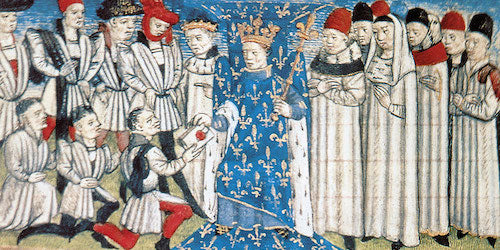
An excerpt from Lineages of the Absolutist State (1974) by Perry Anderson.

Perry Anderson probes Edward Thompson's work on William Morris and his defense of utopianism.
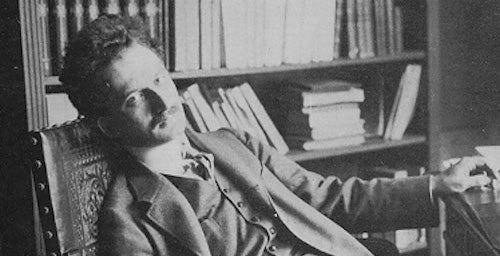
This text is excerpted from Considerations on Western Marxism, written in 1974 as the introduction to a reader on Western Marxism whose publication was ultimately delayed before appearing as a standalone volume in 1976.

The capture of the postmodern by Jameson has set the terms of subsequent debate. It is no surprise that the most significant interventions since his entry into the field have likewise been Marxist in origin. The three leading contributions can be read as attempts to supplement or correct, each in its own way, Jameson's original account. Alex Callinicos’s Against Postmodernism (1989) advances a closer analysis of the political background to the postmodern. David Harvey's Condition of Postmodernity (1990) offers a much fuller theory of its economic presuppositions. Terry Eagleton's Illusions of Postmodernism (1996) tackles the impact of its ideological diffusion. All these works pose problems of demarcation. How is the postmodern to be best periodized?