
Arguments Within English Marxism: Utopias
Perry Anderson probes Edward Thompson's work on William Morris and his defense of utopianism.
Perry Anderson probes Edward Thompson's work on William Morris and his defense of utopianism.
This text is excerpted from Considerations on Western Marxism, written in 1974 as the introduction to a reader on Western Marxism whose publication was ultimately delayed before appearing as a standalone volume in 1976.


In any case, what sticks out amidst this mass vote is a feeling of absurdity. The absurdity of a mechanism that brings to power a man we know nothing about, and who has grounded his success precisely in his capacity to say nothing (the back cover of his book Révolution has not one line of text, but just a full page photo of Macron himself). The absurdity of a system that gives a crushing majority to such a man, in order to avoid a danger that is largely imaginary. Most of all, the absurdity of a focus on elections that we all feel have nothing to do with our lives, and which we all feel are playing out on a sort of flying carpet, above our heads.

The capture of the postmodern by Jameson has set the terms of subsequent debate. It is no surprise that the most significant interventions since his entry into the field have likewise been Marxist in origin. The three leading contributions can be read as attempts to supplement or correct, each in its own way, Jameson's original account. Alex Callinicos’s Against Postmodernism (1989) advances a closer analysis of the political background to the postmodern. David Harvey's Condition of Postmodernity (1990) offers a much fuller theory of its economic presuppositions. Terry Eagleton's Illusions of Postmodernism (1996) tackles the impact of its ideological diffusion. All these works pose problems of demarcation. How is the postmodern to be best periodized?
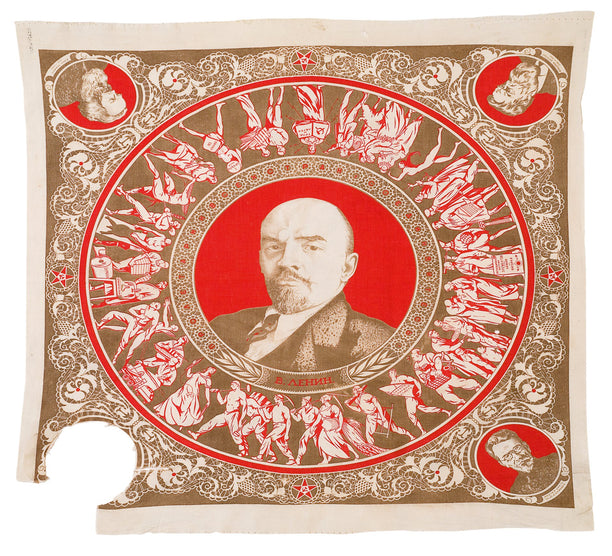
This year we've been marking the centenary of the Russian Revolution with new books from Tariq Ali and China Miéville, plus Weekend Reads looking at women in Russia before and after the Revolution, the Black Bolsheviks, and lots more.
In this series of posts (Part I, Part II, and Part III below) writers respond to the Revolution and its importance today.
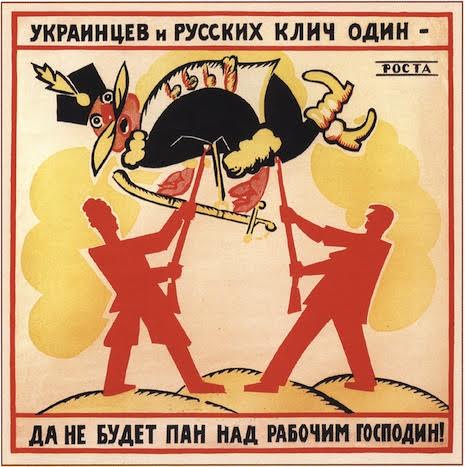
This year we've been marking the centenary of the Russian Revolution with new books from Tariq Ali and China Miéville, plus Weekend Reads looking at women in Russia before and after the Revolution, the Black Bolsheviks, and lots more.
In this series of posts (Part I, Part II below, and Part III) we ask writers to respond to the Revolution and its importance today.
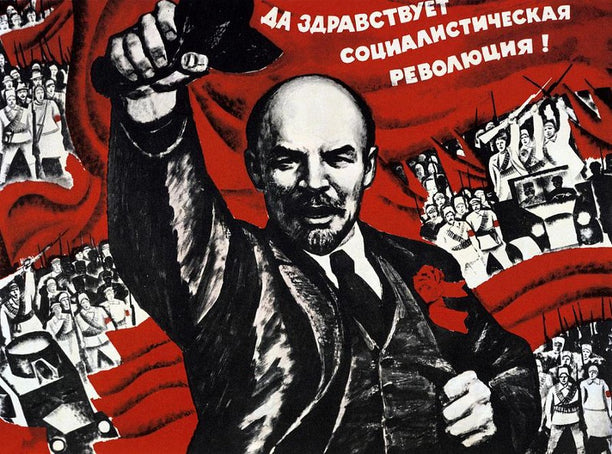
This year we've been marking the centenary of the Russian Revolution with new books from Tariq Ali and China Miéville, plus Weekend Reads looking at women in Russia before and after the Revolution, the Black Bolsheviks, and lots more.
In this series of posts (Part I below, Part II, and Part III) we ask writers to respond to the Revolution and its importance today.
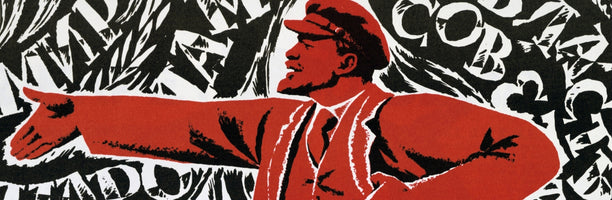
Do you know your Lenin from your Lunacharsky? Your Krupskaya from your Kerensky? If so, then we have just the quiz for you!
In the centenary year of the Russian Revolution, and to celebrate the launch of Tariq Ali's The Dilemmas of Lenin, we're giving away a huge bundle of Russian Revolution books to two lucky people! One person from North America and one from the rest of the world will win copies of The Dilemmas of Lenin, China Miéville's October, Red Rosa, Moshe Lewin's Soviet Century, The Communist Manifesto/April Thesis, The Prophet, and Revolutionary Yiddishland.

THIS QUIZ IS NOW OVER.
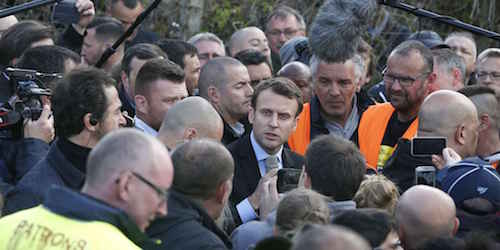
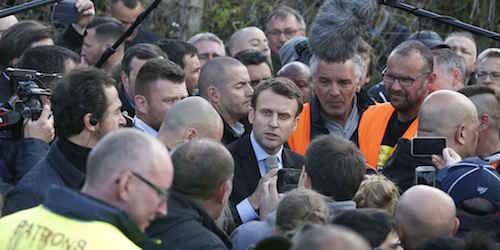
Macron is the name of a crisis of any politics that purports to "represent" political orientations in an electoral space. That clearly owes to the fact that the earthly disappearance of the communist hypothesis and its parties has little by little made the truth about parliamentarism apparent: namely, that ultimately it only "represents" small nuances in the dominant consensus around neoliberal capitalism — and not any alternative strategy. The far Right, in the brutal style of Donald Trump or the renovated Pétainism of Marine Le Pen, profits from this situation, since although it stands totally within that consensus it is alone in giving off the appearance of being on the outside.


This year sees the Golden Jubilee of Guy Debord’s The Society of the Spectacle and Gabriel Garcia Marquez’s One Hundred Years of Solitude. Both are darkly pessimistic texts that speak to our times. They pinpoint the shortcomings of the 1960s generation as much as embody its utopian desires. They transmit a strange optimism, a backdoor sense of hope, and offer another take on what our lives might be.
In this essay Andy Merrifield, author of The Amateur, looks at the importance of these texts on their 50th Anniversary.
It is the contradictions of the dictatorship of the proletariat, as it was beginning to develop in Russia, that form the object of Lenin's analysis and of his arguments. If you forget this fact, you can easily fall into dogmatism and formalism: Leninism can be represented as a finished theory, a closed system — which it has been, for too long, by Communist parties. But if on the other hand you remain content with a superficial view of these contradictions and of their historical causes, if you remain content with the simplistic and false idea according to which you have to "choose" between the standpoint of theory and that of history, real life and practice, if you interpret Lenin's arguments simply as a reflection of ever changing circumstances, less applicable the further away they are in history, then the real causes of these historical contradictions become unintelligible, and our own relation to them becomes invisible. You fall into the domain of subjective fantasy