Blog

  • The Repressed Origins of the Fifth Republic

    The Repressed Origins of the Fifth Republic

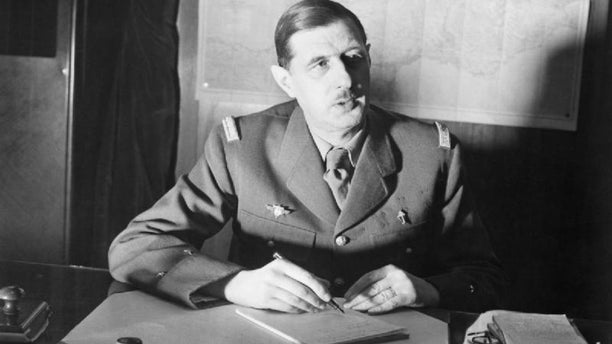
    The 1968 revolts in France live in popular memory as the country's most significant political moment in the twentieth century. In this extensive interview, Grey Anderson urges us to turn our attention instead a decade earlier to 1958 and the fall of the Fourth Republic. Anderson argues that the Fourth Republic's demise was a coup that allowed de Gaulle to seize power and crush his oppostion.
  • Everything, All the Time, Everywhere: a Letter from the Editor

    Everything, All the Time, Everywhere: a Letter from the Editor

    "Post modernity ‘originated under the star of’ neoliberalism and should be seen as much a system of market discipline as a philosophical set of ideas expressed through cultural forms. It is both the alibi and indictment for neoliberalism, but is too ironic, too cool to call itself out." –Leo Hollis, editor

  • For a Neo-Leninism

    For a Neo-Leninism

    There's no question that we're living in a moment of ecological crisis precipitated by capitalism's insatiable drive to expansion, but how should the left organise itself in the fight to prevent ecological collapse? Frédéric Lordon argues that the left must adopt a neo-Leninist position in order to develop and maintain a strategic, macroscopic objective in opposition to capitalism.

  • 5 Book Plan: Breaking Police Power

    5 Book Plan: Breaking Police Power

    Geo Maher selects five books that shaped his understanding of the history, function, and innate brutality of the police—and of the imperative, and the means necessary, to abolish them.  

  • Against populist reason: Ernesto Laclau’s blind alleys

    Against populist reason: Ernesto Laclau’s blind alleys

    "Populism," as a political concept, gained mainstream traction over the 2010s as the neoliberal consensus broke down internationally. But what is populist theory and what is its relationship to the twentieth-century Marxist thought from which it developed? In this piece, Stathis Kouvélakis offers a critical examination of the political logic of Ernesto Laclau’s theory of populism.