The Impossible Reconstruction
Architect and scholar Tomà Berlanda on rubble and the politics of remaining in Gaza

Objects of Repair installation: Architects for Gaza, British Pavilion, Venice Architecture Biennale 2025
There are places where the idea of reconstruction collapses under the weight of repetition. Gaza is one of them. Each time the bombs stop, the word rebuild returns, as if there were a neutral ground on which to start again. Yet the ground is never neutral. It is layered with the ruins of previous rebuildings, with the debris of homes mapped, erased and re-inscribed by occupation. To speak of reconstruction here is already to confront a paradox: how to rebuild when rebuilding itself risks succumbing to the very erasure it responds to.
What emerges here as the impossible reconstruction is a condition in which architecture can neither withdraw nor repair without reproducing the logic of domination—a space where building, mourning and endurance collapse into one another. It describes a tension that is both ethical and political: the need to act amid devastation while knowing that action itself can perpetuate harm. To think from within the impossible reconstruction is to recognise that architecture’s task is no longer to rebuild what was lost, but to stay with what persists.
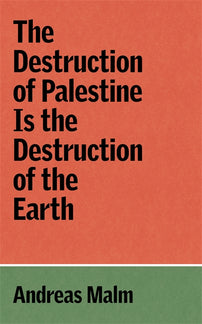
The destruction of Gaza, and of Palestine more broadly, is not an accident of war but a structural project. It exposes the long entanglement between architecture, politics and colonial power. Every map drawn, every master plan proposed, every material restriction imposed through blockade becomes a spatial instrument of control. Humanitarian reconstruction, however well intentioned, often participates in the same logic. It transforms catastrophe into a problem of management, where architecture’s role is to normalise crisis rather than to contest it.
Architecture has always oscillated between care and domination. Its tools—drawing, planning, measuring—promise order, yet they are easily mobilised by systems of violence. In Gaza, even the act of rebuilding a wall or a road is governed by the occupier’s approval. Cement becomes a weapon of regulation; speed becomes a metric of obedience. Edward Said once wrote that Orientalism fixed the East in a “timeless image,” unchanging, outside of history. The colonial project does something similar with space and time: it freezes Palestinian life in a perpetual state of emergency, an eternal present of destruction and deferred repair.
To build under such conditions is to inhabit what Judith Butler calls a “killing time,” when the rhythms of daily life are bent by the temporality of occupation. Delays, checkpoints, demolitions: these are not only spatial barriers but temporal ones. They slow, suspend or accelerate the pace of existence. Against this backdrop, the idea of architectural progress, of moving forward, of building toward a future, loses meaning. The future itself becomes occupied.
The challenge, then, is not only technical but ethical: what does it mean to practice architecture in a landscape where every act of construction is haunted by its own potential destruction? What can architects, educators and writers learn from the persistence of those who continue to build, to teach, and to live amid rubble?
[book-strip index="1"]
Remaining with the Ruins
Perhaps the task is no longer to rebuild, but to remain. Remaining is not resignation; it is a practice of endurance that refuses both annihilation and premature healing. To remain is to insist on presence when presence itself is under attack, to keep space alive and hold memory within the broken material of the city.
In Palestine, rubble is not only the residue of violence; it is also an archive. Every fragment carries traces of life: a doorway, a tile, a child’s drawing on a wall that no longer stands. These fragments record both destruction and the unyielding will to persist. They are lessons in architecture’s most elemental form, showing how to make space, however provisionally, for life to continue.
Working with rubble demands a different kind of knowledge. It asks architects to unlearn their obsession with completion and instead to engage with incompleteness, interruption and care. It calls for a pedagogy of slowness, where the act of observing, documenting or repairing a wall becomes an ethical stance. Palestinian practices offer this lesson with clarity. Long inspired by its founder Suad Amiry’s intelligent passion, Riwaq’s patient restoration of villages and cultural heritage shows how reconstruction can be rooted in continuity and custodianship rather than spectacle or speed, working with the layered time of place rather than the accelerated timelines imposed by crisis management. The Yalla Project’s (Abdalrahman Kittana, Alessandra Gola and Basel Kittana) community-based work in Nablus extends this ethic into the urban everyday, collaborating with neighbourhood committees and youth groups to document, repair, and maintain fragile social infrastructures that sustain life between incursions. DAAR—Decolonizing Architecture Art Residency (Sandi Hilal & Alessandro Petti) adds another dimension, experimenting with forms of unbuilding and re-inhabiting that expose and unsettle the spatial logics of domination without turning ruin into an aesthetic position. And Architects for Gaza, led by Yara Sharif and Nasser Golzari, brings these sensibilities directly into the field of emergency and reconstruction, developing incremental, resource-sensitive techniques that work with scarcity while preserving local agency, as exemplified in their recent Objects of Repair installation at the 2025 Venice Architecture Biennale. Taken together, these practices model ways of building that measure time in endurance rather than efficiency, grounding architecture in proximity, relation, and the slow labour of staying.
Impossible Reconstruction
The phrase impossible reconstruction emerged from that understanding. It gathered shape through conversations and writings among architects and scholars speaking from different latitudes and proximities to Palestine, each facing the unbearable task of articulating presence amid destruction. What united them was a refusal to look away and a shared conviction that architecture must think and act from within rubble, not after it.
Out of scattered notes, lectures and correspondences grew a collective inquiry into what it means to work within rubble rather than after it. The reflections that took shape—at once theoretical, diaristic, and pedagogical—move across registers and distances. Some arise from Gaza and Beirut, others from classrooms where students struggle to draw what cannot be represented. The tone shifts from testimony to analysis, but the question remains constant: what form of architecture is possible when its materials, institutions, and certainties have all been shattered?
What has taken, tentatively, form as the impossible reconstruction is not a conclusion but an opening, a proposition for others to take up, to think with and act from, and to test against their own practices. It gathers voices, yes, but also proposes a way of working: an architecture after complicity, grounded in relation rather than control, in staying rather than restoring.
[book-strip index="2"]
Architecture as Endurance
The political demand that arises from these reflections is clear: to redefine architectural agency as endurance. Agency is no longer the capacity to shape form, but the capacity to sustain relation. To endure is to remain in proximity to pain without turning it into aesthetic currency. It is to acknowledge that the work of architecture begins where its forms collapse.
Such a redefinition has consequences beyond Palestine. It challenges the profession’s complicity in global systems of extraction and displacement. It asks architects to abandon fantasies of mastery and to confront their role within the infrastructures of domination. It invites educators to cultivate forms of knowledge grounded in solidarity rather than expertise, to teach from within rubble, acknowledging that the ground of architecture itself is unstable.
Endurance does not mean passivity. It is an active stance, a way of holding open the possibility of life amid devastation. The Arabic concept of sumud, steadfastness, captures this precisely: the quiet, daily insistence on remaining where one is not meant to survive. In Gaza, sumud is both a political act and an architectural one. It is the reconstruction that precedes any rebuilding: the reassertion of being in the face of erasure.
Toward a Pedagogy of Attention
To speak of persistence is not to romanticize ruin or to surrender to despair. It is to recognise that the future cannot be built on the obliteration of the present. The politics of staying demands that architecture slow down and learn from the forms of life that persist within destruction. In such a condition, architecture becomes a pedagogy of attention, learning through space, through ruins and through the endurance of those who remain.
Pedagogy here is not instruction but relation: a way of inhabiting the wound without aestheticizing it, of transforming the act of witnessing into spatial practice. From Gaza’s pulverised neighbourhoods comes an unyielding lesson: that the ground of architecture is no longer stability but fracture, and that from this fracture a different ethics might begin.
To work in rubble is not to erase what happened but to stay with it, to treat every fragment as testimony and every scar as instruction. Architecture, in this view, becomes a language of care spoken in the tense between mourning and resistance. Its drawings are no longer blueprints for the future but traces of presence in a time that seeks to annihilate it, affirming that space endures where life insists on itself, and that the ruins are not the end of architecture but its beginning.