The Rise of a New Left Revisited
Raina Lipsitz revisits her 2022 book in light of the DSA's recent electoral victories.

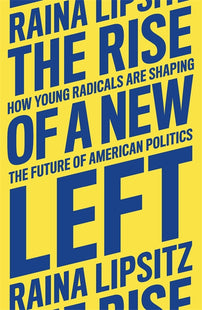
In 2022 I wrote a book for Verso called The Rise of a New Left: How Young Radicals Are Shaping the Future of American Politics. The project grew out of the years of reporting I’d done on the new wave of socialist and progressive candidates inspired by major developments in U.S. politics: Occupy Wall Street, the surprising strength of Bernie Sanders’ first presidential run, Trump’s 2016 election, Alexandria Ocasio-Cortez’s stunning victory over a ten-term incumbent congressman, and the remarkable transformation of the Democratic Socialists of America (DSA) from a small and relatively unknown group to a significant political force.
My book examined how this new left-wing wave emerged, analyzing how it rose from the passionate but defeated anti-war movement of the early 2000s and electrifying but ephemeral Occupy Wall Street to the exponential growth of the DSA post-2016 and the election of Ocasio-Cortez, who joined a climate protest at Nancy Pelosi’s office shortly after being elected. I live and work in New York City, my home of more than 20 years, but I spoke and met with organizers across the country, from California and Florida to Kentucky and rural Pennsylvania. They had a variety of political and personal backgrounds: socialist and progressive; lawyers and college dropouts; Black, white, South Asian, and Latino; men and women; young and not; immigrants and not. I wanted to know what they and the groups they’d founded or joined had in common, and how their goals and approaches differed by organization and region.
One thing that surprised me in my conversations with these organizers was how indifferent they were to labels, despite having broadly similar goals and perspectives—those working on the ground cared far more about improving the lives of their families and neighbors than they did about “socialism” as a word, theory, or ideology. What mattered was organizing around a shared set of values and experiences and building enough power to demand better.
But when I submitted my manuscript in the spring of 2021, the left-wing efflorescence I’d been covering for years seemed to have hit a plateau. Like tens of thousands of others I had joined the DSA in 2017, heartbroken over Bernie’s loss, terrified of the damage Trump would do, and enraged at the corporate politicians who control the Democratic Party. I hoped the organization would continue to grow, but from 2021 until 2024 its membership would slowly decline.
My book came out in September 2022, the year the cover of left-wing magazine Jacobin depicted three DSA-affiliated lawmakers in a waiting room symbolizing“the left in purgatory.” I did my best to speculate on the movement’s future in my book’s conclusion, but it felt profoundly uncertain in the shadow of the pandemic and the interregnum of Biden’s presidency. Like the pandemic itself, Biden’s temporary defeat of Trump—which I don’t think would have happened without a major public health and economic crisis—had sapped progressive energy and weakened organizing efforts.
Fast forward to 2026. With around 120,000 members, the DSA is now the largest socialist organization in U.S. history. Throughout the last year, and especially in the last several months, stories about socialism have dominated political news coverage in the U.S. and abroad: "Socialism's Moment Is Here,” (Current Affairs); “America’s Democratic Socialists are having the summer of their lives” (The Economist), “America’s summer of socialism" (The New Statesman), “So what is attracting voters to DSA’s ‘Sexy Socialist Summer’?” (The Washington Post), “A new radical left is shaking up the Democratic party” (Le Monde), “Democratic socialists surge in mayoral races across the U.S. as anti-Trump fervour rises” (The Globe and Mail), “The rise of socialism and the return of history” (The Washington Post), 'We're Proving It Works': Inside the DSA’s Push to Remake the Democratic Party” (Time), “Socialism Is Here—and It’s Serious” (The Wall Street Journal), “A Vision of a ‘Society Without Capitalism’” (The New York Times), “Moderates See Socialists as a Threat to the Democratic Party. Socialists Agree” (The New York Times Magazine), “How American Socialism Changed, and Stormed the Democratic Party” (The New York Times Magazine), “Socialists’ agenda takes hold in America’s cities and towns, while their foothold grows in Congress” (Washington Times), and “America’s quiet socialist takeover is spreading from town halls to classrooms” (Fox News).
[book-strip index="1"]
In August, The Economist ran a story titled, “America’s Democratic Socialists are having the summer of their lives.” I can’t speak for other American democratic socialists, but the summer of my life was in 2025. That’s when my fellow socialists, progressive allies, assorted New York City voters and I organized for months on end to elect Zohran Kwame Mamdani the Democratic nominee for New York City mayor. Together, for the better part of a year, we knocked on three million doors, talked to and organized our fellow New Yorkers, and—facing torrents of money and an unrelenting, racist smear campaign led and amplified by the mass media—we elected a DSA member mayor of the largest city in the United States.
It was a stunning achievement, a moving act of collective solidarity after years of isolation, polarization, and societal fracturing. To those of us who had poured our hearts into the campaign, it was surreal in a way that felt intense and life-altering. The scale of what we had done felt enormous. For the first time in many of our lives, the good guy had actually won. New Yorkers had spoken, and we wanted it all: from the rent freeze, fast, free buses, and universal child care that Mamdani had campaigned on to control over our bodies and lives, democratically run workplaces, universal health care, safe housing, and freedom from poverty, violence, and war.
In June, DSA again shocked the establishment by demonstrating that Mamdani’s win was neither a fluke nor solely due to his personal talents and charisma. The New York City chapter won nine of the ten races we competed in, including two for congressional seats. We also won races throughout the state and country: in my hometown of Buffalo—solidly blue but not as left as New York City—DSA-backed attorney Adam Bojak won a seat in the Assembly, and in Central New York, DSA member and Syracuse-based county legislator Maurice "Mo" Brown took an Assembly seat from one of the longest-serving Democrats in the region after being outspent by five-to-one. In Colorado, democratic socialist Melat Kiros toppled a fifteen-term congresswoman in a Denver area Democratic primary; in Pennsylvania, democratic socialist Chris Rabb won a primary for a House seat in Philadelphia; and the residents of Washington, D.C. are expected to elect democratic socialist Janeese Lewis George their next mayor.
One of my goals in writing The Rise of a New Left was to foreground the experiences, stories, and perspectives of the grassroots organizers powering this left-wing resurgence—many of them women, immigrants, economically precarious, and/or people of color. Mamdani is now a globally famous politician; in 2021, he was a Queens DSA member who had just been elected to the state legislature. Few knew his name, but he had not, as most mainstream media outlets reported, come out of nowhere. Rather, he was a committed member of an organization that was learning to take electoral politics seriously in part by confronting its failures. After winning four of the five New York races in which it endorsed in 2020, the DSA was slowly but surely growing its power. It was identifying and training natural leaders and talented campaigners with local roots like Mamdani. And people who didn’t necessarily identify as socialists were responding to this new style of leadership: small-d democratic, coming out of a mass movement, and placing the common good above individual careers—in short, Bernie’s 2020 campaign slogan, “Not me, us.” Mamdani appears in my book through the eyes of a teenage volunteer:
Asked what drew him to New York State Assemblyman Zohran Mamdani’s campaign, Omar Abouhamama, then a 16-year-old volunteer from Astoria, Queens, told me he enjoyed helping the campaign pack groceries and prepare meals to deliver to neighbors in need. “I don’t [usually] see politicians in the street helping people out themselves,” he said admiringly of Mamdani.
Headlines have narrative power, but they do not tell the whole story. The current socialist resurgence comes just three years after even left-wing magazines were predicting DSA’s demise and publishing essays denouncing its leadership’s “politically and morally bankrupt response” to the October 7 attacks. The socialism that most Democratic voters prefer to capitalism is now winning more seats in office and attracting more media attention than it has in decades, but ultimate victory is not imminent or assured. It’s possible that the DSA could hit another plateau or its opponents could find a more effective line of attack than they came up with in 2023.
If this comes to pass, the organizers I met while writing my book have shown the importance of organization, long-haul planning, and staying the course. Along with many others, I joined the DSA when its power and effectiveness were far from certain, desperate for viable opposition to American fascism. Along with my comrades, I committed to making it stronger.
The hardest part of writing the book was finishing it; it felt incredibly difficult and arbitrary to sum up history while we were still making it. The biggest mistake I made was briefly allowing media narratives to cloud my judgment. By 2021—the year I had to stop writing and rewriting and adding new material—I was beginning to think that socialism in the U.S. might be a nonstarter after all. That year, there were many more headlines about socialism’s losses and limits than there were about its triumphs. Now-disgraced ex-NYC mayor-turned-data center shill and DSA hater Eric Adams had just been elected, and the mainstream press was touting him as a remarkable new breed of politician and a key Democratic Party leader. I feared the DSA’s membership slump would become permanent. In the first flush of victory after Ocasio-Cortez’s win, all things seemed possible. But by 2021, backlash to the progressive activism spurred by Trump’s first term had set in. I didn’t fully believe that the DSA would not only continue to win, but grow. I thought there might be a clear limit to what we could achieve, and that our opponents—given their wealth, power, corporate backing, and cultural dominance—would inevitably triumph.
In light of what the DSA and the broader left have accomplished in the last electoral cycle, the wisdom and insights of the people I spoke with for my book seem more relevant than ever. Writing the book and helping to change history over the last four years have shown me what’s possible when you take your failures as seriously as your successes, learn and apply painful lessons, and do the slow, tedious, unsexy work of building long-term power: finding venues to host meetings; calling and texting members to make sure they’ll show up; fielding questions; organizing and attending dozens of events; sending out a weekly newsletter. The work is harder and less glamorous than I’d imagined, but the reward is considerably greater. Even amid climate catastrophe, an ascendant global right, and the second presidency of a demagogue as unhinged as Trump, there are roads out of the darkness. They’re just not easy, quick, or clearly marked, and they require a great deal of trying, failing, and trying again.
Book strip #1
-
 30% off
The Rise of a New Left
-
 30% off
The Blueprint
-
 30% off
For a Left Populism
