Toufic Haddad vs. The Council for British Research in the Levant: Invitation and Update
A letter from Toufic Haddad, a Palestinian-American writer and scholar, with an update on his case against his dismissal from a UK-funded institute in Jerusalem.

I would like to invite the public to attend the final day of the online public hearing of “Toufic Haddad vs. The Council for British Research in the Levant.”
I am represented in my legal counsel by the European Legal Support Centre (ELSC) who have instructed barrister Franck Magennis of Garden Court Chambers. Both ELSC and Franck have done incredible work supporting me for the past two years, while doing cutting edge work for countless other members of the Palestine solidarity and progressive movement family. The case is also fully supported by my trade union, the UCU, and my trade union representative is UCU London Regional head, Sean Wallace.
This public hearing was initially scheduled for 1-4 July 2025 but was rescheduled for 11-13 March 2026.
My campaign issued a statement last July on ‘why this case matters’, found here.
Additional background information on the circumstances that led to this case can be read here.
To attend the hearing online, click here and insert “8254” for the “guest pin.”
The hearing starts 13 March 2026, 09:30 London (UK) and proceeds throughout the course of working hours. We expect to hear the remainder of testimony/cross examination and closing arguments for both sides.
ELSC are also holding a fundraiser to help offset costs for my legal team’s fantastic work, which I encourage you to contribute what you can to.
Bless
TH
[book-strip index="1" style="buy"]
Reflections
The current political moment in world history cannot be read without direct reference to the Gaza genocide and the failure to hold its perpetrators to account.
I say these words cautiously, acknowledging that Israel has not respected the ceasefire and has killed at least 636 Palestinians since it ‘went into effect’. Moreover, genocidal conditions persist in the Gaza Strip, while responsible critical judgement necessitates we warn and prepare for this likelihood.
In this light, the movement that pushed to end the genocide should also be appreciated in its appropriate historical and political stead. This movement was attempting to play an important political and moral role in history, although its chief goal – to stop the genocide - was ultimately denied, while facing heavy repression.
Allow us to recall that the Gaza genocide didn't ‘just happen’. Nor was it an exclusively Israeli-perpetrated genocide. The Gaza genocide was an international genocide, and its path was paved by significant military, diplomatic, financial and political support of key Western actors who armed, justified, paid for, and in the end, profited from it. These actors remain on the political and commercial scene, positioned to continue the Gaza genocide and/or to profit further from the boomerang effect of the technologies, tactics and precedents developed in Gaza, being applied to various combat and non-combat arenas globally.
The genocide also benefitted from activities of a set of actors in the West who attempted to prevent an intellectual, moral, and political movement from emerging that could obstruct this facilitation.
We now have empirical data and research on this activity thanks to the work of the European Legal Support Centre (ELSC) in partnership with the Forensic Architecture (FA) initiative at Goldsmiths University.
These organizations recently issued a joint report and database documenting “the multi-sited repression of Palestine solidarity in Britain.” This report complements a similar database ELSC assembled on repression in Germany, and another report on how European governments instrumentalise counterterrorism measures to criminalise Palestine solidarity.
The dataset features 964 verified incidents of repression of the Palestine solidarity movement in the UK collected from January 2019 to August 2025.
For purposes of full disclosure, the ELSC are part of my legal team for my legal claim against the Council for British Research in the Levant, and an event I co-organized at the University of Edinburgh, with Palestinian historian Dr. Salman Abu Sitta is also featured in the ELSC-FA database.
While I do not wish to specifically comment here on the ways (or not) in which the ESLC-FA report applies to my case, I do want to highlight some of its exceptional writing, research and conclusions, which are invaluable to a range of civic and politically informed and impacted individuals, institutions, and movements - not least the Palestine solidarity movement but also civil rights movements, including those which deal with academic freedom, journalistic freedom, free speech, and the right to organize and protest.
What sets the ELSC-FA report apart is how it provides an empirically-grounded anatomy of what it describes as a “coordinated political ecology of repression” across the UK.
It identifies distinct historical and political features and mechanisms in operation as part of the crackdown against Palestinian solidarity and highlights the deliberate concentration “on sectors fundamental to shaping public discourse and holding public trust” (Report p7). Core pillars targeted include its intellectual foundations, public organisers, and trusted public voices, as students, academics, and teachers feature most frequently in the database (336 incidents).
The report is careful to clarify that actors from state and public institutions, lawfare groups, media outlets, educational bodies, and private companies “do not operate as a unified command structure.” They do however function “as a distributed network”, with “each node performing a distinct but complementary role” that collectively composes the “architecture of plausible deniability”:
the media manufactures discursive cover, lawfare groups weaponise legal frameworks, institutions enforce discipline, police stage public spectacles of sovereign power, and so on. This division of labour allows repression to appear diffuse, uncoordinated, even spontaneous. Yet the cumulative effect is systematic and constitutes a multi-sited assault that targets solidarity from every direction while granting each actor plausible deniability. No single institution bears full responsibility; no single hand is seen to strike the blow. This insulates each node from legal liability, public outrage, and reputational damage, allowing institutions to maintain their liberal self-images while participating in illiberal outcomes. (41)
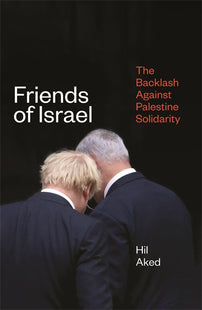
The repression of the Palestine solidarity movement - which de facto formed the backbone behind the movement to stop the genocide – was not a random occurrence. Neither was it the strategic, centralized activity of a single player. It existed in what Hil Aked terms ‘state-private networks’ in her book studying the activity of Israel’s advocates in Britain, namely:
informal channels through which official power and private advocacy reinforce one another. Elite access, revolving doors between government and lobby groups, coordinated legislative pushes, and the quiet alignment of institutional policy with Zionist advocacy all ensure that the network coheres without needing to conspire. (Report p.41)
How all this applies or not to my case is a matter for others to study and judge.
I do know that my case grows in significance in light of the recent controversy at the British Museum regarding the removal of the term “Palestine” from the description of some of its displays.
Indeed, the Kenyon Institute – CBRL's Jerusalem branch, that I am attempting to raise a claim against in UK Employment Courts, is named in part after Sir Frederic Kenyon – a former head of the British Museum, a president of the British Academy, and an influential architect in the formulation of British policy regarding the restitution of artefacts after WWI.
In this context, it admittedly feels surreal to know that the chief burden of proof my legal team needs to overcome to win UK jurisdiction revolves around whether my employment as the Kenyon Institute Director for four years “was more connected to the UK” than it was to Israel, the country of my contract. If our legal team are able to convince the judge of that, we will gain UK jurisdiction for my case.
While I will refrain from further reflection until the court hears our legal team out, I do wish to conclude by asking a question one is left with when one finishes reading the ELSC-FA report – that being, the question of counterfactual consideration.
What would the situation in Gaza, Palestine or South West Asia look like today if efforts to repress the Palestine solidarity movement had not taken place? What if the actors animating the ecology of repression had instead listened to these movements? Or sanctioned, boycotted, divested and charged the perpetuators and profiteers of the genocide? Could the genocide still have taken place? Would it have been as horrific as it was, and continues to be? Would the world still be on the road to WWIII?
These counterfactual questions echo similar considerations from other contexts where genocide previously occurred: the question of whether the Allies could have bombed the rail lines to Auschwitz, or how the world failed to heed the warnings of General Romeo Dallaire on the eve of the genocide in Rwanda.
With these questions seemingly too large to be claimed by any one individual or cause, the necessity of their posing is nonetheless appropriate in the light of the rapidly deteriorating world order around us.
This said, the ELSC-FA report provides an encouraging set of closing reminders that “the architecture of repression” documented "is neither seamless not unassailable.” Indeed, it is very defeatable:
[T]he very frameworks weaponised against solidarity – equality law, criminal procedure, professional regulation – can, under sustained challenge, be turned back on those who misuse them. And they yield strategic lessons: legal defence works; regulatory complaints can constrain repressive actors; juries are persuadable; coordinated movement pressure, including direct action and hunger strikes, can extract material concessions from the state and its commercial partners; and mass non-compliance can render even proscription unenforceable. Above all, they confirm that the movement’s political and legal literacy is itself a form of resistance – one that must be continually strengthened and shared. (90-91)
Join us as we make our case at the UK Employment tribunal!
And please consider chipping in to help offset our legal costs!
Thank you for your attention to these matters!!
Toufic Haddad
Joining Instructions
· To join by web browser use this link
· If the link does not work for any reason, cut and paste https://meet.video.justice.gov.uk/go/3402fd64-caea-49eb-889e-0bcec7b4b467/ into the Google Chrome browser and enter hmcts1218@meet.video.justice.gov.uk where it says “Conference alias of URI”
· The Guest PIN is 8254
[book-strip index="2" style="buy"]