Blog
-
In honour of World Press Freedom Day, we are publishing this statement from La Fabrique's authors in solidarity with La Fabrique's rights manager, Ernest, who was outrageously arrested by UK anti-terrorism police upon his arrival in London from Paris on 17 April. -

The detective as social geographer
How the private eye became key in historicizing France’s recent past in the seventies and eighties. -

A change of strategy
Marx’s texts from the 1850s onwards took a different approach to his previous work: different not only in their style but also their concepts and formats, but united by their object – capitalism – grasped from different angles and viewpoints.
-

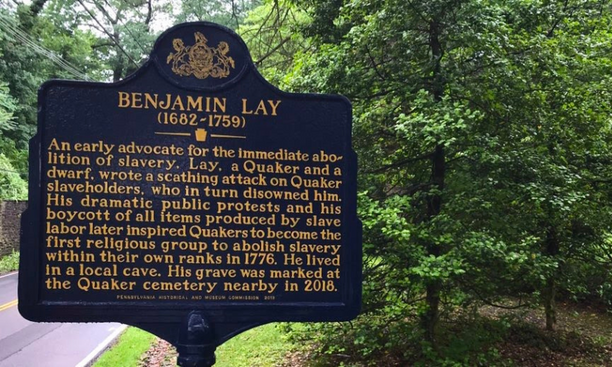
In his time, Benjamin Lay may have been the most radical person on the planet
Benjamin Lay was one of the first practical abolitionists, grounded in the real day-to-day struggles of enslaved peoples of African descent.
-

Why We Need Benjamin Lay
Benjamin Lay was a class-conscious, race-conscious, gender-conscious, environmentally conscious man with a fully integrated radical worldview; he was “intersectional” almost three centuries ago! -

Faith in Liberation
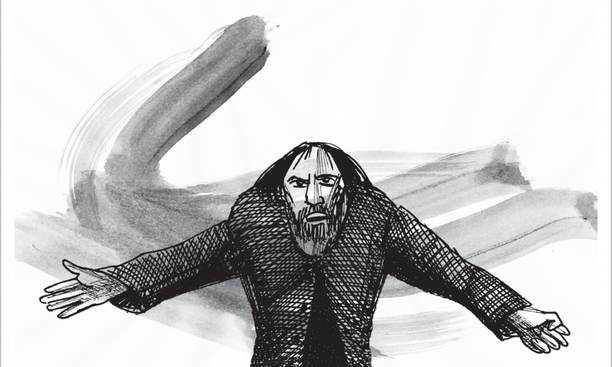
Lucien Goldmann, the tearaway son of a Romanian Rabbi who would become one of the greatest Marxist sociologists of literature and culture, maintained a lifelong commitment to liberation and to particular form of socialist humanism. Here, Madoc Cairns charts his personal and intellectual development from the tumultuous years in the Romanian communist party of the 1930s to his pioneering studies of Kant and Pascal in post-war France, and the vital role he played in the development of a Marxist study of culture.
-

Tariq Ali on Tom Nairn
Tariq Ali on Tom Nairn (1932–2023)
-

What is class today?
Common Wealth’s Amelia Horgan spoke to historian Gabriel Winant about class in the twenty-first century. Gabriel Winant is the author of The Next Shift: The Fall of Industry and the Rise of Health Care in Rust Belt America (Harvard University Press: 2021).
-

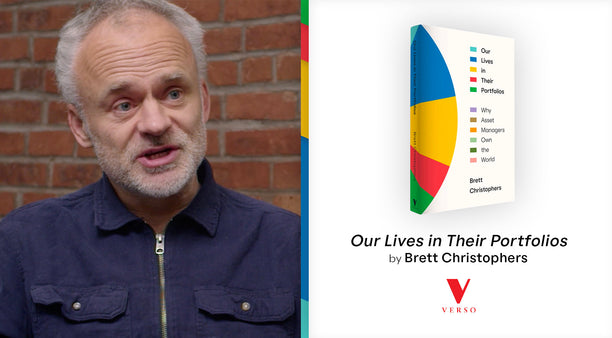
Watch: Brett Christophers on Our Lives in Their Portfolios
We sat down with Brett Christophers to discuss what happens when the basic infrastructure of our everyday lives (housing, roads, schools, water networks, etc.) become assets in the portfolios of asset management firms. -

A Political Education
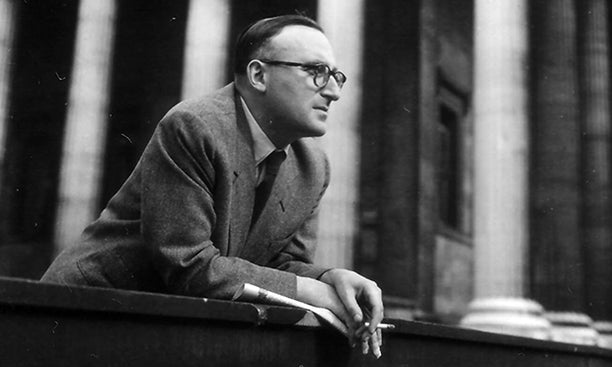
Alexander Baron, the writer, political activist, journalist, soldier, and prominent figure in mid-twentieth-century British cultural history, is best remembered today as the author of the novels The Human Kind (1953), The Lowlife (1963), and King Dido (1969). In this extract from his recently published memoir Chapters of Accidents, introduced by his son Nick Baron, he recounts his political education in interwar East London. -

Beyond the Rainbow
50 years ago today, Gravity's Rainbow, was first published. Here, Jared Marcel Pollen discusses Thomas Pynchon’s masterpiece, and its thrilling vision of technological modernity and its mystical offshoots.
-

The Culture War in France
Anticapitalist class politics have receded from French political discourse and action over the last several decades, replaced in part by what some French figures have identified as an American-influenced identity politics. As Daniel Zamora argues in this essay, however, France has long embraced a home-grown, essentialising politics of identity.