
A revolutionary party is a way to f*** everything up, methodically
Frédéric Lordon explains why the current moment necessitates a revolutionary party – an organization whose goal is to destroy existing capitalist institutions.



In the final installment of our roundtable on The Great Recoil, Paolo Gerbaudo responds to Gabriel Hetland, Carlo Invernizzi Accetti, and Anton Jäger and reflects on pandemic-era neoliberalism, neo-statism, and socialist strategy

Far-right French pundit-turned-politician Eric Zemmour has recently surged in presidential polls, sparking speculation about the upcoming election. Ugo Palheta urges against such hasty analyses, reflecting instead on the broader trends in French politics which Zemmour's rise exemplifies

Politicans around the world associate themselves with popular sports, but in South America the relationship between politicians and football has often been much stronger than that.

Focussing on the Indian government's counterinsurgency operations against Maoists in Bastar, Nandini Sundar examines how formal democracy works to subvert popular power.
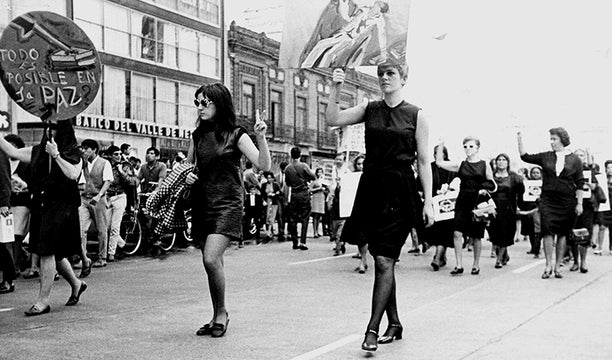
On the 50th anniversary of the global uprisings of 1968, we present a reading list to inspire the continued fight for freedom.

In his book Adults in the Room, Yanis Varoufakis gives us his version of the events that led to the Tsipras government’s shameful capitulation in July 2015. In the seventh part of a series of articles analyzing this account, Eric Toussaint looks at the disastrous agreement Varoufakis signed with the Eurogroup in February 2015.
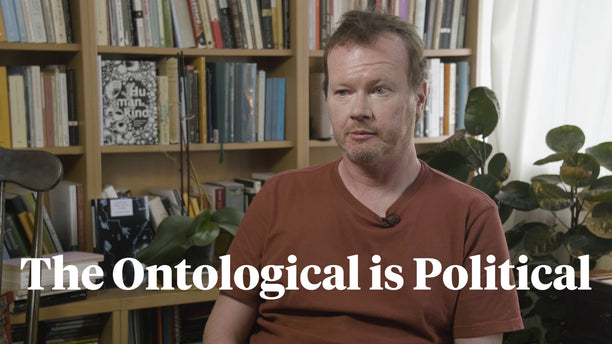
Timothy Morton's new book radically call for solidarity between humans and non-humans. In this interview, he discusses the political idea of the collective, subscendence, solidarity, fighting Nazis, and lots more.

In his book Adults in the Room, Yanis Varoufakis gives us his version of the events that led to the Tsipras government’s shameful capitulation in July 2015. In the third part of a series of articles analyzing the book, Eric Toussaint traces how Varoufakis influenced Tsipras to abandon the economic policies of the Syriza programme once in government.


It has become popular today to say that we live in an era of what Benjamin Barber has labelled "Jihad vs. McWorld." The globalising powers of capitalism ("McWorld") are confronted with or resisted by the forces that Barber labels "Jihad" — the variety of tribal particularisms and "narrowly conceived faiths" opposed to the homogenising force of capital. Even those with a critical view of the growth of American empire and the expansion of what is erroneously termed the global market usually subscribe to this interpretation. In fact it is the critics who often argue that we need a better understanding of these local forms of resistance against the "universal" force of the market.
The terms of this debate are quite misleading. We live in an age, to adapt Barber’s nomenclature, of "McJihad." It is an age in which the mechanisms of what we call capitalism appear to operate, in certain critical instances, only by adopting the social force and moral authority of conservative Islamic movements. It may be true that we need a better understanding of the local forces that oppose the globalisation of capital; but, more than this, we need a better understanding of the so-called global forces of capital.