From the Archive: Carlo Ginzburg
Take a dive into our archive to remember Italian microhistorian Carlo Ginzburg.

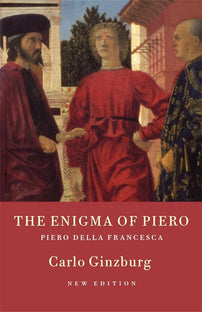
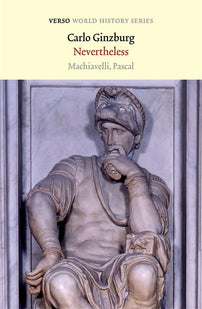
Born into a radical family in Turin at the beginning of the Second World War, Carlo Ginzburg (1939-2026) was a luminary historian and founder of the field of microhistory. Below is Peter Burke’s introduction “Carlo Ginzburg, Detective” from the 2002 edition of The Enigma of Piero: Piero Della Francesca, and “Reading Between the Lines: Brief Note on The Leopard”, featured in Ginzburg’s Nevertheless: Machiavelli, Pascal. For a look into his life and work, watch this 2020 discussion between Jason Dawsey and Carlo Ginzburg on the legacy of the Italian Resistance.
Carlo Ginzburg, Detective
The purpose of this brief note is not to introduce Carlo Ginzburg to the English-speaking world –a task fortunately made superfluous by the translation of his Night Battles and The Cheese and the Worms– but to comment on this particular book. Why is the discoverer of the benandanti and Menocchio the miller writing about the paintings of Piero della Francesca? What has a "plain" or "general" historian to do with art history?
We should beware of type-casting Ginzburg too easily. If he is best known as a historian of popular culture, it does not follow that he lacks other interests. In 1966, for example, two years after a brief visit to the Warburg Institute in London (to which he later returned for a year), Ginzburg published a perceptive essay on the art historians associated with that institute, notably Aby Warburg, Fritz Saxl and Sir Ernst Gombrich. The problem he discussed was how - and how not - to use works of art as historical sources, noting in particular the danger of circularity involved in reading paintings as evidence of the painter's state of mind.
In 1979 Ginzburg published two more essays with the visual arts as a major or minor theme. The first, written in collaboration with the art historian Enrico Castelnuovo, was a discussion of "Centre and Periphery" in the history of Italian art, in other words the problem of the cultural lag between the works produced in a centre of artistic innovation, such as Florence, and the works produced in the provinces. The authors argue that the relation between centre and periphery is both a complex and a variable one. They deny the assumption that all lags are peripheral or that all peripheries lag. They also suggest that provincial imitations of the products of the centre express the "symbolic dominance" of particular cities. This suggestive essay deserves to be better known outside Italy.
Art is also a central theme in one of Ginzburg's most wide-ranging and controversial pieces, an article with the intriguing title "Clues". Its purpose is to discuss what the author calls a paradigma indiziario, a phrase almost impossible to translate because indiziario refers not only to the phrase prova indiziaria, "circumstantial evidence", but also to the various meanings of indizio, "sign" no less than "indicator" or "clue". The implication, which the article itself teases out, is that there is a sort of art of suspicion, an art which utilizes small pieces of indirect evidence rather than direct or massive proof Ginzburg begins with a striking comparison between the achievements of three masters of this art at the end of the nineteenth century: Sherlock Holmes, Sigmund Freud and the art historian Giovanni Morelli. All three investigators based important conclusions on apparently trivial pieces of evidence. Holmes attended to the barking of a dog and to other details overlooked by Watson; Freud based diagnoses on apparently trivial slips of the tongue, lapses of memory and so on; while Morelli worked out a system for attributing pictures to particular painters on the basis of such minor details as the shape of the painted ears. As Aby Warburg used to say, "God is in the details" (Der liebe Gott steckt im Detail). Ginzburg goes on to trace the history of this paradigm, which takes him back to the diagnoses of hippocratic medicine, practices of divination and finally to the prehistoric hunter who "read" the tracks of the animal he was pursuing. He has particularly interesting points to make about the seventeenth-century art collector Giulio Mancini. Mancini, himself a physician famous for his diagnoses, told his readers to study the "character" of a painting as they would that of a piece of handwriting, in order to infer its author's identity. This brilliant essay is at once a plea for and an example of historical clue-hunting or divination.
Problems of historical method have long interested Carlo Ginzburg, as they interested his teacher Delio Cantimori (1904-66), a scholar who was particularly concerned with the history of heresy in Italy, but who also published important essays on the cultural historians Jacob Burckhardt, Johan Huizinga and Lucien Febvre. Cantimori's two interests came together when he investigated the "Nicodemites", those heretics who conformed to orthodoxy in their outward behaviour (they were named after Nicodemus in the gospels, who came to Christ by night). To track down men like these one needs a historical detective who is exceptionally conscious of problems of method.
Ginzburg too has published a study of "Nicodemism" and the problems of religious simulation and dissimulation in the sixteenth century. His books on the bcnandanti and on the cosmology of Menocchio the miller, hero of The Cheese and the Worms, also reveal his acute awareness of the awkward problems of method involved in the study of popular culture through sources produced by the learned; oral culture through written texts; and the views of the unorthodox via the investigations of the inquisitors who were trying to suppress them.
Problems of method are also raised by Ginzburg's investigation of Piero della Francesca. Piero's major paintings have been the subject of a long debate, particularly since the great Italian art historian Roberto Longhi published his essay on them in 1927. It is not the authorship which is in doubt this time but the dating of the paintings and also their meaning. The specific problems of interpreting the Flagellation and other paintings by Piero raise the burning question of the validity of the so-called "iconographical" or "iconological" approach. This approach was worked out from the 1920s onwards by a group of German art historians, notably two members of Aby Warburg's circle, Erwin Panofsky and Edgar Wind.
Panofsky defined iconography as "that branch of the history of art which concerns itself with the subject-matter or meaning of works of art, as opposed to their form" . He distinguished between two levels, iconography in the strict sense, which involves identifying a painted figure of a woman, say, as "Venus", "Judith" or "Clio", and iconology, a less precise term. It might be rendered as the art of grasping the meaning of the whole, whether that whole is an individual picture, the "programme" or unifying theme of a pictorial cycle, the oeuvre of a particular artist, or the distinctive quality of the art of a given period. Iconography proper depends very largely on the evidence of texts, but iconology, as Panofsky admitted, requires intuition or - as Ginzburg might say - the art of divination.
Since the publication in 1939 of Panofsky's famous book on the subject, there has been a great wave of studies of this kind. Among the most famous - and controversial - examples are those of Edgar Wind and E. de Jongh. Wind claimed to find references to pagan mystery religions in paintings of the Italian Renaissance, while de Jongh has argued that many seventeenth-century Dutch genre paintings, on the surface depictions of everyday reality, were intended to have a symbolic or emblematic meaning.8 Botticelli's so-called Primavera and Giorgione's so-called Tempesta have given rise to a particularly rich literature of interpretation. The iconographical approach, once unduly neglected, has become something of a fashion and there has inevitably been a backlash against it.
The critique of the iconographical approach to works of art rests on two main arguments. In the first place, it has been suggested that the programme or "deeper meaning" of the work of art did not matter to most patrons (if indeed it mattered to the artists themselves). There is also the argument that even if the artist or his humanist adviser once formulated a programme, and the patron understood this, the art historian may still have little hope of discovering what that programme was. lconology can rarely meet strict standards of proof The divergence between the scholars who have written about the meaning of Botticelli's Primavera, for example, is so great as to remind one of the fable about the wise men and the elephant.
It is in this context that we should read Carlo Ginzburg's investigations into Piero. Like his friend Salvatore Settis, a classical archaeologist who has offered one of the most persuasive readings of Giorgione's Tempesta, Ginzburg wants to replace iconographic laxity with a more rigorous method. They both believe in the possibility of successful detective work in this field, provided that the detective follows strict rules. "The first rule", writes Settis, "is that all the pieces should fit together without leaving blank spaces between them. The second is that the whole should make sense." Ginzburg adds a third rule –we might call it "Ginzburg's razor"– to the effect that "other things being equal, the interpretation requiring fewest hypotheses should generally be taken as the most probable".
All the pieces should fit together. As a "plain" historian, Ginzburg's advantage over his art-historian colleagues is that he has more pieces to play with. He has put the problem of Piero into a wider context, notably that of the theological and political conflicts of the time. The major political conflict was of course the one between the Byzantine Empire and the Ottoman Empire which was about to swallow it up. The Byzantines could see what was coming. That was why the emperor John VIII approached Pope Eugenius IV with a plan for a general council which would put an end to the theological disputes between eastern and western Christendom. The council was held at Ferrara and Florence in 1438-39, and the union was signed. However, western aid was ineffective; John VIII came to regret his approach to the pope; and, five years after his death in 1448, Constantinople fell to the Turks.13 Ginzburg is not the first scholar to have noticed the references in Piero's paintings to John VIII's distinctive hat, any more than he is the first to have noticed the relation between Fiero and Bessarion, the Greek archbishop who became a Roman cardinal. All the same, the link between art and politics is central to his study of Fiero as it is not in those of his predecessors.
Christopher Hill once wrote of the need to take the history of law away from the lawyers and the history of theology away from the theologians. Ginzburg's essay shows the advantage of taking art history away from the specialist art historians ( or to be fairer and more exact, of sharing it with them). For the plain historian has a good deal to say about art patronage. According to Salvatore Settis, for example, Giorgione's Tempesta cannot be understood without studying the intellectual interests of the man who - in all probability - commissioned it, the Venetian patrician Gabriele Vendramin. The meaning of the painting depends upon its context. In a similar way, Ginzburg argues below that it is important to study the humanistic interests of Giovanni Bacci, who was one of the patrons of Fiero della Francesca, in order to discover the meaning of the Arezzo frescoes and other works by Fiero. Art historians have been aware of Bacci's existence for some time, but it was Ginzburg who identified him with the minor humanist whose letters are preserved in the Archivio di Stato in Florence.
Politics and patronage have taken us a considerable distance away from Giovanni Morelli and his clues, but when Ginzburg attempts to identify the mysterious figures in the foreground of Piero's Flagellation, he offers us an analysis which Morelli would have appreciated. In the case of one figure, for example, he focuses on "the very unusual ear, sharply pointed and indented at the top, fleshy at the lobe", and in a second case he concentrates on a nose, "slightly humped, and rounded towards the end". Elsewhere he writes about beards, and about the meaning of certain hand gestures. One of this book's most remarkable features is the range of the sources which it exploits without regard to the frontiers between disciplines and what Aby Warburg used to call the "watchmen" who guard them.
Like earlier essays on Fiero della Francesca, Ginzburg's has already provoked considerable controversy. Such a severe critic of the speculations of others and their excesses of "interpretative zeal", as he puts it, could hardly have expected his own hypotheses to have escaped criticism.
Like Freud and Sherlock Holmes, Ginzburg has an urge to speculate and on occasion he presents these speculations as "fact". Indeed, in one passage he even tells us with great confidence what one figure in the foreground to the Flagellation must be saying to the other two. To be fair, he refers, elsewhere in the essay, to his own "chain of conjectures", and to the dangers of circular arguments in a case with so many unknown factors, a jigsaw puzzle in which so many pieces have been lost. His own hypotheses are at once ingenious, economical and plausible. Whether or not readers will agree with the substantive conclusions, it will be hard for them to resist admiring the exemplary way in which the problems have been set out. But it is high time to let Carlo Ginzburg tell his own story.
Peter Burke
[book-strip index="1"]
Reading Between the Lines: Brief Note on The Leopard, from the appendix of Nevertheless: Machiavelli, Pascal
1. Terms like gattopardesco and gattopardismo have been part of the Italian language for some time.[1] As is well known, they refer to the passage in Il Gattopardo (The Leopard) in which the young Tancredi Falconeri addresses his uncle Don Fabrizio, Prince of Salina, commenting on Garibaldi’s advance in Sicily: ‘Unless we ourselves take a hand now, they’ll foist a republic on us. If we want everything to stay as it is, everything will have to change. D’you understand?’[2] According to current opinion, the sentence ‘if we want everything to stay as it is, everything will have to change’, which became famous immediately, encapsulates the meaning of Giuseppe Tomasi di Lampedusa’s novel. In the heated discussion that followed posthumous publication of The Leopard, someone on the left referred to ‘anti-historicism’; and many criticized the author, attributing a static view of history to him. In a talk given in 1959, and posthumously published under the title ‘Contro Il Gattopardo’, Franco Fortini did not mince his words: ‘The rejection of history in this book is not the rejection of some particular history, but a rejection of change in itself.’[3] Often, as Nunzio La Fauci has noted, such judgements presuppose ‘the hasty identification between the protagonist of the novel and its author … that … is a characteristic feature of the critical literature on The Leopard.’ Not only that, but the current interpretation of the sentence – the vulgate of gattopardismo – is based (as La Fauci has highlighted) on a misunderstanding: ‘The extremely famous “If we want everything to stay as it is, everything will have to change” cannot but represent a way of thinking that assigns times and spaces to the human capacity for projection, which situates action in the universe of possibilities rather than that of limits. The thought of someone who feels part, and an active part, of history.’[4]
2. These are pertinent observations. But for a clearer understanding of the famous passage, it is useful to identify its ‘source’, or the text which, inverted, forms its starting point. This is a passage in Machiavelli’s Discourses from the chapter ‘Whoever Wishes to Reform a Long-Established State in a Free City Should Retain At Least the Appearance of Its Ancient Ways’ (Book I, chapter 25):
Any who desires or tries to reform the government of a city in a way that is acceptable and capable of maintaining it to everyone’s satisfaction will find it necessary to retain at least the semblance of its ancient customs, so that it will not seem to the people that its institutions have changed, though in fact the new institutions may be completely dissimilar from those of the past, because men in general live as much by appearances as by realities: indeed, they are often moved more by things as they appear than by things as they really are.[5]
As far as I know, this (inverted) derivation from Machiavelli has not been signalled. Francesco Orlando nearly hit the target. Rejecting the standard use of the terms gattopardesco and gattopardismo, derived from Tancredi’s ‘regrettably famous’ sentence, he asked: ‘A prejudice that has become part of the language is definitively incorrigible – for how many centuries has it been futile to seek to purge Machiavellianism and Machiavellian of their pejorative sense?’[6] A near miss.
3. In the course of the novel, Don Fabrizio, thinking to himself, frequently returns to his nephew’s words, whose profound significance he gradually comes to understand: ‘Tancredi, he considered, had a great future; he could be the standard-bearer of a counter-attack which the nobility, under changed trappings, could launch against the new political order.’[7] Here, for an instant, Machiavelli’s lexicon surfaces: ‘though in fact the new orders may be completely dissimilar from those of the past’. But over and above the formal echo, the inverted relationship between Tancredi’s words and Machiavelli’s passage is manifest. If we want everything to change, some things must remain as they are (Discourses); ‘If we want everything to stay as it is, everything will have to change’ (The Leopard). The ends are opposite: revolution in the first case, conservation in the second. The means are the same: change (partial in the first case, total in the second). The one who pushes the paradox to extremes (‘everything…everything’) is the conservative, not the revolutionary. But can we define someone who regards the transformation of ‘everything’ as the only solution as a ‘conservative’? Would it not be better to define him as a reactionary? asked Fortini. And which of them is it: the character or the author? Tancredi, followed by Don Fabrizio, or Lampedusa? In the allusion to ‘the uneducated Machiavellianism of Sicilians’, which we read in a passage of The Leopard, there resonates the contemptuous voice of the most cultured and Sicilian of authors.[8] Other passages are less transparent. In a letter to his friend Guido Lajolo of 31 March 1956, Lampedusa wrote of his novel: ‘It must be read with great attention because every word is weighed and every episode has a hidden meaning.’[9] In his beautiful Ricordo di Lampedusa, Orlando recalls Lampedusa’s preference for the implicit, in which the taste of the man of letters (the choice of ‘lean’ writers) converged with aristocratic ostentation.[10] And dealing with Machiavelli, the implicit was de rigueur, as Lampedusa observed in his lectures on English literature: ‘Machiavelli is an author whom one can, and perhaps must, follow in politics, provided one repudiates him publicly. If not, one is no longer Machiavellian.’[11] Thus, when Tancredi adopts, in inverted form, a maxim of Machiavelli’s that inspired his matrimonial strategy, he could not have declared his debt. Reading The Leopard (and any other book) between the lines is not only possible, it is compulsory: if only to catch undeclared allusions, addressed to the ‘happy few’ to whom Stendhal, beloved of Lampedusa, had dedicated The Charterhouse of Parma.[12] Decipherment of these allusions, literary or otherwise, formed part of the critic’s craft even in the distant past, when the term ‘intertextuality’ had yet to appear. For this reason I cannot accept the page in which Orlando, in his book on The Leopard, rejects intertextuality (a term that is certainly superfluous), emphasizing, in a tone which is seemingly jocular but in truth serious, that reading cannot do without focusing on a single text: ‘one at a time, for heaven’s sake!’. Elsewhere Orlando himself has demonstrated the wealth of what he here curtly dismisses as a ‘reflexive procedure imitating the laboratory’.[13] It is enough to think of a book like Illuminismo e retorica freudiana, which reads implicit echoes of Pascal behind the anti-religious polemic of the philosophes.[14] But what does add to a reading of The Leopard the identification of the (inverted) debt to the passage from the Discourses?
4. According to Francesco Orlando, ‘the vulgate has transformed into the moral of the story a proposition that is triply unreliable: not invented by the free will of the author, not confirmed by ultimate developments of the narrative, echoing the historical material predominantly as an illusion.’[15] I shall try to examine these objections starting with the last. In a context that is not Sicilian but European, the strategy delineated and then implemented by Tancredi (come to terms with the bourgeoisie to ensure the survival of the aristocracy) was far from illusory, as Arno Mayer demonstrated in an original book that analyses the persistence of elements of the ancien régime until the First World War.[16] The second objection seems more to the point: at the end of The Leopard, the embalmed corpse of the dog Bendicò, thrown out of the window, is momentarily transfigured into the heraldic animal of the Salinas and symbolizes their end. But the title chosen by Lampedusa for this final paragraph, Fine di tutto (end of everything), is (as we shall see) ironic.
There remains the first objection entered by Orlando: ‘not invented [Tancredi’s sentence] by the free will of the author’. I imagine that Orlando wished to underscore that the person who utters the sentence is not the narrator but a character, who, once created, represents a constraint for the author himself. But Tancredi’s words resurface insistently in the monologues of the protagonist Don Fabrizio, who makes them his own: “Just negotiations punctuated by a little harmless shooting, then all will be the same though all will be changed.” Into his mind had come Tancredi’s ambiguous words, which he now found himself really understanding. … “For everything to remain same”, just as it is now: except for a gradual substitution of classes’.[17] In the last line the voice of the protagonist and that of the narrator merge. Lampedusa may have sensed the proximity between the two voices as a danger. In some instances, he sought to distinguish them, as in Don Fabrizio’s reflections on the manipulation of the referendum results approving Sicily’s annexation to the Kingdom of Italy:
At this point calm descended on Don Fabrizio, who had finally solved the enigma; now he knew who had been killed at Donnafugata, at a hundred other places, in the course of that night of dirty wind: a new-born babe: good faith … Don Fabrizio could not know it then, but a great deal of the slackness and acquiescence for which the people of the South were to be criticised during the next decades, was due to the stupid annulment of the first expression of liberty ever offered them.[18]
But the impulse that prompts the author to speak through one of his characters suggests to him, in the case of Colonel Pallavicino (the sole character in the novel who actually existed), an expedient not without awkwardness:
‘For the moment, due partly to your humble servant, no one mentions red shirts anymore; but they’ll be back again. When they’ve vanished, others of different colours will come; and then red ones once again. And how will it end? There’s Italy’s Lucky Star they say. But you know better than me, Prince, that even fixed stars are so only in appearance.’ Perhaps he was a little tipsy, making such prophecies. But at such disquieting prospects Don Fabrizio felt his heart contract.[19]
5. The autobiographical implications of this passage are obvious. The 1948 elections, when the symbol of the Popular Democratic Front displayed Garibaldi’s image (the return of the red shirts), were followed by the agrarian reform of 1950 which irreversibly sanctioned the decline of the Sicilian aristocracy. The novel’s most impressive pages (the ball, the protagonist’s death) feed off awareness of this decline, which is very different from the ‘rejection of change in itself’ erroneously pointed out by Fortini. In The Leopard, political change exists, as does, at a more profound level, the ‘gradual substitution of classes’ evoked by the author throughDon Fabrizio’s reflections on Tancredi’s words. But there is something more profound still – the Sicilian landscape stamped by immutable backwardness: ‘he … looked up at the scorched slopes of Monte Pellegrino, scarred like the face of misery by eternal ravines’.[20] The person looking is Don Fabrizio: ‘the view of the mountain near Palermo crystallizes a desperation that is conceived as meta-historical’ – i.e. eternal – ‘because no human lifetime would be sufficient to prove it illusory’, comments Orlando.[21] But another scholar, Edward Reichel, has argued that a perspective emerges here shared by Lampedusa himself. The image of history presented in The Leopard is structured according to three rhythms: quasi-immobile, conditioned by geography and climate; slow, based on social history; rapid and ephemeral, depicted in the goings-on of the characters. Reichel has highlighted the analogy between this image of history and that proposed by Fernand Braudel in his book on the Mediterranean.[22] This would be a mere coincidence, even if (Fabien Kunz-Vitali reports) a copy of Braudel’s work (1949) was found in what survives of Lampedusa’s library.[23]
[book-strip index="2"]
6. Less hypothetical, and closer to Lampedusa, seems to me to be a reading based on words that recur several times in the novel: ‘eternal’, ‘eternity’. Here is Don Fabrizio speaking to the Jesuit Father Pirrone: ‘We live in a changing reality to which we try to adapt ourselves like seaweed bending under the pressure of water. Holy Church has been granted an explicit promise of immortality; we, as a social class, have not. Any palliative which may give us another hundred years of life is like eternity to us.’[24] And here is Don Fabrizio once again after his conversation with the Piedmontese noble Chevalley di Monterzuolo:
The Prince was depressed. ‘All this shouldn’t last; but it will, always; the human “always” of course, a century, two centuries … and after that it will be different, but worse. We were the Leopards and Lions; those who’ll take our place will be little jackals, hyenas; and the whole lot of us, Leopards, jackals and sheep, we’ll all go on thinking ourselves the salt of the earth.’[25]
In this passage, the character steps back from himself (‘we were’) and the author steps back from the character (‘we’ll all go on thinking ourselves’). We are in the slow time of social history, where one hundred or two hundred years are equivalent to eternity. The conditioned history of climate is even slower: ‘he … looked up at the scorched slopes of Monte Pellegrino, scarred like the face of misery by eternal ravines’. But from a non-human perspective eternity is something else entirely: it is the eternity of the stars, which the astronomer prince contemplates with his telescope. When it comes, death seems to him like a woman, like a star, ‘lovelier than she ever had when glimpsed in stellar space’.[26]
7. ‘Le silence éternel de ces espace infinis m’effraie’ [‘the eternal silence of these infinite spaces scares me’].[27] ‘Anyone wishing to call himself a man, not a two-legged animal’, said Lampedusa, ‘must have read Pascal’s Pensées.’[28] The Leopard, a novel about history and the attempts to alter it made by some of the characters, in a determinate time and place, is framed by Pascal read in a sceptical key. History has a meaning for those who make it, or believe they make it, motivated by more or less Machiavellian strategies; it has no sense from the viewpoint of the stars. The ‘End of everything’, with which the analytical index composed by Lampedusa concludes, refers to the end of the Salinas and the end of the novel. But it is a patently ironic phrase. Human history is not the entire reality: on this, beyond any possible divergence, we cannot but agree with Lampedusa.
[1] The following text is based on a lecture given at the Université Sorbonne Nouvelle-Paris 3, 19 February 2015.
[2] Giuseppe Tomasi di Lampedusa, The Leopard (1958), trans. Archibald Colquhoun, Everyman, London 1998, p. 22; trans. modified. (‘Se non ci siamo anche noi, quelli ti combinano la repubblica. Se vogliamo che tutto rimanga come è, bisogna che tutto cambi. Mi sono spiegato?: Il Gattopardo, new edn revised by Gioacchino Lanza Tomasi, Feltrinelli, Milan 2013, p. 50.)
[3] Franco Fortini, ‘Contro Il Gattopardo’, in Saggi ed epigrammi, ed. and introd. Luca Lenzini with a text by Rossana Rossanda, Mondadori, Milan 2003, pp. 720-30, esp. p. 730. See the remarks by Francesco Orlando, L’intimità e la storia. Lettura del ‘Gattopardo’, Einaudi, Turin 1998, pp. 156-7 n. 54.
[4] Nunzio La Fauci, ‘Analisi e interpretazioni linguistiche del Gattopardo’, Annali della Scuola Normale Superiore di Pisa. Classe di Lettere e Filosofia, 3rd Series, Vol. XXIII, nos 3-4, 1993, pp. 1145-85, esp. pp. 1163-4.
[5] Niccolò Machiavelli, Discourses on Livy, trans. and introd. Julia Conaway Bondanella and Peter Bondanella, Oxford University Press, Oxford 2008, p. 79. (Ch. I, 25: ‘Chi vuole riformare uno stato anticato in una città libera, ritenga almeno l’ombra de’ modi antichi’: ‘Colui che desidera o che vuole riformare uno stato d’una città, a volere che sia accetto e poterlo con satisfazione di ciascuno mantenere, è necessitato a ritenere l’ombra almanco de’ modi antichi, acciò che a’ popoli non paia avere mutato ordine, ancorché in fatto gli ordini nuovi fussero al tutto alieni dai passati; perché lo universale degli uomini si pascono così di quel che pare che di quello che è; anzi molte volte si muovono più per le cose che paiono che per quelle che sono’: Discorsi sopra la prima deca di Tito Livio, ed. Corrado Vivanti, Einaudi, Turin 1983, p. 108.)
[6] Orlando, L’intimità e la storia, pp. 142, 14.
[7] The Leopard, p. 52; trans. modified. (‘Tancredi, secondo lui, aveva dinanzi a sé un grande avvenire; egli avrebbe potuto essere l’alfiere di un contrattacco che la nobiltà, sotto mutate uniformi, poteva portare contro il nuovo ordine politico’: Il Gattopardo, pp. 85-6.)
[8] Ibid., p. 77; trans. modified (‘machiavellismo incolto dei Siciliani’: Il Gattopardo, p. 117). See also Orlando, L’intimità e la storia, p. 107.
[9] Andrea Vitello, Giuseppe Tomasi di Lampedusa. Il Gattopardo segreto, revised and updated edn, Sellerio, Palermo 2008, pp. 335-6. The limitations of this flat, reticent biography emerge, for example, from an essay by Fabien Kunz-Vitali, ‘”Un po’ di convenzionale ruggine antisemita…”. Giuseppe Tomasi di Lampedusa e la questione ebraica’, Italienisch, no. 67, 2012, pp. 47-70.
[10] Francesco Orlando, Ricordo di Lampedusa (1963), All’Insegna del Pesce d’Oro, Milan 1985, p. 50ff.
[11] Giuseppe Tomasi di Lampedusa, Letteratura inglese, ed. Nicoletta Polo, in Opere, introd. Gioacchino Lanza Tomasi, 5th, expanded and revised edn, Mondadori, Milan 2004, p. 818.
[12] See Orlando, Ricordo di Lampedusa, p. 50.
[13] Orlando, L’intimità e la storia, p. 8.
[14] Francesco Orlando, Illuminismo e retorica freudiana, Einaudi, Turin 1982, p. 186ff.
[15] Orlando, L’intimità e la storia, p. 15.
[16] Arno J. Mayer, The Persistence of the Old Regime: Europe to the Great War (1981), Verso, London and New York 2010.
[17] Ibid., pp. 26, 28; trans. modified. (‘”Trattative punteggiate da schioppettate quasi innocue e, dopo, tutto sarà lo stesso mentre tutto sarà cambiato.” Gli erano tornate in mente le parole ambigue di Tancredi che adesso però comprendeva a fondo … “’Perchè tutto resti com’è.’ Come è, nel fondo: soltanto una lenta sostituzione di ceti”’: Il Gattopardo, pp. 54, 56.)
[18] Ibid., pp. 82-3, 84; my emphasis. (‘A questo punto la calma discese su Don Fabrizio che finalmente aveva sciolto l’enigma; adesso sapeva chi era stato strangolato a Donnafugata, in cento altri luoghi, nel corso di quella nottata di vento lercio: una neonata, la buonafede … Don Fabrizio non poteva saperlo allora, ma una parte della neghittosità, dell’acquiescenza per la quale durante i decenni seguenti si doveva vituperare la gente del Mezzogiorno, ebbe la propria origine nello stupido annullamento della prima espressione di libertà che a questo popolo si era mai presentata’: Il Gattopardo, pp. 123-5.)
[19] Ibid., pp. 172-3. (‘’”Per il momento, per merito anche del vostro umile servo, delle camicie rosse non si parla più, ma se ne riparlerà. Quando saranno scomparse queste ne verranno alter di diverso colore; e poi di nuovo rosse. E come andrà a finire? C’è lo Stellone, si dice. Sarà. Ma Lei sa meglio di me, principe, che anche le stelle fisse veramente fisse non sono.” Forse un po’ brillo, profetava. Don Fabrizio dinanzi alle prospettive inquietanti sentiva stringersi il cuore’: Il Gattopardo, p. 231.)
[20] Ibid., p. 26 (‘Guardava i fianchi di Monte Pellegrino arsicci, scavati ed eterni come la miseria’: Il Gattopardo, p. 54).
[21] Orlando, L’intimità e la storia, p. 116.
[22] Edward Reichel, ‘Geschichtsdenken und Gegenwartsdeutung in Il Gattopardo. Tomasi di Lampedusa, die “nouvelle histoire” und das Ende der Nachkriegsepoche in Italien’, Italienische Studien, no. 4, 1981, pp. 31-54, on which see also Orlando, L’intimità e la storia, p. 159 n. 61.
[23] Personal communication from Fabien Kunz-Vitali, to whom I am grateful.
[24] The Leopard, p. 31; my emphasis. (‘Viviamo in una realtà mobile alla quale cerchiamo di adattarci come le alghe si piegano sotto la spinta del mare. Alla Santa Chiesa è stata esplicitamente promessa l’immortalità; a noi, in quanto classe sociale, no. Per noi un palliativo che promette di durare cento anni equivale all’eternità’: Il Gattopardo, p. 59.)
[25] Ibid., p. 137; my emphasis. (‘Il Principe era depresso: “Tutto questo” pensava “non dovrebbe poter durare; pero durerà, sempre; il sempre umano, beninteso, un secolo, due secoli…; e dopo sarà diverso, ma peggiore. No fummo i Gattopardi, i Leoni; quelli che ci sostituiranno saranno gli sciacalletti, le iene; e tutti quanti Gattopardi, sciacalli e pecore, continueremo a crederci il sale della terra”’: Il Gattopardo, p. 185.)
[26] Ibid., p. 185 (‘più bella di come mai l’avesse intravista negli spazi stellari’: Il Gattopardo, p. 246).
[27] Blaise Pascal, Pensées, ed. Michel Le Guern, Gallimard, Paris 1977, fr. 187 (Brunschvicg fr. 206), p. 161 (trans. A.J. Krailsheimer, Penguin, Harmondsworth 1983, fr. 201, p. 95; trans. modified). And see above the Postscript to Chapter 6, pp.
[28] Quoted in Orlando, Ricordo di Lampedusa, p. 70.