Memory and History: On the Poverty of Remembering and Forgetting the Judeocide
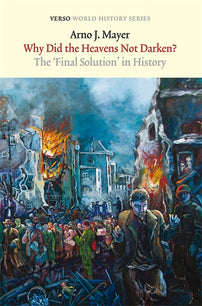
On what would have been Arno Mayer's 100th birthday, we're republishing Arno Mayer's Memory and History, an expanded speech defending his practice of history, featured as afterword to Why Did the Heavens Not Darken?

In 1989, the year after the original publication of Why Did the Heavens Not Darken?, Jewish students of the local Hillel chapter began to boycott my undergraduate course at Princeton University. In the spring of 1992, they invited me to speak on Yom Hashoah (Holocaust Remembrance Day) to give me “the opportunity” to prove, publicly, that I was “neither an anti-Semite nor a ‘revisionist.’” After careful consideration I decided to accept this well-intentioned but defiant invitation, on the condition that it be understood that I would commemorate the victims of the Judeocide in my own way, without any apologia for whatever transgressions may have been imputed to me over the last few years. This essay is an expanded version of that talk, and as such it is very much a pièce de circonstance rather than a scholarly paper.
Princeton–Chérence
Summer 1992
In these tentative reflections on our “mental diaries” of the Judeocide, I am concerned with selective remembering as well as with selective forgetting. I also propose to consider the timeliness of reinserting a universal dimension into the social and public memory of the Judeocide that, it seems to me, has become excessively sectarian.
My views are, of course, influenced by my being an unbelieving yet unflinching Jew whose maternal grandfather died in the Theresienstadt concentration camp. They are also conditioned by my being a dissident yet unrepentant contemporary historian who is a critic rather than a servant of power. In both capacities, I follow Marc Bloch’s injunction to maintain a continuing dialogue with the dead. This mandate is the more compelling for coming, as it does, from one of this century’s great historians who, during World War II, was persecuted for being Jewish and executed for his active role in the French resistance. Bloch may well have shared Walter Benjamin’s fear that “should the enemies of the dead be victorious, even the dead would not be safe from victors who do not cease to score victories.”
It is precisely because I am an unregenerate Jew, and a historian, that I can have no truck with the self-proclaimed but counterfeit “revisionists” who categorically deny the Judeocide. To be sure, these negationists have unwittingly asked some pertinent questions. Even so, they are hate-mongers, with outright contempt for genuine scholarship and intellection. Precisely because of their crass casuistry and imposture, they should be ignored instead of showered with critical and censorious attention, which simply and solely feeds their political notoriety and their feigned martyrdom.
Nor can I reason with dogmatists who seek to reify and sacralize the Holocaust for being absolutely unprecedented and totally mysterious. Obviously, the purposes of most dogmatists are altogether honorable and many of them continue to make important contributions to the study of the Final Solution. Even so, ultimately the dogmatizers maintain that the Holocaust was so utterly unique as to balk all efforts at aesthetic transfiguration and historical imagining, which cannot dispense with universalzing categories and idioms. The zealots among them even go so far as to claim that there is no appropriate language in which to narrate the Judeocide and that “to tell the story [of the Holocaust] is to distort and diminish . . . a mystery [that should] be protected from the process of demystification.” But to peremptorily treat the Judeocide as a supernatural event, to doggedly shield it from reality, and to incessantly bewail it, is neither to prove nor to dignify its peculiar anomaly. In my judgment it is to be unfaithful to the victims to argue with fanatic negationists and hard-line dogmatists who approach debates about the Judeocide as boxing matches, in which they score points or knock-out punches for an uncontested and final truth. Interpretations of the Judeocide— not unlike interpretations of the decline of Rome, the Christian Crusades, the French Wars of Religion, the causes of World War I, the French and Russian Revolutions—will forever remain subject to intense debate and reappraisal. Indeed, authentic rethinking and re-inquiry are the historian’s noblest and most exacting tasks.
Revision requires sympathetic understanding and open scholarly exchange if it is to confront and reconcile conflicting insights and approaches into an everchanging but artless critical and analytic vision. In sum, the notion of instantly achieving an ultimate truth about the Judeocide is as implausible as the notion that with additional time and research such a truth will sooner or later crystallize.
Memory is certainly very much in fashion these days: in Caen, in Jerusalem, in Washington, in Moscow, in Warsaw, in Berlin, in Oradour-sur-Glane, on Gorée Island. It is being commodified for profit and instrumentalized for political ends. It is also the latest radical chic among Western historians who are rushing to study commemorations, memorials, historials, and museums. The world is haunted less by “the specter of man without memory” than by the specter of man without forgetting, perhaps best captured in Let the Artists Die, Tadeusz Kantor’s pandemoniac play. Surely this rage for memory is neither politically innocent nor historically fortuitous. Whereas, until relatively recently the extreme depreciation of memory was correlated with the “principle of hope” and the project of progress, today’s flourishing theory and practice of memory coincides with the “principle of disenchantment” and the raging doubt and despair about the promises of the Enlightenment. Indeed, it is as if Edmund Burke and Joseph de Maistre were wreaking their vengeance on Voltaire and Condorcet.
Even in many regions of the Third World where at first glance the political reactivation of social memories seems to play a liberating role, on closer examination the situation turns out to be extremely problematic. Inevitably there is memory and memory: it can be progressive and it can be retrogressive. However, most likely and in most places, memory pulls simultaneously and unevenly in both directions, with serious risks of spinning out of control. At any rate, memory privileges piety and consensus over freethinking and criticism. It tends to foreclose discussion rather than to free and encourage it. Memory is not intrinsically or even primarily a fount of “dangerous” thoughts and subversive intentions, even if, under certain circumstances, it certainly can and does contribute to fueling liberalizing dissent and rebellion.
The memory of Auschwitz has become overly static, inflexible, and undialectical, with the accent almost exclusively on the unfathomable barbarity of the Nazis and the monstrous degradation and suffering of the victims. With historical pasteurization animated by ideological determinism, the social, economic, and cultural mainsprings of the horrors of Auschwitz have been lost from sight. This foreshortened view marks a withdrawal from history rather than a commitment to it. As constructed, the memory of Auschwitz disremembers that its death machine was relentlessly driven not only by I. G. Farben—which is presently changing its name in order to erase its past—but also by Nazi Germany’s war of conquest and crusade against Bolshevism in eastern Europe. This elision is in tune with the primitive anti-Marxism, leavened by fashionable modernist postmodernism, which feeds the shift from causality, diachrony, facticity, and configuration, to indeterminacy, representation, deconstruction, and fragmentation. It is not the horrors of Auschwitz that, in and of themselves, haunt several social memories, including the impossible yet ever incipient universal memory. Rather, these memories are burdened by the suspicion that these horrors could not have materialized without the synergy of advanced bureaucracy, science, technology, medicine, law, and education, mediated by established elites motivated by ordinary self-interest. Perhaps the once-pregnant aphorism that whoever does not speak about capitalism had best be quiet about fascism, should be revised to read that whoever does not treat of fascism should forgo discussing the memory of Auschwitz.
In sum, it is not enough to emotionalize and “dwell on [the] horrors” of Auschwitz. Instead of allowing these horrors to “paralyze” our critical intelligence, they should be read with a view to discerning “political contexts” and mobilizing “political passions” relevant to present-day concerns.
There is, of course, no way of knowing “the past simply as past,” without intellectual—and hence biased—intervention. The past— any past, our past—is constructed by the “after-meditation” of the scribes of both memory and history.
The memories as well as the histories of the Judeocide are shaped by us—by “after-meditators”—who stand if not outside nevertheless considerably removed from the particular and larger tangled past in which it was embedded. We seek to understand it through lenses tinted by outcomes and consequences which were unknowable and unknown to the victims, perpetrators, and bystanders of the time. The muses of both memory and history take pains to clarify, simplify, rearrange, and exaggerate discrete aspects of the afflictions of the Jews in order to highlight those elements of quintessential uniqueness that distinguish the Jewish torment from the torments of the other victims of Nazi Germany. There being no way of retrieving personal remembrances of life in Auschwitz simply as remembrances, the chroniclers of the Judeocide—like the chroniclers of other, if lesser, fiery ordeals— select, distill, and simplify oral and written eyewitness accounts. At the same time, they unconsciously but willfully reshape them to fit into a collectively remembered past; any memory being, intrinsically, shared or social, rather than insular or individual.
To be sure, individuals have remembrances that are direct, literal, and tangible—like those my maternal grandmother relayed to me about her infernal life in Theresienstadt. But even such distinctly personal recollections, in addition to being shared, are swayed, not to say adulterated, by the present, which conditions the way they are articulated. Personal remembrances are singular to individuals at the same time that they intersect with the impersonal memories of the larger group to which every individual necessarily belongs. In fact, since individuals are “never really alone,” they construct their autobiographical recollections in reciprocal relation with the no-less-constructed reminiscences of others. Ultimately, then, individual and collective or social memories are a seamless web, whose patterns are imprinted with later understandings and concerns, and whose articulations are ordered and symbolized in accordance with conventional yet changeable codes of narrative exposition. Memory, unlike history, originates and develops within a distinct group, to which it remains confined. Being “limited in space and time,” memory also stresses the resemblances of the in-group at the expense of its inherent dissimilarities. In sum, just as there is no isolated and impermeable personal memory, so “there is no universal memory.”
A brief look at the grand memorial at Douaumont near Verdun may help to capture the peculiarly modern aspects of the self-conscious and deliberate construction and transmission of the memory of the Judeocide, as coordinated by the memorial authority of Yad Vashem in Jerusalem. The principle and production of memory that is so characteristic of our time may be said to date from the Great War of 1914–18. This colossal conflict was the first major phase of the Thirty Years War of the twentieth century which egregiously extended, not to say transgressed, the heretofore conventional limits of man’s inhumanity to man. While Verdun became emblematic of the slaughter of World War I, Auschwitz became emblematic of the slaughter of World War II.
In the immediate aftermath of 1918 and 1945 respectively, the field of slaughter of Verdun and the death factory of Auschwitz were perceived to be radically unprecedented, unique, and hitherto unimaginable. The one was remembered through the memorial complex at Douaumont and the commemoration of Armistice Day, the other through the memorial complex at Yad Vashem and the commemoration of Yom Hashoah. In its own way, each represents an important milestone on the contemporary road to the studied construction and diffusion of collective memory. Both center around the cult of the untold millions killed in the wars of a cursedly bloody epoch: Douaumont was charged with keeping alive the memory of millions of French soldiers killed in World War I, whose casualties were virtually all fighting men; Yad Vashem is charged with keeping alive the memory of millions of Jews murdered in World War II, which claimed more civilian than military casualties. Both Douaumont and Yad Vashem were and are inherently sectarian: the one was intended to restore the deeply wounded national identity of a long-established sovereign state; the other was founded to invent and anchor the founding myth of a newly created and therefore highly vulnerable state.
Characteristically the Tranchée des Baïonnettes and the ossuaire at Douaumont were legendary despite the stark reality of their ideographic representation. The French soldiers “sleeping standing up and clutching rifles” fitted with bayonets in the unaffected Trench of Bayonets are supposed to have been buried alive by collapsing embankments while heroically defending their patrie, though the bayonet was anything but a defensive weapon; the bones displayed in the ossuary are presumed to be those of 130,000 “unknown” French soldiers killed on battlefields which were also littered with the bones of thousands of equally “unknown” German soldiers. The memorial complex at Douaumont, including its Voie Sacrée, is both secular and hallowed, civilian and military. Until 1940 it was France’s preeminent space for the cult of the fallen soldier, with ritualized ceremonies, pilgrimages, and invocations. Even the grandiose annual ceremony of November 11 at the Tomb of the Unknown Soldier under the Arch of Triumph in Paris derived its legitimacy from the rites of Verdun.
Clearly, among the dead the victorious poilus were carefully separated from the defeated bodies, as if to suggest that they were continuing their mutual slaughter from beyond their graves. The cult of France’s fallen heroes was integrated into a civic religion of nationalism whose officiators were political, military, and religious leaders with essentially conservative world views and agendas.
While Douaumont originated in civil society but soon became an official undertaking, Yad Vashem was, from the outset, charted and defined by an act of the Knesset, the Israeli parliament. As a nongovernmental yet official memorial authority, Yad Vashem was directed to retrieve and inscribe the names of all the victims of the Judeocide on an honor roll, to record and document vital aspects of the Shoah, to promote discussions and publications for the benefit of future generations, and to fix and devise an official day of memorial observances.
Inevitably, the “inventors” of Yom Hashoah rooted it in Jewish tradition in which there is little room for ideography. It was conceived not simply as a day of mourning but also as a day of heroism. Although a relatively residual or recessive strand in the Jewish past, military valor was now heralded for linking the last stand at Masada and the hopeless uprising in the Warsaw Ghetto with the wars for independence of the nascent state of Israel. Modeled on the sounding of the shofar, wailing sirens summon the entire nation to observe a two-minute silence as a prelude to the day’s commemorative ceremonies. As for the date chosen for Yom Hashoah, it was anything but random: the twenty-seventh day of Nisan falls in the period of Sefirah in which “the first crusaders, the ancestors of the Nazis, had destroyed many ‘holy’ (i.e., Jewish) communities” in the Rhineland. Israel’s Day of Remembrance embodies a subtle admixture of time-honored history and memory with the blistering recollection of recent experience and the press of contemporary politics.
It is worth emphasizing that collective memories are a generational matter, in that they do not remain raw and burning too long after the extinction of the members of the group which experienced the events firsthand, and their immediate progeny and “heirs.” With time, and in a radically changed political climate, Douaumont has been transmuted from a sanctuary for pilgrimage and commemoration to a prosaic tourist site: “Don’t miss this summit of your holiday.” Simultaneously the once solemn Armistice Day of November 11 has been assimilated into France’s peculiar cult and culture of vacations. Even the spectacular gesture of reconciliation of September 22, 1984—when President Mitterrand and Chancellor Kohl stood in silence and hand in hand in the cemetery at Douaumont—was something of an anticlimax (unlike Willy Brandt’s ingenuous kneeling at the Memorial of the Warsaw Ghetto on December 7, 1970, which was precursive). It all but completed the desectarianization and decanonization of the rites of Verdun. Will Yad Vashem and Yom Hashoah avoid a similar evolution by virtue of the singular nature of the Jewish memory to be preserved?
In this day and age the annalists of both memory and history maintain that there is no spontaneous, self-generating memory. Especially with today’s withering attention span, collective memory cannot take form and persevere without organization and orchestration. To be remembered and singularized, the Judeocide needs anniversaries like those of Crystal Night, of the Vel d’Hiv Roundup, and of the Warsaw Ghetto Uprising; commemorations like Yom Hashoah; pilgrimages to Theresienstadt, Auschwitz, and Treblinka; and memorial centers like Yad Vashem in Jerusalem and the Holocaust Museum in Washington. Furthermore, in addition to being anchored in consecrated spaces, memory must be encoded in speeches, images, relics, and music. In sum, without sustained efforts to foster the interiorization and transmission of the memory of the Judeocide, much of this memory risks being swept away sooner rather than later, by the tide of irreverent historical scholarship.
In “literate” societies, profane history takes “the relay of oral testimony and social remembering” in the dusk of inviolable and uncontested collective memory. Unlike the chroniclers of memory, who are parochial and beholden to the in-group, the chroniclers of history use universalizing concepts and languages to examine groups from the outside, with close attention to their unexceptional dissemblances, tensions, and cleavages. Critical historians of the Judeocide distinguish the behavior and fate of eastern and western Jews, of the Jewish classes and masses, of orthodox religious and secularized assimilated Jews, and of unpolitical and politically engaged Jews.
It might be said that commemorations, monuments, and honor rolls are to the memory of the Judeocide what dates, documents, diaries, and statistics are to its history. The construction of the histories of the Judeocide differs from the construction of its memories. It differs in the ways in which historians gather and validate evidence, transmit, preserve, and revise findings and explanations, probe irreversible and defining moments which were not known—could not have been known—to eyewitnesses. In other words, the very act of recovering a more encompassing and uncertain past—which calls for the sifting of discordant firsthand testimonies and the correction of received narratives and interpretations—challenges the memory of the Judeocide which is both categorical and sectarian, and which the curators of Yad Vashem and the U.S. Holocaust Memorial Council are appointed to safeguard. Needless to say, this memory, unlike its history, is solemn, emotive, and lachrymose.
There are, then, two major modes of access to the Judeocide: memory and history. What deserves special emphasis, however, is that both memory and history tend to be used and misused for political ends. Through the ages, historical narratives and interpretations have served numerous functions other than the advancement of scholarship. They have been—and continue to be—shaped and instrumentalized to exalt rulers, to generate founding legends, to promote national identities, to brace belief systems, and to rationalize abuses of power. Similarly, the memory of the Judeocide—not unlike the memory of the other genocides and ethnocides of this century—is angled and mediated to aid and abet the fugitive present as it encroaches on the uncertain future. Indeed, the purpose of heralding a collective memory is less to preserve an immutable receding past than to readjust and enliven it for use in arguments over policies for today and tomorrow: to deny or minimize the instrumental aspects of collective or social memory is to misconceive it. In 1976, at Yad Vashem’s Wall of Remembrance, Mordechai Gur, then Israel’s chief of staff—and currently its deputy minister of defense—declared the Holocaust to be “the root and legitimation of our enterprise,” and insisted that the army “draws its power and strength . . . from the holy martyrs of the Holocaust and from the heroes of the [Warsaw Ghetto] revolt.” And to this day, in the debate over Arab–Israeli peace, the hawks who incessantly extol survival and security as absolute values, contend that to go back to the pre-1967 frontiers would be to return to the “borders of Auschwitz.” In turn, the doves favoring a genuine policy of peace for land cry out against the officialized hegemony of a “cast-iron” creedal and emotional Holocaust memory that justifies repressive excesses against Palestinians, which they fear will corrode and ultimately destroy Israel.
It is often argued that “only in Israel, and nowhere else, is the injunction to remember felt as a religious imperative to an entire people.” It is not to disagree with this interpretation to insist that for other peoples, or in other countries—including in as yet only imagined ones—this command to remember is equally binding and blinding.
Today’s innumerable national(ity), ethnic, and cultural conflicts, many of them intensified by religious fervor, are unthinkable without the driving engine of instrumentalized social memory: in Israel and the Occupied Territories; in the lands of yesterday’s Soviet Union and Yugoslavia; in Kashmir and Sri Lanka; in the Sudan and Somalia; and more. Many neighborhoods of our planet are threatened by volcanic eruptions of highly selective, sectarian, and sacralized social memories. Although in the recent past men and women died “for the fatherland”—after 1945 even my grandfather was said to have died pour la patrie in Theresienstadt—in this fin de siècle they are dying, and killing, “for memory.”
In enlightened circles it was once fashionable to denounce super-patriotism as the last refuge of political scoundrels. Nowadays rare are the voices that decry the overzealous invocations of memory whose rage is equivalent to yesteryear’s strident appeals of integral nationalism, not to say of “blood and soil,” presently called “ethnic cleansing.” To be sure, many of the collective memories which are flaring up among today’s “peoples without history” have in large part been transmitted “through folksongs, epic poems, and oral traditions.” But this does not make them any more spontaneous and consensual than those that have acted on the Irish and the Poles through the centuries. To the contrary, collective memories are intentionally reanimated and recast in the fires of intramural political, social, economic, and cultural conflicts, particularly in moments of acute tension. In each would-be “nation” seeking statehood, the communal self is as much at war with itself as it is at war with the non-self (non-selves) or the other(s). In any case, whereas at present there are only about 180 recognized nation states, many times that number are claiming to be formed and certified.
This is not the appropriate occasion to attempt an etiology of the current rise of runaway public collective memories which will, inevitably, increase the world’s store of martyrs, monuments, memorial authorities, and historical museums. But this wildfire of memory-driven and manipulated conflicts enjoins attention to the enigma of forgetting. In the late nineteenth century Nietzsche considered Europe—which was the only world he penetrated and prized—to be “suffering from a malignant historical fever” due to man’s “prodigious memory,” more particularly due to “man’s capacity not to forget anything.” To be sure, he fully recognized that there was a “need and a right time” for selective remembering. But Nietzsche was no less emphatic about a need and a right time for selective forgetting.
In Nietzsche’s view, life was “absolutely impossible” without unremembering. Indeed, he held that memory unalleviated by wise forgetting was “a festering sore.” He postulated a link between, on the one hand, “intestinal and venomous” memories that fire the resentments of the powerless in the face of extreme and unmerited suffering and, on the other hand, a burning desire for endless vengeance. Certainly there is no denying that often in history, memory and vengeance have gone hand in hand, and that in several regions of the globe they continue to do so even now. Distant and near descendants or survivors often seek, at a minimum, symbolic revenge. And, in many instances, when they do proceed to kill for memory, they do so furiously, savagely, and indiscriminately. Though not an apostle of redemption, Nietzsche was led to consider that “to be redeemed from vengeance—that is for me the bridge to the highest hope, and a rainbow after long storms.”
It may be extravagant to claim that Nietzsche’s meditations on vengeance provide the key to “his way of thinking, and hence to the inner core of his metaphysics.” Regardless, and no matter how perplexing, his musings about the tangled linkage of memory, forgetting, and vengeance remain heuristically powerful. Of course, the Judeocide, whatever its degree of uniqueness, is too enormous ever to be wholly forgotten, let alone either forgiven or avenged. But it does invite, possibly demands, a refiguration of the necessary relationship of remembering and forgetting in the embers of its memory.
Disremembering or unremembering, not unlike remembering, is complex and composite; willful and unconscious, systematic and random, biased and innocent, official and unofficial. What is forgotten and repressed for being insignificant, extraneous, or inconvenient at one moment, may be considered essential and expedient at another. In sum, “acts of oblivion,” not unlike acts of remembrance, are subject to contestation—not only Babi Yar and Yad Vashem, but also the abortive ceremony at Bitburg and the exclusionist convent and cross of the Carmelites at Auschwitz.
There should be ways of judiciously mixing selective remembering and selective forgetting. The objective of any such mixing would be to reduce the sectarianism of public collective memory without robbing memory of its essential virtues. Not that this is an easy task, judging by the current polemics about memorial monuments in Berlin, which are at once instructive and disquieting. The controversy started in 1988, on the fiftieth anniversary of Crystal Night: a local citizens’ committee launched a campaign to erect a Holocaust monument in Berlin to honor the victims of the Judeocide. With the collapse of the Berlin Wall the idea gained force. The monument was to be built on a prominent location south of the Brandenburg Gate, near the underground bunkers of Hitler’s razed chancellery (which some city officials propose to turn into yet another lieu de mémoire collective).
Soon after the start of the campaign, the Central Council of German Sinti and Roma (Gypsies) demanded that the Holocaust memorial be conceived to commemorate the common destiny of Jews and Gypsies, many thousands of Gypsies, men and women, infants and adults, young and old, healthy and sick—having perished in the concentration camps and killing centers of the Third Reich. In response, the original proponents, supported by the president of Germany’s Jewish community, maintained that the singular quality and quantity of the Jewish torment called for a specific and separate monument. Besides, should Gypsy victims be admitted to the sanctum, other victims might have to be let in. In turn, the advocates of the Gypsy community objected to Gypsy victims sharing a separate memorial in Berlin with an array of “lesser” martyrs: victims of euthanasia, Soviet prisoners of war, non-Jewish Poles and Russians, Jehovah’s Witnesses, political prisoners, homosexuals. They also considered it humiliating to be offered a separate-but-not-equal monument on the remote and secluded grounds of what had been a Gypsy camp in southwest Germany.
In the face of the argumentation and opposition of the Gypsies and their allies, as well as of the danger of the proliferation, if not saturation, of mortifying memorial sites in Berlin, attention is now turned to the establishment of an ecumenical memorial park. The idea is to design an admonitory memorial complex to commemorate the trials and tribulations of all the victims of Nazism—not of all the victims of war, as foreshadowed by the unseemly ceremony at Bitburg (and at the Yasukuni Shrine, which is the Shinto repository for the souls of Japan’s war dead, including the civil and military leaders convicted of war crimes at the Tokyo Trial). It is hoped that a spatial and monumental architecture can be conceived that will reflect a certain “hierarchy’’ of suffering in Nazi Germany’s Hell on Earth, without forgetting or slighting any of the unjustly damned. Incidentally, the Daimler-Benz and Bosch corporations, as if to atone for a heavy past, stand ready to act as financial sponsors.
Constructed to symbolize and decry the full range of Nazi crimes and horrors, this architectural lament—this “frozen music” (Schelling)—is likely to further both reverent and critical reflection about the kinship and distinctiveness of evil. But it will not be easy to control “the banality of commemoration” once what is likely to become one of Europe’s salient memorial sites turns into a prime way station—another lucrative theme park—on the mass tourist circuit, inviting “the oblique genuflections of devout but hurried pilgrims.”
The exaggerated self-centeredness, if not entrenchment, of the Jewish memory of the Judeocide, which entails the egregious forgetting of the larger whole and of all other victims, has intensified this confrontational struggle and drive for the articulation of other memories. Rather than leave it to others to expose and attack the intemperate narrowness of their memory, Israelis and Jews should rethink and refigure it themselves.
Why not begin by resituating Primo Levi’s testimony of his deportation and concentration camp experience, first published in 1947? The original title of his seminal chronicle, If This Is a Man, better captures the universal temper of his remembering and lament than the revised title, Survival at Auschwitz, which is distorting and restrictive. Why not suggest to the governors of Yad Vashem and the Holocaust Museum that to take into account, or not to forget, the torment of mixed Afro-German offspring, of euthanasia victims, of Gypsies, and of Soviet prisoners of war, would be to enhance the integrity and outreach of their mission? After five hundred years, and especially since in March 1992 King Juan Carlos went to collect himself in Madrid’s main synagogue, why not stress the joint suffering of Jews and Moors following the edict of mass expulsion from Spain in 1492? After 900 years, why not emphasize that Jews and Muslims were kindred victims of the sacralized fury of the First Christian Crusade?
Indeed, through the centuries, severe and large-scale torments of Jews have tended to coincide with severe and large-scale torments of other minority communities—a common fate in which their respective uniqueness was respected even as they were “hung” separately. (If, over the last few years, prominent Jews had acknowledged the Gypsies to have been their fellow martyrs at the hands of the Third Reich, today’s German government would think twice before deporting over 20,000 Gypsies back to Romania. In several important respects this deportation is reminiscent of Nazi Germany’s deportation of Jews of Polish nationality to Poland on the eve of Crystal Night.)
In any case, I hope and suspect that it is not to betray the victims of the Judeocide to desectarianize or, if you prefer, re-universalize their memory by illuminating it with contextual and homologic history. Their torment is certain to forever remain the quintessential embodiment not only of Nazi Germany’s uniquely merciless victimization of Jews but also of man’s infinite capacity to be savage to man—If This Is a Man. Probably Marc Bloch would not consider it a violation of our compact with the dead to adapt the commemoration of Yom Hashoah to also incite critical reflection, lest it serve to perpetuate the numbing of our sense of common humanity in the face of the cunning persistence of history in this fin de siècle.
Fifty years after Auschwitz and Treblinka, Jews should consider leaving “the wilderness of [their] great grief” as well as their “ghetto of indifference” to the fate of other peoples, past and present. The outside world’s halting reaction to the killing in Bosnia-Herzegovina and the starvation in Somalia—and to the iniquity in the Occupied Territories—is only the latest reminder that “seclusion from the world . . . is a form of barbarism,” and the cause of the Jews remains, as always, inseparable from that of other endangered and potentially forsaken peoples.
[book-strip index="1"]
Image: Issachar Ber Ryback, The Sharpener. 1924. Via Wikicommons.