Richard Gott (1938-2025)
Robin Blackburn remembers radical journalist and historian Richard Gott

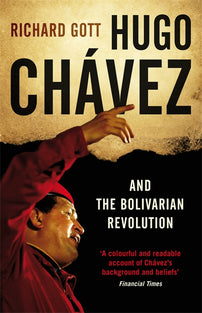
The death of Richard Gott takes from us a brilliant writer and editor who used his talents as a journalist and historian to document and illuminate Latin America’s struggle for national liberation, democracy and social justice. His reports and conversations with leaders of these struggles, from Che Guevara to Hugo Chávez, are riveting examples of the ‘actuality of revolution’.
Richard was especially keen to highlight the tragedy of the ‘Indian’ – that is to say, indigenous - contribution to the resistance and liberation of the peoples of the Pantanal Mattogrossense, the commanding theme of his Land Without Evil, published by Verso in 1993. The Conquistadores obliged the indigenous – whatever the cost – to adopt communal forms patterned after an imaginary Iberian ideal.
Richard’s work as an editor is less visible than his own writings but in some ways more important. He was Features Editor of the Guardian from 1978-89, and Literary Editor of the paper from 1992-94. During this time, he served as an impresario of socialist debate in Britain and, more generally, throughout the English-speaking world. The Guardian’s circulation of between a quarter and a third of a million copies daily was way ahead of any left-liberal rival.
[book-strip index="1"]
Richard had a knack for spotting fresh issues and novel approaches. In the mid-80s, he somehow persuaded his editor at The Guardian to dedicate over a dozen pages of his paper to document the plight of the miners’ villages after many months strike. On this occasion the inspiration came from Raphael Samuel, the advocate of ‘history from below’.
Richard introduced to a wider public the debate aroused by Eric Hobsbawm’s lecture ‘The Forward March of Labour Halted’, which provoked responses from such writers as Edward Thompson, Ralph Miliband, Raymond Williams, Dennis Potter, Juliet Mitchell, Dorothy Thompson and many others. Martin Jacques, editor of Marxism Today, then got Richard’s permission to edit these reactions into a book published by Verso/New Left Books.
Another important debate which Richard took up from Marxism Today was that sparked by Stuart Hall’s keynote analyzing the nature of Thatcherism. These two contributions offered conceptualization and evidence far more telling than anything to be found in a Fabian pamphlet, New Statesman editorial or Guardian op ed. The debate on Thatcherism led to a warning that the demise of Britain’s two-party system was opening the way to ‘Authoritarian Populism’, a prescient concept that owed something to Antonio Gramsci and Walter Benjamin but even more to Ernesto Laclau and Chantal Mouffe. Stuart Hall’s Hard Road to Renewal was a devastating critique of Thatcherism and the Labourism which prepared the way for it. But what was the alternative? Laclau and Mouffe urged that more and better democracy was the answer.
Richard had no time for slavish consistency, viewing it as, in Emerson’s phrase, the ‘hobgoblin of little minds’. But he valued radical opposition to oppression in all its guises. He was an English public school (i.e. private school) rebel from a ‘distinguished’ military family, who became a pacifist. As a cub reporter he learnt Hebrew during a six-month stint on a kibbutz, priming him to become a very well-informed and thorough-going opponent of Zionism.
As The Guardian’s Latin America correspondent in the sixties and seventies he had, if so inclined, an entrée into the region’s agreeable diplomatic life, with its cocktail parties and polo games. But Richard preferred to endure the rigors of the backlands, industrial districts and favelas, where fried maggots and raw cane juice were more likely to be on the menu. I shouldn’t give the impression that Richard was a hairshirt socialist. His options were dictated by his conviction that something truly revolutionary was shaking the continent. The indigenous and multiracial communities were re-discovering/re-inventing traditions and voices. This was the real story, beneath the world of coup and countercoup, which could divert and delay but not destroy the forces of resistance.
[book-strip index="2"]
Richard was an early admirer of Tina Modotti, Wilfredo Lam, Frida Kahlo and the border-breaching surrealists. His marriage to Vivien Ashley, who worked for London’s Serpentine Gallery, deepened his engagement with Latin America’s layered colonialism. Richard found fellow spirits in Prensa Latina’s network for journalists, notably Gabriel García Márquez. The Colombian writer was to accompany the Cuban expedition to Angola – documented in ‘Operation Carlota’, published in NLR - which would play a key role in the defeat of the South African apartheid regime.
The impact of a journalist or editor is not easy to pin down. In Richard’s case it would be interesting to trace the way in which he helped to thaw some of the frozen structures of the Cold War, outside as well as inside Europe. This was an epoch framed by revolutionary Cuba’s Tri-continental congress, on one side, and the planetary triple crisis, on the other. Richard, without being himself a Marxist, stimulated a Marxian intelligence in others.
Book strip #1
-
 30% off
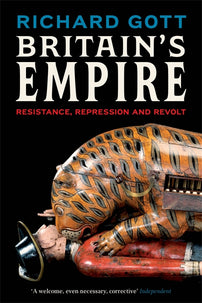
Britain's Empire
-
Book strip #2
-
 30% off
The American Crucible
-
 30% off
The Making of New World Slavery
