
Understanding the Gilets Jaunes
Enzo Traverso on the elusive meaning of France's new horizontal populist movement. Can the Yellow Vests achieve their aims without reference to the red flag?
Enzo Traverso on the elusive meaning of France's new horizontal populist movement. Can the Yellow Vests achieve their aims without reference to the red flag?
Molly Smith on striking in solidarity with sex workers.

At the height of the crisis of the 1970s Tom Nairn published his collection of essays The Break-Up of Britain, which soon became a key intellectual reference point for the Scottish and British left. Post-Brexit, could those same trends that Nairn predicted would lead to the break-up of Britain be returning? In this article, Scott Lavery asks what Nairn can teach us today.

The frequently invoked will of people has been one constant of discussion around Brexit, often used to dismiss the idea of a second referendum. But what do we mean by the people's will? In this article, Peter Hallward looks to the legacy of Rousseau.

"Explain the gilets jaunes? What are we supposed to explain? Give reasons why things happen that we didn’t expect? Such reasons, in fact, are rarely missing."

If biopower is the power to make live and let live, then what is geopower? What if the power that lay at the boundary between life and nonlife was becoming more important in the Anthropocene? McKenzie Wark approaches this question through a reading of recent work by Elizabeth Povinelli.

The struggle for Venezuela will decide the destiny of Latin America, argues Claudio Katz. We must recognise global Right's hypocrisy in its attempts to topple Maduro. But it doesn't act alone: similar forces are alive inside a government that has failed to counteract economic collapse.

Nick Estes asks what it means to be a citizen of a nation that invades your land.
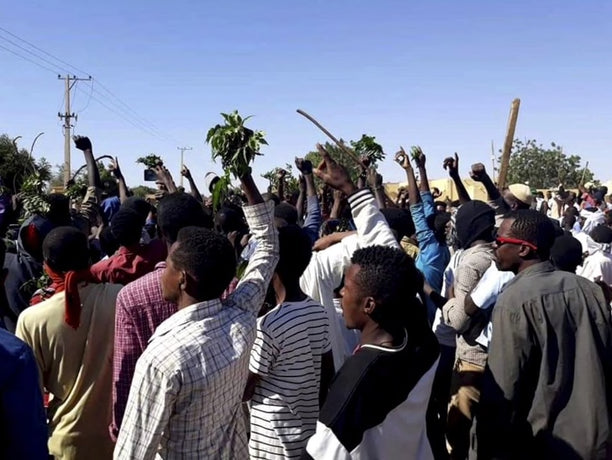
Tariq Sheikh describes the role of youth in the revolutionary movement that, since late-December 2018, has engulfed the country. If this youth revolution succeeds, it will be different from previous experiments, ridding Sudan of the cycle of a coup, followed by revolution, followed by coup.

Jean Tible argues that a living Marxism must be open to contamination in order to break the spell of bewitched capitalism. We must introduce Marx into spaces, times, outlooks and practices that are different from its habitual, white, rationalist ones: "A Marx undomesticated, fuel for struggles. A black, feminist, indigenous, worker, peasant, transgender Marx. A savage Marx."

Meagan Day describes the rapid growth of the Democratic Socialists of America and puts forward an electoral strategy for the socialist movement.

Introducing a free ebook about socialists, elections, and the fight for working-class power.