Which Black Lives?
Cedric Johnson responds to the recent After Black Lives Matter symposium.

This article, along with the symposium, was originally posted on the Urban Affairs Review website. You can find information on the symposium here.
Alex Pretti. Renée Nicole Good. Silverio Villegas Gonzalez. Jean Wilson Brutus. Nenko Gantchev. Parady La. Keith Porter Jr. Geraldo Lunas Campos. All persons who died in the maelstrom of Immigration and Customs Enforcement (ICE) raids initiated by Donald Trump’s second presidential administration. In February 2026, a poster bearing the names and photos of each victim was wheatpasted under the Metra commuter train viaduct near Chicago’s Kenwood Academy High School. Pretti and Good were shot to death in broad daylight in the presence of multiple witnesses. Both were murdered in the city of Minneapolis within weeks of each other in January 2026. Both were slandered by the Trump administration, labelled as terrorists without any evidence by Homeland Security secretary Kristi Noem, ICE commander Greg Bovino and the president himself. No one was arrested or charged in their killings, nor any others listed here, but their deaths sparked rounds of intense protests in the Twin Cities. Such actions were part of a growing wave of anti-ICE demonstrations and marches that had been building for months in Los Angeles, Chicago and many other cities and towns where masked agents descended on communities without warrant and in total breach of recent democratic precedent as well as any sense of basic decency.
In many respects, the protests against ICE raids are a clear extension of Black Lives Matter (BLM) activism. Thousands of citizens have initiated “Know Your Rights” teach-ins and mass meetings, some organized community patrols and whistle brigades to warn neighbours of the presence of ICE agents, others have used social media alerts and mapping to forge early warning systems, many lawyers and ordinary citizens have taken on the role of legal monitors and observers during ICE arrests, and Americans who had never joined a protest before have crowded the streets for marches and mass rallies. Some BLM strategies and tactics of Ferguson, Chicago and Minneapolis have, once again, been embraced by millions.
Citizen resistance to ICE raids also marks a sharp departure from the BLM moment, one where African Americans were deemed the primary, if not sole, victims of carceral power. This was never truly the case, but it was difficult to argue otherwise when so many saw opposition to vigilante and police violence against Black people as a measure of left conscience. Amidst the ICE raids, a new sense of solidarity rather than mere sympathy emerged in spaces of citizen resistance. While BLM demonstrations often emphasized how different the daily existence of non-blacks was from George Floyd and other black victims of police violence, ICE protestors advanced an explicit narrative that described undocumented immigrants as “our neighbours,” “our communities” and vital contributors to the American economy. Anti-ICE protestors ventured beyond the strategies of BLM as well, moving to contain, circumvent and openly disrupt ICE actions. Some citizens bought out immigrant street vendors so they might shelter-in-place and avoid harassment by ICE. Teachers and academic staff refused agents entry into their campuses and classrooms, and restauranteurs and other small business owners denied service and restroom use to ICE personnel.
As he has in other moments, Trump has forced a new set of realities on the American citizenry and a deeper reckoning with the undemocratic, illiberal and violent character of the society. In the first year of his second term, he initiated deep cuts to social spending, dismantled standing commitments to diversity and inclusion in federal policy, laid off thousands of public workers, and ramped up the assault on the nation’s system of higher education, using the threat of rescinding federal funding to induce university-level austerity and undermine one of the few remaining outposts of scientific inquiry, decommodified creative activity, civic engagement and liberal tolerance and debate.
This administration’s attempts to federalize domestic police power is a reaction to the strength of Black Lives Matter protests that helped doom Trump’s first re-election bid, and to the wave of policing reforms that were initiated across most states in the months after the 2020 George Floyd protests. The Trump administration has deployed ICE, Homeland Security and Border Protection officers in violent, chaotic, unlawful, racist and vindictive actions against citizens, targeting larger cities where his wannabe-dictator aspirations have been most loudly opposed. He has even pushed for the use of national guard units, even against the will of sitting governors and constitutional processes, to “clean up” cities like Chicago or any other place that draws his ire. His second term has been filled with dangerous manoeuvres, blatant propaganda and free speech suppression, open graft and cronyism, and petulant antics that have surpassed the mayhem of his first term. While there have been important court rulings against his administration’s legal overreach, so far this advancing authoritarian turn has been impervious to durable constraints. That we are now a nation sinking into an authoritarian nightmare a mere half decade after George Floyd requires sober reflection, serious questioning of the ideological and strategic failures of BLM, and most of all, a return to a majoritarian-left politics, a counterpower capable of placing limits on the current governing alliance of high-technology capital, the MAGA administration, the Republican Congressional majority, a reactionary Supreme Court, white nationalists, the right-wing blogosphere and the corporate Democrats that comprise the bulk of the listless political “opposition.”
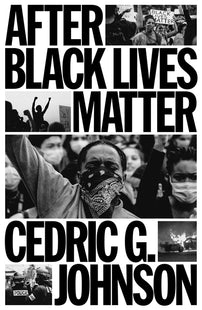
I certainly could not anticipate this moment when After Black Lives Matter was published in spring 2023 but appreciate this chance to revisit and address some of the book’s arguments, questions and limits in concert with the colleagues who participated in this forum. I want to thank Toussaint Losier, Joseph G. Ramsey, Brendan McQuade and Timothy Weaver for taking the time to read my work and offer their thoughts and criticism. This is something increasingly rare in our times as some academics have come to view spirited criticism as a violation of contemporary expectations of adoration and fandom, rather than the lifeblood of intellectual life that it should be. Each of their contributions has given me much to think about. For the sake of readers, I’ll table some of the minor issues raised by my interlocutors, like quibbles over what books I should have incorporated in my analysis. If I did not cite or engage someone’s favoured sources, it was likely I just did not see those analyses as germane to my own or worth adding to the many other works my book engages.
In what follows I address some of the challenges, correctives and affirmations of my work raised by the contributors to this forum. First, I reiterate the origins and motive for writing this book. Second, I take up the errant charge of “class rigidity” and how that claim not only misrepresents my work but also deflects attention from the book’s critique of Black Lives Matter. Third, I discuss the underclass myth as a primary ideological justification for welfare rollback and the carceral expansion, and how it served to unite culture war conservatives and neoliberals on the Right. I argue that while this notion originated as a form of cultural racism, authored by Great Society liberals no less, the underclass myth eventually became an adaptable insult of the poor, finding converts across the colour line and building mass consensus around an anti-welfare and pro-carceral politics. Fourth, I take up the problem of philanthro-capitalism and its underacknowledged patron-client connections to Black Lives Matter and abolitionist politics. Finally, I turn to the book’s prescriptive dimensions and revisit the prospects of public works as a means of achieving public safety through the expansion of the social wage and creation of greater economic security.
Why I Wrote After Black Lives Matter
I did not set out to write a comprehensive treatment of Black Lives Matter, even though some reviewers have characterized my work in that way (Kang 2023). To paraphrase Hegel, the owl of Minerva only beats its wings when the evening sun goes down, so it is difficult to write about a political phenomenon in any comprehensive manner when it is still actively unfolding. As noted in the introduction, this book was intended as a critical engagement with the thought and politics of Black Lives Matter and took shape slowly as I grew increasingly dissatisfied with prevailing modes of discussing and addressing the nested problems of police violence and mass incarceration. Paradoxically, the growing strength of Black Lives Matter made it more difficult to talk about actually existing black life with any honest attention to detail and empirical integrity. Many academic colleagues were swept up in the moment, and as I quickly discovered, unwilling to even countenance facts that contradicted their belief that the entire black population was under siege by police and that blacks as such were the primary, if not sole, targets of repressive policing and incarceration. The New Jim Crow analogy, popularized in the eponymous book by law professor Michelle Alexander, quickly came to dominate seminars, conferences, podcasts and social media threads. The problem for me was not that these arguments did not cast some important light on the problem, but that too much of the broader demography and social reality of carceral power was ignored, and in the process, both the class dimensions of black life were dismissed and the opportunity for broad solidarity beyond temperamental liberal sympathy with black oppression was being missed. After Black Lives Matter criticizes what I suggest is a specifically Cold War-descendant focus on racial inequality that has functioned as common sense in a time of neoliberal triumph and heightened alienation and economic anxiety. Against this popular lore, my work sought to illuminate the concrete historical conditions that gave birth to the carceral expansion and the modes of policing that Black Lives Matter protests and local organizing sought to address.
In certain contexts, particularly in the urban areas that were the main theatres of Black Lives Matter demonstrations, a race-centric framing captures much of the social reality of police abuse and carceral targeting. In a city like Chicago, for instance, we know that black working-class residents bear the brunt of carceral power. Between 2008 and 2015, the Obama years when Black Lives Matter took shape as a national phenomenon, black Chicagoans accounted for 74% of those shot by police. During the same period, black Chicagoans were the overwhelming majority (72%) of those persons subjected to harassment stops, police detainments that do not result in an arrest (Davey and Smith 2016). These numbers are especially stark in a city evenly divided among blacks, whites and Latinos, with each group making up roughly one-third of the city’s population, respectively.
When we pause to ask which Black people are most often the targets of police wilding and routine carceral power, a different reality comes into view, namely, that policing has become the primary means of managing relative surplus population in the aftermath of welfare state retrenchment. After Black Lives Matter describes the lives of several well-publicized black victims of police violence, e.g. Freddie Gray, Laquan McDonald, Alton Sterling and others, and with few exceptions, a common thread unites them—and, despite the commonsense that came to dominate public discourse, the most crucial thread was not race. As I argued in After Black Lives Matter, “We can see the race of victims in those videos that make their way into our social media feeds— but [their] situatedness in an underground economy is essentially invisible . . . Their common position among the most submerged elements of the working class is not as readily legible for some audiences” (Johnson 2023, 51). At the time of their fateful encounters with police, most were unemployed, impoverished, precarious and dependent upon some combination of state assistance or informal work to survive. This is true as well, when we expand our view beyond the urban context to victims of carceral power in the nation’s hinterlands, small towns, and cities and regions where Blacks are less present. Slogans-cum-analyses like “The New Jim Crow” and “Black Lives Matter” have been less helpful when we turn our gaze away from the latest viral video and look at national trends. There are many incidents of police violence and killing that are not recorded, and others that are documented by cell phone cameras but not circulated on social media when those acts of violence do not conform to the dominant narrative of black oppression. “There is clearly a racial dimension to the contemporary carceral state,” as I note, “but this reflects the composition of the working class, whose most dispossessed segments are disproportionately African American and Latino” (C. G. Johnson 2023).
The problems confronting working-class Blacks mirror, often in intensified ways, the problems confronting the labouring classes writ large, but much of the literature on policing and mass incarceration since the aughts has cohered around not just a “Black people have it worst” disparity logic but also, the falsehood that all Black people experience American society in the same ways. Hence, Black exceptionalist discourse, the contention that policing and mass incarceration are problems uniquely and for some extreme camps, exclusively experienced by African Americans, is a primary target of After Black Lives Matter. As someone who has been living and studying Black political life for decades, I felt it necessary to point out the limitations of this line of thinking, how it obscures social reality and reproduces established race leadership dynamics and patron-clientelist relations, albeit with greater representation of black women and LGBTQ voices. The power of BLM yielded some meaningful technocratic reforms but ultimately sidelined those analyses and strategies that might unite popular constituencies around legislation capable of checking carceral power and delivering real progress for millions of Americans who have been abandoned in the wake of deindustrialization and the evisceration of the social wage.
The Joys of Conjunctural Analysis
The most consistent positive response to the book over the last few years has been praise for its conjunctural analysis, coming to terms with the exact balance of forces at play in both the making of mass incarceration in the closing decades of the twentieth century, and the popular campaigns and movements arrayed against carceral power in recent times (C. G. Johnson 2023, 71–78; Jefferson 2021, 24–32). Ramsey, McQuade, and Weaver, as well as other reviewers beyond this forum laud the book’s keen sense of historical contingency. With that said, let us address the charge of “class rigidity” levelled in varying ways by McQuade and Losier, who both offer defences of the race-centric interpretation of the carceral crisis that unites much contemporary abolitionist and criminal justice scholarship.
If by class rigidity, what is meant here is an unwavering commitment to the interests of working-class people, and stony opposition to all manner of dispossession, exploitation and authoritarianism meted out by capital, then I am guilty as charged.
Their criticisms, however, suggests some inflexibility of interpretation on my part, and in particular, an alleged unwillingness to see the social consequences of racism, especially as it relates to carceral power. McQuade claims my “conceptualization of class is rigid and reductionist and one can be cleanly separated from race, which is reduced to a purely ideological concept.” He is correct in the sense that I agree with a few generations of left intellectuals that race is ideological and falsified by science, but as I make clear, “the specious character of race does not make it any less real in terms of social power” (C. G. Johnson 2023, 36–37). “Others may choose to do so,” I contend elsewhere in the same chapter, “but there is no need to debate the fact of persistent and pervasive antiblack discrimination in contemporary US society, such as has been documented through test studies of hiring practices, showing that even ‘Black sounding’ names of job applicants can lead to unfair treatment and consideration, or studies of consumer spaces like nightclubs demonstrate how Black men are routinely denied entry, or charged a higher rate than white patrons, even when wearing identical attire.” Of course, pointing out that racial discrimination exists and is a powerful force, often defining lives and politics across generation in a variety of contexts is not the same claim as the more metaphysical idea that something called “race” structures human life in the same way as class (here defined as relationship to means of production).
[book-strip index="1" style="buy"]
I do not treat BLM protests as somehow lesser concerns or distractions from anti-capitalist struggles. “Far from being distractions from putatively more important issues,” as noted in the introduction, “popular struggles against policing and mass incarceration are addressed to core dimensions of consumer capitalism and neoliberalization . . . As this book details, policing as we know it exists for the defence of property relations, for the protection of retail and touristic spaces of consumption and processes of metropolitan real estate valuation and development, and for the regulation of relative surplus populations who are deemed threats to this accumulation regime” (C. G. Johnson 2023, 20). These opening theoretical claims and keen attention to local contexts, real historical actors and shifting conditions are reflected throughout the book in discussions of slave patrols, the formation of police departments in early industrial cities, the transformation of urban space after World War II and the modernization of policing in places like Los Angeles and Chicago. How is any of this “class rigidity”? The answer of course is that for scholars like McQuade and Losier, if one does not elevate race to a metaphysical form of causation beyond concrete instances of discrimination, extra-legal violence, etc., then one is inherently guilty of class rigidity.
The “race vs. class” debate reached a fever pitch during the 2016 Bernie Sanders campaign for the Democratic presidential nomination, but it seems both intractable, and for me, an excruciatingly boring conversation to have at this point. As Barbara Fields makes plain, race and class are concepts of a different order (B. J. Fields 1982, 151; K. E. Fields and Fields 2014). Race and class do not refer to the same social and historical phenomenon, and one cannot be substituted for the other. And I would add, nor should they be conflated through neologisms like the “materiality of race” “racial capitalism” or worst of all, the “race is class” claim. At this point, I have become accustomed to the charge of class reductionism in social media threads, and conversely, to the periodic messages I get from battle-worn sectarians who quarrel with my work for its “political Marxism,” and what they see as too much nuanced attention to historical specificity, actual interests and social contradictions. In a time of resurgent culture war, mass anxiety, academic labour redundancy, AI-generated content and cancel culture, social media spaces are where serious intellectual engagement gasps its dying breaths. I have come to expect “class reductionist” talk there, but I am disappointed and underwhelmed seeing that characterization made in this forum.
This charge of class reductionism is especially strange and misdirected now when our own historical moment demands an anti-capitalist class analysis. Since the publication of After Black Lives Matter, we have witnessed the growth of billionaire wealth globally at a rate three times faster than the previous five-year average, and at the time of this writing, the combined wealth of billionaires stands at the highest level in human history at $18.3 trillion (Resisting the Rule of the Rich 2026). Such massive concentrations of wealth and power have accelerated while over half of humanity lives in poverty. The insistence that this forest should be ignored for the trees of particularistic claims about which Americans have it worst is analytically limited and politically counterproductive.
The notion of class rigidity also belies how the book approaches class. Throughout, class is treated as a social relation and process of capital accumulation, not as a behaviouralist variable or unitary identity as such. And while acknowledging the central division between capital and labour at the outset, the analyses in the book’s substantive chapters are trained on contingent, embodied manifestations of that broader class divide. “Class interests are not strictly economically determined, but shaped through historical processes and politics,” and thus, “classes are not without their own internal social, political, sectoral and other divisions and the situated-class experiences of various historical protagonists—the urban poor, politicians, middle-class gentrifiers, beat cops, union bureaucrats, assembly-line workers, activists, real estate developers, combat veterans, etc.—are foregrounded throughout this book” (C. G. Johnson 2023, 20). That all being said, if there are places where my reading of American history and politics gives the sense that economic structures and powerful elites determine aspects of social, political and cultural life that is simply because in certain junctures, they do.
There are racial disproportionalities in who is routinely harassed by police, arrested, prosecuted and convicted in the U.S. criminal justice system (Clark et al. 2025). I do not ignore nor diminish this fact as McQuade and Losier claim. Quite the contrary, as I note in the introduction, black citizens are “more likely to be surveilled, assaulted and killed by police,” and “also more likely to be unarmed” during those encounters (C. G. Johnson 2023, 20). Again, which black citizens are we talking about? For McQuade and Losier, all that seems to matter about these victims contextually and sociologically is that they are black. One could be forgiven for assuming then that just as all that matters about us is our blackness when we are surveilled, assaulted, and killed so too is it all that matters when we are not. Indeed, the prevailing anti-racist discourses criticized in After Black Lives Matter draw little distinction between the experiences of black professionals, celebrities, wealthy entrepreneurs and the investor class, and the most submerged elements of the working-class, service industry employees, contingent labourers, the unemployed and unemployable.
McQuade’s alternative to my materialist-conjunctural analysis of the conditions that delivered mass incarceration in our times, is not particularly convincing. [1] If anything, the genealogical metanarrative of racial oppression he provides contradicts the spirit of the racial formation theory he embraces, which was after all offered during the 1980s as an antidote to race-essentialism and partly informed by Gramsci’s arguments regarding the struggle for hegemony (Omi and Winant 1986; Winant 1994). When McQuade claims that in the U.S., “racialization is rooted in the codification of racial hierarchy in law following Bacon’s Rebellion, when race was legally codified to drive a wedge between two types of bonded labourers, ‘white’ indentures and ‘black’ slaves,” he is correct in terms of what happens in Virginia after the passage of the 1705 slave codes, but generalizing directly from that historical context to the twenty-first century is troublesome, let alone more than three centuries later. Building on that illustration, when he contends that “deeply rooted and intertwined processes of labour formation and racial formation developed through time, shaping successive regimes of accumulation and state forms” we run the risks of reading the complexity and contingency out of history, especially in regard to the relative meanings, power and hegemony of racist ideology at various junctures—including the juncture under consideration in After Black Lives Matter. His analysis is a selective genealogy rather than a critical history. [2]
Along the same lines, we should be leery of the conclusions that can be drawn from highly abstract discussions of racial formation from the colonial period through our own times, which reads like a smarter version of the 1619 Project, most of all because it encourages ahistorical judgements about the relative implications of race in discrete contexts, and even less helpful conclusions about how people lived and what their motivations and political lives were like. For instance, the “wages of whiteness” claim evoked by McQuade tells us very little about the substantive political choices thousands of workers made during the Reconstruction period and after. [3] Indeed, some white workers united with the merchant-landlord class and industrialists under the banner of white supremacy, but others waged strike actions with black workers, e.g. the Knights of Labour campaign to organize black and white sugar cane cutters in coastal Louisiana, which was brutally repressed in the 1887 Thibodaux Massacre, or the bi-racial organizing that resulted in the 1892 New Orleans General Strike. Still others found common cause with newly emancipated blacks forming interracial governments such as the local Fusionist regimes in North Carolina, most notably in Wilmington, the Readjuster government in Virginia, and the short-lived Republic of Jones County, Mississippi and other Reconstruction experiments in interracial democracy (Arnesen 1991; Rosenberg 1988; Arnesen 1998, 2014).
This longer history, while more complex than sweeping characterizations of transhistorical racism would suggest, is not as relevant to the carceral expansion of the closing decades of the twentieth century, which was precipitated by the collapse of the New Deal coalition, the dismantling of the welfare state, and the scramble of local and national politicians to find a cheap solution to the joblessness, social misery and neighbourhood instability produced by federal divestiture, capital intensification and globalized production. As noted in the book, the antebellum slave patrols, the Thirteenth Amendment’s “forced labour” clause, and New South convict leasing scheme should be discussed alongside other historical phenomena like penal colonies, nightwatchmen, “London-style” police departments, frontier sheriffs, the Temperance movement, vigilantism and mob justice, the architectural evolution of jails and asylums, which were all a part of the longer development of the repressive state apparatus. To be sure, all these histories—and others still— are genealogically important in understanding certain contours of American policing and the coercive police power more broadly.
Rather than such genealogical excavations—be they of McQuade’s preferred early modern administrative science, antebellum America or even the Great Migration—our mass incarceration problem has more recent contingent origins and a metanarrative of racial oppression obscures much more than it clarifies. In their respective defences of the centrality of race, McQuade and Losier both seem to sidestep the empirical matter of majority-white prison demography for much of the nation’s history. The fact remains that throughout the twentieth century, the vast majority of prisoners in the US were white, and whites would still comprise a 60% majority when Ronald Reagan was sworn in as President (Langan 1991, 5).
In passing, both McQuade and Losier acknowledge the changes within black life since the defeat of Jim Crow segregation, but they diminish the political and social significance of what comes next. What we witnessed in the decades after major Congressional reforms that banned discrimination in public accommodations, elections, college admissions, immigration, and housing, and the nominal extension of the New Deal social safety net was truly revolutionary in terms of liberal democratic governance. We saw the restoration of black citizenship rights, the unprecedented expansion of the black middle and upper classes, and major reductions in black poverty. These were not mere civic or demographic shifts, but a societal transformation that saw the unprecedented integration of African Americans into mass culture, various industries, local, state and national politics, public employment and social life.
At the same time, the trajectory for large segments of black workers was headed in the opposite direction. The story of the carceral expansion begins with the postwar urban crisis, in the first social dislocations produced by manufacturing labour force contraction, and their visible, dire effects for urban life. Just as African Americans gained control of municipal government in many America cities, those same locales faced common problems of intensifying black and Latino unemployment and real crime. During the seventies and eighties, black publics and governing regimes in cities like Washington, D.C., Detroit, Gary, Atlanta, and New Orleans were desperate to find solutions to rising homicide, property crime, drug addiction and the general deterioration of neighbourhood life. As others have noted, ramped-up policing, grassroots “tough-on-crime” organizing, zero-tolerance policies, and mandatory-minimum sentencing rules for drug and violent offenses emerged as ready solutions to growing instability and deepening inequality, even among majority-black constituencies.
In insisting that my work abide the prevailing race-centric sensibility that defines Black Lives Matter discourse as well as a great deal of academic work on carceral power, McQuade and Losier diminish the historically-grounded manner in which I do address race and class, especially the origins, cultural power and promiscuity of the underclass myth, which is addressed throughout the book. This is a major oversight on their part.
The Underclass Myth
I appreciate Weaver’s urging to explore the difference between neoliberalism and conservatism more fully. “In my own work,” he writes, “I’ve come to the tentative conclusion that it makes sense to separate out neoliberalism and conservatism and thinking about them as distinct political orders, sometimes at odds; at other moments working together towards a common goal.” I agree and have drawn clear distinctions in some of my earlier work that was more focused on urban neoliberalization. [4] For a time, the New Right was able to house a diversity of political tendencies, but on certain issues like the legalization of “chemical abortion” and cannabis, the interests of corporations and free-market libertarians have at times conflicted with the beliefs and interests of Christian fundamentalists, anti-drug crusaders, misogynists and the like. The underclass myth, however, has united these different market fundamentalist and Christian conservative factions, combining the former’s disdain for the welfare state, the latter’s commitments to patriarchal family values, and the racism and class prejudice of both sides.
As I note in Chapter Two, the “middle class” and “underclass” are two powerful myths that attained hegemony during the Cold War years, but the underclass “would come to be reviled from the sixties onwards as a social burden on the middle class” (Johnson 2023, 87). “[I]f the middle class came to be understood as white, suburban, law-abiding, virtuous, affluent, property owning, hardworking, autonomous and Republican,” I argued, “then the underclass was black and brown, urban, poor, criminal, dysfunctional, dispossessed, lazy, dependent, and apathetic” (Johnson 2023, 89). As detailed in After Black Lives Matter, these popular fictions of class were overly broad, stereotypical and obscured the actual social reality and experiences of millions of Americans during the Cold War years. Chapter Two also traces the origins of this culturalist turn in thinking about class through the work of two influential liberal figures of the early sixties, architecture critic and anti-urban renewal activist Jane Jacobs, and professor and White House appointee, Daniel Patrick Moynihan (Johnson 2023, 108-121). “The thread that binds both of their arguments is culture—either the culture of the middle- class neighbourhood that civilizes, or the alleged culture of the poor that breeds barbarism,” noting that “Where Jacobs decouples public safety from economic inequality, Moynihan makes a similar manoeuvre, even while focusing explicitly on the most visible manifestation of inequality in sixties American urban life: the condition of the black urban poor“ (Johnson 2023, 117).
The underclass originates as a kind of cultural racism during the Great Society, a statement of black inferiority directed at the poor, but shorn of overt biological claims. Though sympathetic to the plight of the black urban poor, Daniel Patrick Moynihan’s 1965 report, The Negro Family: The Case for National Action embroidered a narrative of cultural pathology and maladjustment, being careful not to emphasize structural determinants or deeply redistributive solutions for fear of losing Republican Congressional support for anti-poverty legislation (T. Reed 2015; see also, Geary 2015). As noted in After Black Lives Matter, “Moynihan’s thesis evolved within the context of two overlapping social conflicts. The first, the battle to overthrow Jim Crow segregation, was primarily sectional and openly political. The second, black urban poverty and unemployment, was national and had its roots in peacetime industrial demobilization and changes in the forces of production” (Johnson 2023, 118-119). Rather than addressing racial discrimination and political economy, Moynihan’s analysis and prescription would focus on social reproduction and the alleged cultural dysfunction of the black poor. “At the heart of the deterioration of the fabric of Negro Society is the deterioration of the Negro family,” Moynihan claimed. And while the “white family has achieved a high degree of stability and is maintaining that stability,” he contends, “[b]y contrast, the family structure of the lower-class Negroes is highly unstable, and in many urban centres is approaching complete breakdown” (Moynihan 1965, 5).
The conservative aspects of Moynihan’s thesis would grow larger and more influential over the decades. Moynihan’s imagery of the black single mother in desperate need of public assistance was taken up on the presidential campaign trail by Ronald Reagan who embellished a case of welfare fraud in Chicago. That case involved Linda Taylor, who was legally white, but racially androgynous (Levin 2019). In his stump speeches, Reagan appealed to racist nostalgia for the world before the Great Society and sixties urban rebellions. He exaggerated the extent of Taylor’s fraudulent actions, and instead of sympathy, his words inspired anger and resentment from aging and middle-class whites. Reagan was defeated in previous attempts to win the Republican nomination, but his welfare queen mythology gained traction in the wake of the oil shock-induced recessions of the middle and late 1970s, handing him victory over incumbent Jimmy Carter in 1980. Throughout the Reagan-Bush administration, the underclass rhetoric was used to attack the anti-discrimination and anti-poverty initiatives of the Great Society without necessarily engaging in explicit expressions of racism.
As the physical and social conditions in many cities deteriorated, black publics demanded relief from the crisis of crime, violence, drugs and disorder that increasingly besieged black working-class neighbourhoods (Jay and Conklin 2020; Forman 2017). In this context, versions of the underclass myth were rearticulated by the black professional-managerial stratum and working-class residents themselves. During the eighties and early nineties, black activists, especially those in old guard civil rights organizations were among the first to raise the alarm about police brutality, discriminatory traffic stops and rising incarceration rates of black men. Theirs was not the only response to the carceral expansion of the Reagan-Bush years, however, as many more citizens, clergy, writers and intellectuals, and neighbourhood activists responded with black male-endangerment discourse, evoking the “conspiracy to destroy black boys,” and pushing initiatives aimed at moral rehabilitation as a means for staving the carceral crisis (A. L. Reed 1999; Alexander-Floyd 2003; Legette 1999).
Such black expressions of underclass ideology are almost always pitched as truth-telling and tough love, but the ideological freight is no different from similar expressions articulated by the New Right. When HOPE VI legislation was passed under Bill Clinton’s leadership, the consensus among corporate Democrats and black elites was that public housing was a failed experiment. Likewise, when a courageous band of local forces were gathering in the aftermath of the Hurricane Katrina disaster to defend those New Orleans public housing complexes not yet bulldozed or redeveloped, they were opposed and defeated by a multiracial governing elite. Infamously, then city councilman (and later convicted felon) Oliver Thomas warned when speaking on the plight of displaced public housing tenants, "We don't need soap opera watchers right now,” trading on a common slight against the poor as universally shiftless and unwilling to work for a living. This was especially insulting given that many public housing residents worked in the city’s low-wage tourism economy but still could not make rent. After Black Lives Matter addresses some of the most pernicious expressions of underclass mythmaking, including the 1995 Million Man March’s message of black male atonement and the need for restored patriarchal authority, Bill Cosby’s bizarre and mendacious 2004 “Poundcake speech,” Barack Obama’s recurring Father’s Day addresses, and other instances where we can find African Americans, elite and mass, claiming that the black poor suffer from self-sabotage, lack of work ethic, disrespect for authority, sexual profligacy, and irresponsible parenting (C. G. Johnson 2023, 191–201; Patterson 2006; Auletta 1982; Dalrymple 2001; Jencks and Peterson 1991; Wilson 1987, 1993).
It should be noted that the tropes we now associate with the underclass—shiftlessness, self-sabotage, alcoholism and drug abuse are remarkably similar to much older characterizations of the labouring classes of all racial ascriptions—insults intended to admonish noncompliant and unruly workers, while disciplining and cajoling others, and ideologically distinguishing ruling classes from the ruled. As living conditions for many Americans have worsened under neoliberalization and globalization, moreover, we can find broader deployments of underclass pejoratives beyond the black ghetto. Epithets like “white trash,” “trailer trash,” “hillbillies,” “meth heads,” “illegals” “the people of Walmart,” etc., carry the same class prejudice, and rather than emphasize the decline in real wages, the dismantling of the social safety net or other structural dimensions of the current moment, such rhetoric takes us back to the familiar ground of blame-labeling the most dispossessed, regardless of color or national origin (Wacquant 2022; O’Connor 2001). During the 2016 Presidential election cycle, a version of the underclass narrative was targeted at white workers. [5] On the Left, they were depicted as unrepentant racist and MAGA-crazy rubes. We were told that these were “low information voters,” who sided with a reactionary billionaire against their material interests, without much discussion of how they perceived their own interests. They were a “basket of deplorables” according to then Democratic front-runner and former First Lady Hillary Clinton. On the political Right, current Vice President J.D. Vance’s 2016 memoir Hillbilly Elegy, served up his log cabin coming-of-age story among the rural, white lumpen that traded in all the same stereotypes of irresponsibility, criminality, addiction and violence that were once reserved for the ghetto poor. [6]
The underclass myth has helped millions of Americans to reconcile the postwar promise of middle-class consumer life with the deteriorating conditions that have accompanied capital intensification (automation, computerization and now artificial intelligence), the ensuing loss of domestic manufacturing jobs, globalized production, and the demise of the old New Deal social wage. Within this context, the inner city, a concoction of postwar suburbanization, became a poignant symbol of broader societal collapse and anxiety with the black urban poor serving as a ready scapegoat for all that was wrong with urban life and the direction of the country more generally. The underclass notion has its origins in anti-poverty liberalism and was appropriated effectively by the New Right, but the “underclass” is a more promiscuous concept and has evolved into a popular explanation of poverty and hardship that can be applied widely to different populations regardless of race. It is a myth that is routinely deployed to justify arrests, police harassment, opioid addiction and overdose deaths, homelessness, evictions and joblessness.
Black Lives Matter and the Humanitarian-Corporate Complex
Within the specific context of police and vigilante violence, Black Lives Matter insisted that blacks deserved equal protection before the law, that is, direct and meaningful enforcement of the U.S. Constitution, an incredibly worthy goal and one worth fighting for, but also an inherently liberal goal. Losier’s essay challenges my work in helpful ways, asking what exactly Black Lives Matter as a phenomenon was. He is not persuaded by my characterization of BLM as a militant expression of racial liberalism, but he does not provide an alternative interpretation. Losier also contends that After Black Lives Matter “misses the chance to offer a fine-grained assessment of BLM and its limitations, offering a critique that while incisive at key points fails, much like the movement itself, to live up to its full potential.” I appreciate his pointed criticism, and the contextual details he provides in response to my discussions of the 2015 protests in Ferguson and Chicago. There is certainly much more to be done in mapping and documenting BLM activism nationally, and so many local chapters, campaigns, strategic debates and neglected voices remain to be explored. As I note in After Black Lives Matter, some like filmmakers Sabaah Folayan and Damon Davis in their work, Whose Streets? and Kristiana Rae Colón’s stage play Florissant and Canfield, in differing ways provide keen studies of the voices of Ferguson residents and the local activist sub-culture that took shape after the killing of Michael Brown (Johnson 2023, 382-383). That said there are other problems that local territorial knowledge, however unique and insightful, simply cannot resolve for us.
There is value in local stories, insider-knowledge and autoethnographic accounts, but to date, much of the literature on BLM in that vein has remained in the mode of memoir and hagiography (Cullors et al. 2018; Cullors 2021; Garza 2020; Lebron 2023; Ransby 2018). Should we expect an auto-critical literature on Black Lives Matter and anti-carceral struggles more broadly, given the loyalty and personal relations governing activist networks and adjacent academic cliques, and given the ways cancel culture has contorted how so many think about intellectual criticism these days, to say nothing of the careers in the humanitarian-corporate complex at stake? It has been seventeen years since the vigilante killing of Trayvon Martin and it does not seem that this kind of critical, reflective literature is forthcoming, at least not from the ranks of BLM faithful. More important, why should we assume that the activist cadre are the only authoritative and informative voices in movement activity that has involved millions of participants from all walks of life?
There are ideological and structural deterrents to the emergence of a vibrant, reflexive criticism from various abolitionist and Black Lives Matter camps. As my comrade Adolph Reed, Jr. has argued, “antiracism is not a different sort of egalitarian alternative to a class politics but is a class politics itself,” and more bluntly, it is “the left wing of neoliberalism in that its sole metric of social justice is opposition to disparity in the distribution of goods and bads in the society, an ideal that naturalizes the outcomes of capitalist market forces so long as they are equitable along racial (and other identitarian) lines” (Reed Jr. 2016). Reed offers a necessary intervention into contemporary debates, which sadly perpetuate old Cold War thinking when race came to be treated as the fundamental social cleavage by journalists and social scientists, and during a time when class struggle had been brutally repressed and banished from legitimate public debate. When Reed says antiracism is a class politics, he is referring to two tightly-related aspects, the ideological manoeuvre of liberals during the Cold War and since, which separates race from capitalism, and the corresponding political tendency of the same liberals and even some professed socialists to prioritize anti-racist posturing, especially things like the reparations demand, over universal policies, like public works and the decommodification of housing and other essential needs, that is, policies that might benefit the working-class majority.
Such democratic socialist reforms constitute the grounds for building even broader popular opposition to the carceral regime, but the public relations manoeuvres and investments of corporations, non-profits, and cohorts of BLM activist and scholars amid the George Floyd rebellion have promoted neoliberal public-private partnerships and incremental reforms. In June 2020, corporations doled out upward of $2 billion in support of anti-racist causes. Apple pledged $100 million for the creation of a racial equity and justice initiative. Warner, Sony Music, and Wal-Mart each committed the same amount respectively. YouTube announced a $100 million initiative to promote black media voices. Google committed $175 million in support of black entrepreneurship. Hundreds of companies posted pro-Black Lives Matter content for Blackout Tuesday. After Breonna Taylor, a 26-year-old emergency medical technician, was shot to death by police executing a no-knock warrant in Louisville, media mogul Oprah Winfrey paid to have twenty-six billboards of Taylor displayed throughout that city. During the George Floyd summer, video streaming services like Hulu, Netflix and Amazon Prime featured curated lists of Black cinema, televisions series and documentary film in a manner usually reserved for Black History Month observations. General Motors, Best Buy, Lyft, Amazon, Mastercard, the National Football League, Nike, Spotify and other companies extended employees a paid holiday for Juneteenth, before the day was made an official federal holiday in 2021.
Losier and McQuade draw an overly sharp distinction between the liberal origins and tenor of BLM, and the more abolitionist left wing they align with and admire. To be sure, there are substantive strategic and ideological differences among BLM activists, but this valorisation of the abolitionist wing actually obscures their connections to the same patron-clientelist networks that have been responsible for the reproduction of BLM nationally. These relations did not begin amidst the 2020 mass protests and were not simply an instance of co-optation as such. BLM was from the very beginning, an offspring of social media, existing anti-carceral campaigns and foundation largesse, and such linkages were enhanced by the corporate philanthropy provoked by the killing of George Floyd. The Open Society Foundation’s Soros Justice Fellows, the Marguerite Casey Foundation’s Freedom Scholars program, the MacArthur Foundation’s Abundance Movement, among others have provided seed money, networking, lucrative fellowships and grants to prominent academics, activists, journalists and grass-roots organizations operating in the BLM-abolitionist milieu. Such relations have been so common and extensive that it would not be hyperbolic to conclude that abolitionism is a form of foundation-socialism, a nominally redistributive project that is comfortable promoting the end of police and prisons but never foregrounds the abolition of private property and the wage relation, mainly because it cannot bite the philanthro-capitalist hands that feeds it. Losier, McQuade and anyone with connections to BLM organizations and the abolitionist left are well aware of this clientelism, but I guess to point out such cozy relations between these ostensible left forces and the affable face of the ruling class is class reductionist.
[book-strip index="2" style="buy"]
As neoliberalization has hollowed out the old welfare state, the humanitarian-corporate complex has grown increasingly powerful and influential in American life, especially as a means of addressing various social problems such as poverty, educational disparities, housing and homelessness, and mass incarceration. Nonprofits, charitable foundations and corporate forces have rushed in to capitalize, taking over the provision of formerly public goods like health care, housing, and education. This problem was especially acute in places like New Orleans during the Katrina disaster where nonprofits played an outsized role in the city’s recovery and reconstruction and helped to facilitate the closure of “Big Charity” hospital, the demolition of the remaining public housing units, and the transformation of the city’s public school district into the first all-charter system in the nation (Arena 2012; V. Adams 2013; C. Johnson and French-Marcelin 2025; C. Johnson 2011). Black Lives Matter emerges in this context of neoliberalization, and the hashtag’s creators, numerous nationally recognized figures from Ferguson and other protests, as well as some local restorative justice efforts are intimately connected to the humanitarian-corporate complex. This does not mean that everything activists connected to nonprofits do is untoward or manipulated, on the contrary in fact. The explosion of this trend does not reflect capture or bad faith but practical liberal alignment. Nevertheless, given the ways non-profits, wealthy individuals and charitable foundations have helped to further neoliberalization, why would we expect these financial and organizational liaisons to produce anything resembling a real anti-capitalist politics?
What is to be Undone?
Inspired by those advocating the defunding the police, I called for even more substantial redistribution. Rather than only focusing on police budgets, I argued that citizens should contest the extensive public investments in private-sector development that have been normalized and expected by corporations and real-estate developers under neoliberalization, e.g. tax-increment financing, tax-breaks, land grants, publicly financed infrastructure development, police and fire protection, zoning variance, etc. My reasoning was two-fold, defunding the police did not have majority support during the George Floyd summer and has even less so at the time of this writing, and police budgets are not the only public-cost burden that should be targeted if we hope to address deep social inequality. Some have read these speculative and prescriptive portions of After Black Lives Matter rather uncharitably, as if the few policy strategies I propose are offered as some cure all, rather than an invitation to collaborative thinking. After all, these problems will be solved in the streets, in city council chambers, in statehouses, in Congress we would hope, that is, through the broader processes of political mobilization, coalition-building and policymaking. I wanted to offer some provisional solutions that took up broader structural inequality and that had some proven historical precedence.
I settled on state-funded and state-managed public works because of how highly impactful that strategy was during the Depression years, and how programs like the Civilian Conservation Corps and the Works Progress Administration with its Federal Writers Project provide us with a glimpse of how labour organized outside of the profit motive might produce public goods and broader societal value. Most Americans living today have only experienced the privatized version of public works that the federal government adopted after the Second World War, a strategy where the state awards contracts to private companies to construct infrastructure, transit, housing and other projects. After Black Lives Matter makes the case for expanding the social wage, decommodifying basic human needs like health care, education, dependent care, transportation and housing to greatly reduce inequality, precarity and alienation that define our current society. Although it is common for many in our time to bristle at the proposal of universal rather than targeted policies to address inequality, I have never seen these approaches as incompatible. Furthermore, attempts to initiate universal policy are not inevitably doomed by racism or other forms of prejudice in terms of administration. This was not the case for the public works projects of the Depression period, which were integrated, and should not be the case some ninety years later.
My decision to focus on Chicagoland and metropolitan-scaled solutions stemmed from my own residence in Chicago and the city’s status as a progressive centre of BLM activism, in addition to the grim political context of completing the book, the waning years of Trump’s first administration and the start of the Biden presidency. Neither administration inspired confidence in the prospects of national-level public works or any other progressive social policy. Our current political moment is demoralizing to say the least, but there are signs of possibility throughout the land. Alongside popular protests against ICE raids and the U.S. War on Iran, the election of democratic socialists and left progressives around the nation has been inspiring, and as many others have noted, local politics can serve as laboratories and testing grounds for national policy. As Joseph G. Ramsey makes clear, a progressive statist approach could have a two-fold impact, “to abolish the immediate precarity that characterizes life for those confined to the ‘surplus population of a capitalist system,’” and “it may help mitigate the psychological and social insecurity and anti-urban attitudes that make wide sectors of the U.S. population —including sectors of the working and ‘middle’ classes, across race and ethnicity—susceptible to genuine (as well as demagogue-inflated) fears of crime, and thus to support the ‘stabilizing’ force of existing or expanded police power, despite its abuses.”
Since the publication of After Black Lives Matter, there have been important experiments in the nation’s largest cities that lend credence to the potential social and economic impact of a revitalized, metropolitan-scaled public works. Beginning in 2022, the transit ambassadors’ program in Los Angeles hired and trained over 300 citizens to serve as public guides on the city’s rail network. The ambassadors assist riders, serve as an unarmed force to address crises that might arise, conduct wellness checks, coordinate with emergency services, and connect the unhoused population to relevant healthcare, aid and shelter resources. More recently, newly elected New York City mayor Zohran Mamdani appealed to citizens to assist in snow removal after an historic bomb cyclone storm event in February 2026. The city hired over 1400 residents to shovel sidewalks, transit stops and crosswalks for a wage of $30 an hour. These initiatives in Los Angeles and New York City demonstrate how genuine public works might address immediate employment demands and enhance the overall quality of urban life.
Weaver raises some important questions about how effective such a public works strategy might be in reducing crime. “First, even if we assume Johnson is right that most crime is a function of neoliberal capitalist relations,” he asks, “can we really be confident that were a right to the just city secured via a massive public works program, that crime would disappear?” “Second, given that Johnson’s solution is necessarily medium- or long-term, what might be done to ensure safety and/ or justice in the interim?” he continues, “Would or should the police play a role in this?”
In response to Weaver’s first question, I do not think that crime would disappear altogether in a city like Chicago even if an expansive and effective public works program were instituted. All historical evidence suggests crime does not begin with the modern and industrial world, but sadly it seems cruelty, bad behaviour, and rule-breaking are endemic to human societies. Guaranteeing universal economic security, however, can produce reductions in the survival crimes and some violent crime that persist in parts of the United States. My thinking on these matters was informed in part by my experiences in cities like Toronto, Berlin, Buenos Aires and Tokyo among others, metropoles with more a generous social wage, e.g. national single-payer health care, viable interurban and public transportation, etc., and less violence, crime and deep social inequality. Likewise, I was inspired by proposals for defunding police departments, which suggest that investment in communities and human needs is a more effective and viable means of producing public safety than policing. In Chapter Five, I discuss proposals like, Freedom to Thrive: Reimagining Public Safety and Security in Our Communities, which was authored and advanced by activists from the Black Youth Project 100, Law for Black Lives, and the Center for Popular Democracy, as well as, “Counter CAPs Report: The Community Engagement Arm of the Police State,” authored by McQuade and published by the organization We Charge Genocide (Johnson 2023, 251-254). These proposals were among the most promising to emerge from Black Lives Matter organizing, but it seemed the redistributive demand needed to be expanded beyond police budgets to the broader urban process of accumulation. And as noted above, without a popular constituency, abolition of the police, prisons, and punishment itself is a political dead-end and a distraction from achieving the kind of social democratic reforms that seem more within reach, despite the authoritarian morass of the present.
This brings us to Weaver’s second question about the role of police going forward. As I have noted in a few places, I do not think we can separate force from political life (C. G. Johnson 2023, 32, 340–41; Jay 2020). Put another way, if into the foreseeable future we live in societies organized through the nation-state or some kindred form of territorial sovereign authority based on the rule of law, it would seem law enforcement will still be necessary. Indeed, many of us yearn for a political context of more law enforcement, only where it is predominantly crimes like wage theft on the part of property owners rather than petty theft on the part of the dispossessed that is met with the force of the law and state. As alluded to in reference to Toronto, Tokyo and other cities, law enforcement does not have to look like it does here in the United States, i.e. militarized, racist, impervious to public pressure, the gunbearers of investor class interests. The character of policing reflects the nature of social order police are tasked with managing and helping to reproduce. Our current social order, even before Trump 2.0 is one defined by abominable inequality, so it is no surprise that policing takes on similarly inhumane qualities. Law enforcement might look totally different, however, if tasked with upholding a just social order. Remaking society along more humane and egalitarian lines is perhaps the single best strategy for changing the nature of policing. In this sense, BLM-abolitionists have put the proverbial cart before the horse.
As I have lectured and given podcasts interviews on After Black Lives Matter over the years, it has become clear that many Americans have difficulty thinking beyond our current state of affairs regarding policing. Even when I offer illustrations from U.S. history where state coercion and force have been necessary to advance social justice, such as the military occupation of the South that made Federal Reconstruction possible, or the deployment of national guard troops and federal marshals against segregationists during the battle to end Jim Crow, most listeners with deep BLM commitments cannot assimilate these historical moments and what they tell us about the contradictory nature of state power. There are other related issues such as the widespread availability of guns and the prevalence of regular mass shooting incidents, domestic violence and suicides in the United States that need to be factored into our discussions of public safety and effective law enforcement.
Lastly, the crimes most harshly punished in our society now are typically the survival crimes committed by the most dispossessed, not the high crimes committed by capital. If we abolish police and prisons in the near term, how will we arrest, prosecute and punish the sex traffickers, paedophiles, insider traders, war criminals, corrupt politicians, i.e., the “Epstein class”? This is more than a rhetorical question but the first question that otherwise sympathetic people, unschooled in esoteric academic debates, ask when confronted with demands for abolition. If we can achieve a society that succeeds in decommodifying basic needs and expanding the social wage, how would we defend it against those who wish to violate that new, more socially just order? The mass protests against ICE raids, the No King’s Marches that have swept across the country over the last year, and the various strike actions, boycotts, demonstrations, independent left media, local protests against A.I. data centres, and growing opposition to the current presidential administration all suggest that progressive changes are still possible despite the bleakness of the moment.
Notes
[1] To contest the materialist approach of After Black Lives Matter, Losier cites the 2017 preface to Sidney Harring’s Policing a Class Society as some corrective to my engagement with this book, essentially positing that if Harring has had a change of heart regarding class analysis, I should too. Losier quotes the following passage by Harring favorably, “The entire criminal justice system, top to bottom, is racist, including the police, prosecutors, and judges, with injustice and violence marking it at every stage.” This passage, however, is misattributed to the extent that this is Harring’s glowing description of Michelle Alexander’s The New Jim Crow. Moreover, her book and Harring’s endorsement could be challenged on multiple fronts, namely that her use of the New Jim Crow analogy is hobbled by its race-centric focus and does not provide us with a fulsome portrait of the carceral demography and the historical motives that account for its rapid expansion. Moreover, Harring’s claim that “[n]either law nor political order have addressed” the problems of racial disparity within the prison system is overstated and falsified by the well-documented decline in the black male prison population between 2000 and 2021, somewhere between a 44 percent to 48 percent decrease. I am neither impressed nor persuaded by Harring’s mea culpa. At best, this seems like a press marketing strategy, and an attempt to sell the relevance of an older Marxist book in new times, when so many activists and academics dismiss class analysis as out-of-fashion and “class reductionist.”
[2] Even after Bacon’s Rebellion, legal codification of racial categories was not a settled matter in law, labour or everyday social life. Likewise, even in Virginia and neighbouring states, slavery was not a settled question, and neither was the primacy of race as a justification for African bonded labour or means of identification for thousands of workers along the eastern seaboard. When Americans increasingly protested and rioted against unjust tariffs initiated by the British crown, they were most often a multi-ethnic lot. Commenting on riots in Boston and New York, John Adams, chided the mob as a “motley rabble of saucy boys, negroes and molattoes, Irish teagues, and out landish Jack Tarrs,” a description that certainly reflects his own ethnic prejudices and class contempt, but not necessarily the views of the interracial labouring classes themselves. Others like James Madison were equally contradictory, opposing slavery in the abstract but owning slaves, and like Adams, fearing slave rebellions as well as specter of “majority tyranny,” genuine democracy where ruling elites might be overpowered by the unpropertied.
Some seventy years after Bacon’s Rebellion, we find Jefferson actively trying to craft justifications for slavery as he waxed on about the physical and intellectual capacities of the enslaved, their temperament, and alleged body odor, all rooted in his self-interested observations and the ascendant quackery of the time. Moreover, even as Jefferson’s Notes on the State of Virginia struggled towards a scientific exposition on the races, few at the time beyond the parlor debates of planters and wealthy artisans would have discussed the world in simple black and white racial terms. Even after the ratification of the 1789 Constitution, which does not mention slavery by name even as it legitimates that institution, the antebellum world was one defined by a combination of political and ideological justifications, as well as law and brute force, and while racism was a part of that mix to be sure, we should be careful not to overstate its universality and hegemony. Likewise, far from a world of black and white, the legions of European and Caribbean immigrants pouring into American coastal cities, the presence of all manner of “mixed-raced” groups, i.e. the Seminoles of Florida, the Lumbee of the Carolina Tidewater, Melungeons of Appalachia, “Redbones” of the Sabine River area, gens de couleur libres in the Louisiana colony, similarly positioned free Negroes in port cities like Charleston and the non-slave states and territories as well as the ubiquitous and troublesome presence of the Planters’ offspring with enslaved women, all necessitate a more nuanced perspective on the matter. See, James Oakes, The Ruling Race: A History of American Slaveholders (New York: Alfred A. Knopf, 1982).
[3] McQuade favorably evokes W.E.B. DuBois’s “wages of whiteness” passage in Black Reconstruction, but this overused claim is not particularly helpful. Elsewhere, I have discussed the limitations of DuBois’s discrete observations about the fall of Reconstruction and how they have been taken up as a transhistorical claim within Whiteness Studies, so I will not belabour the point here. What should be said, however, is the view that white workers were rewarded a “social and psychological” wage by virtue of racial identity is overstated and empirically false when we care to look at the fine grain of history. Impoverished white sharecroppers outnumbered black sharecroppers at the time DuBois’s Black Reconstruction, and they too were excluded from the 1935 Social Security Act, which excluded 27 million of all white workers nationally. See, Touré F. Reed, Toward Freedom: The Case Against Race Reductionism (New York: Verso, 2020); Cedric Johnson, “The Wages of Roediger: Why Three Decades of Whiteness Studies Have Not Produced the Left We Need,” Nonsite 9 September 2019. https://nonsite.org/the-wages-of-roediger-why-three-decades-of-whiteness-studies-has-not-produced-the-left-we-need/
[4] As I have noted elsewhere, “For decades, neoconservative appeals to God, country, and capital worked well in securing Republican electoral victories, but this designation concealed cleavages between those whose market fundamentalism ran deeper than their religious devotion, nationalism, or nostalgia for patriarchal family values.” See, Cedric G. Johnson, ed. Neoliberal Deluge: Hurricane Katrina, Late Capitalism and the Remaking of New Orleans (Minneapolis and London: University of Minnesota, 2011), xxiii-xxiv.
[5] The prevailing interpretation that Trump’s success in the 2016 election was due to support from the “white working class” was not supported by fact. White workers made up 30% of his electoral base that year. Some of these persistent claims are based on flawed data and assumptions, namely the tendency to use the lack of a college education as an indicator of working-class status. That operational definition might make sense for the purpose of public opinion research, but such indicators shed little light on how class is actually lived as a social relation. For example, it is possible for someone to be a high school graduate or maybe even a dropout, attain a skilled construction trade via vocational school or apprenticeship, live in a small town in any state, and have a middle-class lifestyle in terms of consumer capacity and material possessions. The same process could happen within a family of brick masons or automotive mechanics, where progeny without formal education beyond high school are able to secure steady work, relative social status and economic security. It is worth recalling as well that the 2020 January 6 insurrectionists who stormed the Capitol building with the aim of disrupting the certification of electoral college votes were largely military veterans, professionals, business owners and proto-entrepreneurs, deeply committed to Trump’s performance of the unapologetic boss.
[6] Connor Kilpatrick provided one of the best critical surveys of this phenomenon. See, Connor Kilpatrick, “Burying White Workers,” Jacobin 13 May 2016. https://jacobin.com/2016/05/white-workers-bernie-sanders-clinton-primary-racism/; J.D. Vance, Hillbilly Elegy: A Memoir of a Family and Culture in Crisis (New York: Harper, 2016).
References
Adams, Vincanne. 2013. Markets of Sorrow, Labours of Faith: New Orleans in the Wake of Katrina. Duke University Press.
Alexander-Floyd, Nikol G. 2003. “‘We Shall Have Our Manhood’: Black Macho, Black Nationalism, and the Million Man March.” Meridians 3 (2): 171–203. https://doi.org/10.1215/15366936-3.2.171.
Arena, John. 2012. Driven from New Orleans: How Nonprofits Betray Public Housing and Promote Privatization. University of Minnesota Press. https://www.upress.umn.edu/book-division/books/driven-from-new-orleans.
Arnesen, Eric. 1991. Waterfront Workers of New Orleans: Race, Class, and Politics, 1863-1923. Oxford University Press.
Arnesen, Eric. 1998. ““Biracial Waterfront Unionism in the Age of Segregation".” In Waterfront Workers: New Perspectives on Race and Class, edited by Calvin Winslow. The Working Class in American History. University of Illinois Press.
Arnesen, Eric. 2014. “"The Peculiar Waterfront: The Crescent City and the Rewriting of the History of Race and Labour in the United States”.” In Working in the Big Easy: The History and Politics of Labour in New Orleans, edited by Thomas Jessen Adams and Steve Striffler. University of Louisiana at Lafayette Press.
Auletta, Ken. 1982. The Underclass. Random House.
Clark, Thomas S., Glyn, Adam N., and Owens, Michael Leo. 2025. Deadly Force: Police Shootings in Urban America. Princeton University Press.
Cullors, Patrisse. 2021. An Abolitionist’s Handbook. St. Martin’s Press. https://us.macmillan.com/books/9781250272973/anabolitionistshandbook/.
Cullors, Patrisse, Asha Bandele, and Angela Y. Davis. 2018. When They Call You a Terrorist: A Black Lives Matter Memoir. Canongate Books Ltd.
Dalrymple, Theodore. 2001. Life at the Bottom: The Worldview That Makes the Underclass. Ivan R. Dee.
Davey, Monica, and Mitch Smith. 2016. “Chicago Police Dept. Plagued by Systemic Racism, Task Force Finds.” U.S. The New York Times, April 13. https://www.nytimes.com/2016/04/14/us/chicago-police-dept-plagued-by-systemic-racism-task-force-finds.html.
Fields, Barbara J. 1982. “‘Ideology and Race in American History.’” In Region, Race, and Reconstruction : Essays in Honor of C. Vann Woodward, edited by J. Morgan Kousser and James McPherson. New York : Oxford University Press. http://archive.org/details/regionracerecons0000unse.
Fields, Karen E., and Barbara J. Fields. 2014. Racecraft: The Soul of Inequality in American Life. Verso Books.
Forman, James. 2017. Locking Up Our Own: Crime and Punishment in Black America. Farrar, Straus and Giroux.
Garza, Alicia. 2020. The Purpose of Power: How We Come Together When We Fall Apart. One World.
Geary, Daniel. 2015. Beyond Civil Rights: The Moynihan Report and Its Legacy. Politics and Culture in Modern America. University of Pennsylvania Press.
Jay, Mark, host. 2020. Abolish the Conditions: An Interview with Cedric Johnson. The Periphery, July. http://www.theperipherymag.com/the-periphery-interview-cedric-johnson.
Jay, Mark, and Philip Conklin. 2020. A People’s History of Detroit. Duke University Press.
Jefferson, Tony. 2021. Stuart Hall, Conjunctural Analysis and Cultural Criminology: A Missed Moment. Palgrave Macmillan.
Jencks, Christopher, and Paul E. Peterson. 1991. The Urban Underclass. Brookings Institution.
Johnson, Cedric, ed. 2011. The Neoliberal Deluge: Hurricane Katrina, Late Capitalism, and the Remaking of New Orleans. University of Minnesota Press.
Johnson, Cedric, and Megan French-Marcelin. 2025. “When the Investor Class Goes Marching In: Twenty Years of Real Estate Development, Privatization and Resiliency in New Orleans.” Nonsite.Org, August 1. https://nonsite.org/when-the-investor-class-goes-marching-in-twenty-years-of-real-estate-development-privatization-and-resiliency-in-new-orleans/.
Johnson, Cedric G. 2023. After Black Lives Matter: Policing and Anti-Capitalist Struggle. Verso Books.
Kang, Jay Caspian. 2023. “Has Black Lives Matter Changed the World?” Our Columnists. The New Yorker, April 21. https://www.newyorker.com/news/our-columnists/has-black-lives-matter-changed-the-world.
Langan, Patrick A. 1991. Race of Prisoners Admitted to Federal and State Prisons, 1926-1986. Bureau of Justice Statistics/ US Department of Justice.
Lebron, Christopher J. 2023. The Making of Black Lives Matter: A Brief History of an Idea. Oxford University Press.
Legette, Willie. 1999. “‘The Crisis of the Black Male: A New Ideology in Black Politics.’” In Without Justice for All: The New Liberalism and Our Retreat from Racial Equality, edited by Adolph L. Reed Jr. Westview Press.
Levin, Josh. 2019. The Queen: The Forgotten Life behind an American Myth. First edition. Little, Brown and Company.
Moynihan, Daniel P. 1965. The Negro Family: The Case for National Action. Office of Policy Planning and Research, U.S. Department of Labour.
O’Connor, Alice. 2001. Poverty Knowledge: Social Science, Social Policy, and the Poor in Twentieth-Century U.S. History. Princeton University Press.
Omi, Michael, and Howard Winant. 1986. Racial Formation in the United States. Routledge.
Patterson, Orlando. 2006. “Opinion | A Poverty of the Mind.” Opinion. The New York Times, March 26. https://www.nytimes.com/2006/03/26/opinion/a-poverty-of-the-mind.html.
Ransby, Barbara. 2018. Making All Black Lives Matter: Reimagining Freedom in the Twenty-First Century. University of California Press.
Reed, Adolph L. 1999. Stirrings in the Jug: Black Politics in the Post-Segregation Era. University of Minnesota Press.
Reed Jr., Adolph L. 2016. “How Racial Disparity Does Not Help Make Sense of Patterns of Police Violence.” Nonsite.Org, September 16. https://nonsite.org/how-racial-disparity-does-not-help-make-sense-of-patterns-of-police-violence/.
Reed, Touré. 2015. “Why Moynihan Was Not So Misunderstood at the Time: The Mythological Prescience of the Moynihan Report and the Problem of Institutional Structuralism.” Nonsite.Org, September 4. https://nonsite.org/why-moynihan-was-not-so-misunderstood-at-the-time/.
Resisting the Rule of the Rich: Defending Freedom Against Billionaire Power. 2026. Oxfam. https://www.oxfam.org/en/resisting-rule-rich.
Rosenberg, Daniel. 1988. New Orleans Dockworkers: Race, Labour, and Unionism, 1892-1923. SUNY Series in American Labour History. State University of New York Press.
Wacquant, Loïc J. D. 2022. The Invention of the “Underclass”: A Study in the Politics of Knowledge. Polity Press.
Wilson, William J. 1987. The Truly Disadvantaged: The Inner City, the Underclass, and Public Policy. University of Chicago Press.
Wilson, William J., ed. 1993. The Ghetto Underclass: Social Science Perspectives. Updated ed. Sage Publications.
Winant, Howard. 1994. Racial Conditions: Politics, Theory, Comparisons. University of Minnesota Press.
Book strip #1
-
 30% off
After Black Lives Matter
-
 30% off
The Panthers Can't Save Us Now
-
 30% off
Selling Social Justice
Book strip #2
-
 30% off
Class, Crisis and the State
-
 30% off
Fascism or Genocide
-
 30% off
Monumental Lies
