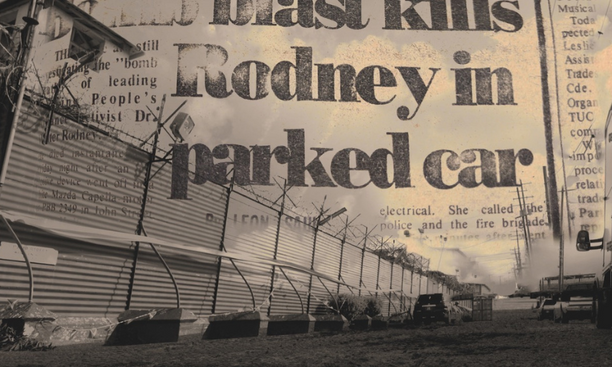
Walter Rodney: What They Don’t Want You to Know
Walter Rodney’s life and legacy — explored in literature and on screen.
Walter Rodney’s life and legacy — explored in literature and on screen.
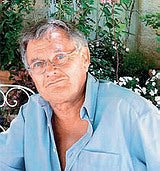
In this second interview of the "Critique of the School in Post-’68 French Thought" series, Roger Establet details his experience as a member of the Althusserian research group on "the school" and, in particular, Pierre Bourdieu's influence on their thinking.

Raina Lipsitz looks to Miami for lessons from a radical Black-led abolitionist organization.

Robert Bevan traces the construction of racially and ethnically segregated urban neighbourhoods.
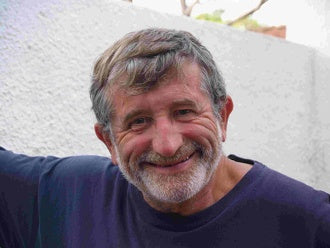
Christian Baudelot founded a research group on "the school" with other students of Louis Althusser in the wake of 1968's events. In this interview, he details the group's ambitions and its trajectory.

A statement in support of the protests in Iran, and in solidarity with political prisoners, from a group of Iranian activists in exile and former political prisoners

Michel Valensi, director of Editions de l'éclat, talks political publishing, the evolution of book production with the rise of the internet, and what it means to be a political publisher.
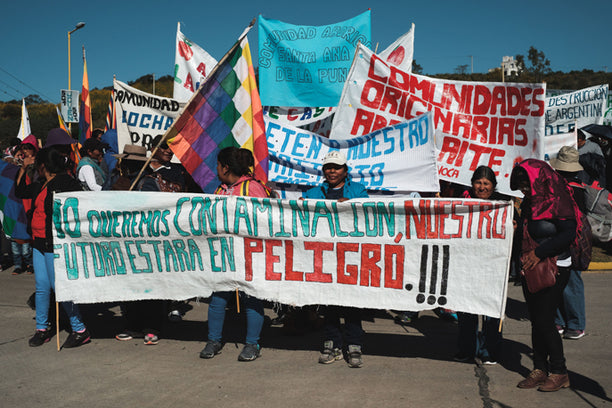
Climate fascism is percolating through the cracks of global capitalist crisis. The Zetkin Collective's foreword to the forthcoming Spanish-language edition of White Skin, Black Fuel offers a concise analysis of the current juncture and outlines what must be done to resist the forward march of climate fascism.
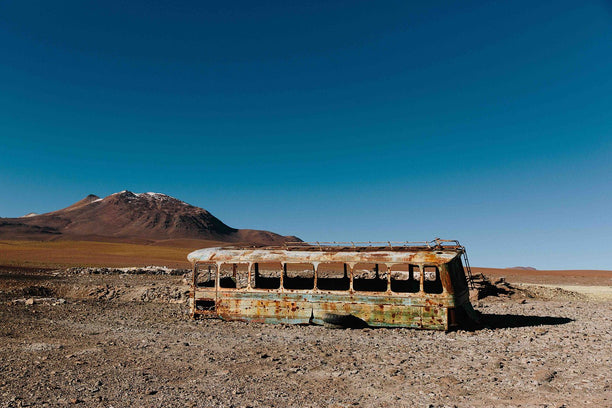
We live, as we're constantly reminded, in uncertain times. But what does uncertainty actually entail? And do some certainties bolster the unjust system in which we live? And could the late philosophy of Ludwig Wittgenstein help us find a way to think through certainty and uncertainty politically?

"The moment of Fukuyama had arrived. There seemed to be an undeniable internal relationship between capitalism and democracy.
How did the left react?"

Hot off the press - here are our October releases!

"The representative, especially of a subordinate group, always stands in an ambiguous position. She tries to speak on behalf of the group’s interests. This raises the whole well-chewed complex of arguments about how the principal (the group) can control its agent (the representative). But there is a more basic problem that needs addressing. This is the interest that the agent has in the preservation of the group as it positively exists."