David R. Roediger

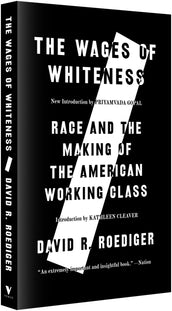
David Roediger is Kendrick Babcock Chair of History at the University of Illinois. Among his books are Our Own Time: A History of American Labor and the Working Day (with Philip S. Foner), How Race Survived US History: From Settlement and Slavery to the Obama Phenomenon, and The Wages of Whiteness: Race and the Making of the American Working Class. He is the editor of Fellow Worker: The Life of Fred Thompson, The North and Slavery and Black on White: Black Writers on What It Means to Be White as well as a new edition of Covington Hall’s Labor Struggles in the Deep South. His articles have appeared in New Left Review, Against the Current, Radical History Review, History Workshop Journal, The Progressive and Tennis.

Blog

  • Django Unchained and Lincoln: A reading list on race, plus your chance to win 3 titles

    Out in the UK this month, Quentin Tarantino's Django Unchained and Steven Speilberg's Lincoln has energized interest in a period of American history defined by race. Rather than make our own critiques or slap downs, we present these books to fill the gaps left by Hollywood.

    Continue Reading

  • "We are black..."—Verso books for Black History Month

    We are black, it is true, but tell us, gentlemen, you who are so judicious, what is the law that says that the black man must belong to and be the property of the white man? ... Yes, gentleman, we are free like you, and it is only by your avarice and our ignorance that anyone is still held in slavery up to this day, and we can neither see nor find the right that you pretend to have over us ... We are your equals then, by natural right, and if nature pleases itself to diversify colours within the human race, it is not a crime to be born black nor an advantage to be white.

    This excerpt is from a letter written in July 1792 by the leaders of the revolution of Haitian slaves. The letter has been republished in the collection of writings of the black leader Toussaint L'Overture, The Haitian Revolution, which includes also the correspondence between him and Napoleon Bonaparte. In the late eighteenth century, Toussaint L'Overture and his supporters established the first black republic in the world.

    In the United Kingdom, October is Black History Month. The celebration was originally introduced in 1926 on the initiative of Carter G. Woodson, the editor of the Journal of Negro History. In 2007, no fewer than 6,000 events were held in the UK as part of its programme. Here are some key Verso titles past and present that are relevant to the study and celebration of African and Caribbean history.

    Continue Reading

  • Join Verso authors in NYC at AAWW's "After 1989: Race After Multiculturalism" Symposium

    "Part symposium, part late night talk show, part Youtube nostalgia-fest," the Asian American Writers' Workshop will be presenting a fun, five-part event series throughout March to think about an alternative racial history of the 1990s. It goes without saying that the 90s were a strange time: neoliberal triumphalism gave birth to a culture of political correctness and a reigning sensibility of diversity based on the simple belief we can all just get along. Yet, at every step of the way, it was accompanied by intense forms of division and surreal spectacles of discrimination of virtually every stripe imaginable.

    Continue Reading

Books