The November/December issue of the New Left Review has been released, and includes the following essays:
Mike Davis: Spring Confronts Winter
Against a backdrop of world economic slump, what forces will shape the outcome of contests between a raddled system and its emergent challengers? Mike Davis examines echoes of past rebellions in 2011's global upsurge of protest.
Mike Davis is author of Planet of Slums.
Robin Blackburn: Crisis 2.0
Internationally, austerity measures have resulted in unemployment, stagnation, the imposition of technocracies, the destruction of welfare systems and a collapse in global demand. Robin Blackburn outlines some radical transitional policy responses that could address the underlying causes of the financial crisis.
Robin Blackburn is the author of Age Shock: How Finance is Failing Us and The American Crucible.
Perry Anderson: Magri's Farewell
Perry Anderson looks back upon the life and work of Lucio Magri, the Italian revolutionary and writer who died last year. An incisive critic of the PCI from both inside and outside of the Party, Anderson traces Magri's unique synthesis of theory and popular struggle from the Hungarian Revolt to the Iraq War, including his last work, The Tailor of Ulm.
Visit the New Left Review website to read the essays in full (subscribers only)
Via Stephen Squibb, a photo of Verso titles proudly stacked on the Occupy Boston Library milk crates:

Books in the photograph:
Planet of Slums, by Mike Davis
Close to the Edge: In Search of the Global Hip Hop Generation, by Sujatha Fernandes
I'm with the Bears: Stories from a Damaged Planet, with contributions by Margaret Atwood, Paolo Bacigalupi, T.C. Boyle, Toby Litt, Lydia Millet, David Mitchell, Nathaniel Rich, Kim Stanley Robinson, Helen Simpson, and Wu Ming 1, and with an introduction by Bill McKibben
The Obama Syndrome: Surrender at Home, War Abroad, by Tariq Ali
Meltdown: The End of the Age of Greed, by Paul Mason
The American Crucible: Slavery, Emancipation, and Human Rights, by Robin Blackburn
News for All the People: The Epic Story of Race and the American Media, by Juan González and Joseph Torres
Trampling Out the Vintage: Cesar Chavez and the Two Souls of the United Farm Workers, by Frank Bardacke
Across the world, slums are home to a billion people. The rich elite want the shanty towns cleared, but residents are surprisingly determined not to leave. In a report for BBC Newsnight and an article for the New Statesman, Paul Mason, author of Meltdown, explores this issue, looking at the reality of life in Philippine slums, and the arguments surrounding the plans for their clearance.
Describing his visit to the slums of Manila, Mason writes:
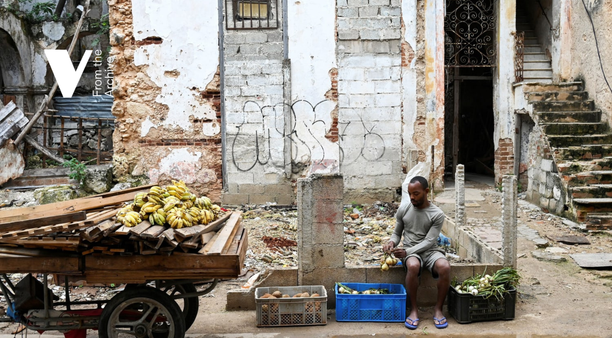
There is a long curve of water and, as far as the eye can see, there are shacks, garbage, washing, tin, bits of wood, scraps of cloth, rats and children. The water is grey, but at the edges there's a flotsam of multicoloured plastic rubbish. This is the Estero de San Miguel, the front line in an undeclared war between the rich and poor of Manila. Figures emerge from creaky doors to move along bits of walkway. In the deep distance is the dome of a mosque; beyond that are skyscrapers.
Mena Cinco, a community leader here, volunteers to take me in - but only about 50 yards. After that, she cannot guarantee my safety. At the bottom of a ladder, the central mystery of the Estero de San Miguel is revealed: a long tunnel, four feet wide, dark except for the occasional bare bulb. It's just like an old coal mine, with rickety joists, shafts of light and pools of what I'm hoping is water on the floor. All along the tunnel are doors into the homes of as many as 6,000 people.