I first met him in 2002, soon after the military coup instigated by Washington and Madrid had failed and subsequently on numerous occasions. He had asked to see me during the World Social Forum in Porto Alegre, Brazil. He inquired: "Why haven't you been to Venezuela? Come soon." I did. What appealed was his bluntness and courage. What often appeared as sheer impulsiveness had been carefully thought out and then, depending on the response, enlarged by spontaneous eruptions on his part. At a time when the world had fallen silent, when centre-left and centre-right had to struggle hard to find some differences and their politicians had become desiccated machine men obsessed with making money, Chávez lit up the political landscape.
Just under a million Venezuelan children from the shanty towns and the poorest villages now obtain a free education; 1.2 million illiterate adults have been taught to read and write; secondary education has been made available to 250,000 children whose social status excluded them from this privilege during the ancien régime; three new university campuses were functioning by 2003 and six more are due to be completed by 2006.
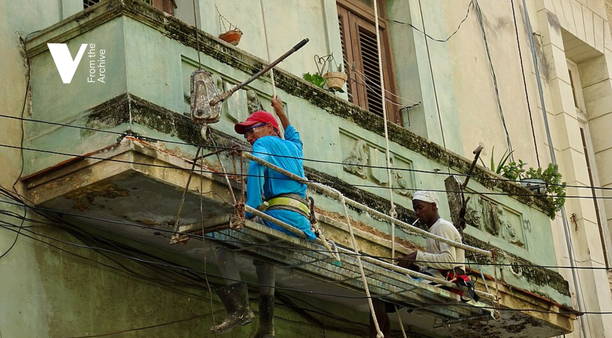
As far as healthcare is concerned, the 14,000 Cuban doctors sent to help the country have transformed the situation in the poor districts, where 11,000 neighbourhood clinics have been estab- lished and the health budget has tripled. Add to this the financial support provided to small businesses, the new homes being built for the poor, an Agrarian Reform Law that was enacted and pushed through despite resistance, legal and violent, by the landlords. By the end of 2003, just over 2,262,467 hectares had been redistributed to 116,899 families.
The bizarre argument advanced in a hostile editorial in The Economist (as in Gunson's article in Vertigo) during the week of the referendum, namely, that all this was done to win votes, is extraordinarily obtuse. Here the defenders of the global elite confuse their own machinations with reality. In the globalised world, where there are no basic differences between competing political factions of the elite, politics is exclusively about power; a world in which Clinton and Bush's billionaire backers, or the financiers who supported first Thatcher, then Blair, can cross sides with ease.
The Bolivarian currents in Latin America are important precisely because they pose a challenge to traditional cacique politics. That is why they are loathed by the elites and their media propagandists. If Chávez had simply been interested in power he could have easily done a deal with the local oligarchy and won the support of the global financial press. The Bolivarians wanted power precisely so that real reforms could be implemented.
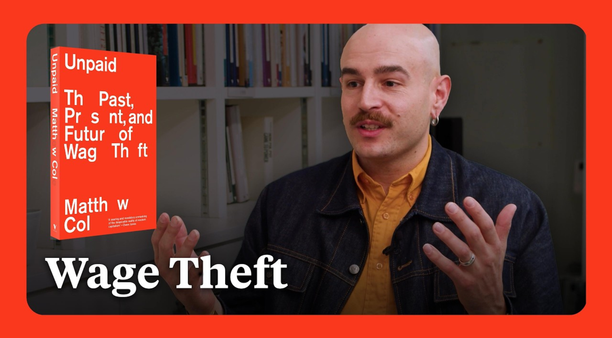
Has the Nobel Peace Prize Committee jumped the shark? In what seemed an early April Fool’s prank, the Committee awarded the Nobel Peace Prize to the European Union for, in the words of chairman Thorbjoern Jagland, its historic role in transforming Europe "from a continent of wars to a continent of peace." This honor was bestowed despite the EU’s savage push for immiserizing austerity on Spain, Italy, and Greece—cuts that have led to violence on the streets, and the participation of many of its member states NATO military interventions in Afghanistan and Libya.
Today, on Democracy Now!, Tariq Ali, author of many books including The Obama Syndrome: Surrender at Home, War Abroad, discussed his reaction to the Committee’s decision, stating:
To give the prize to the European community, at a time, effectively, when economically, it is promoting unemployment, creating real class divides in virtually every country in Europe, where it has led to enormous violence on the streets of Greece, because of the policies being pushed by the EU ... it is a complete and utter joke.
Visit Democracy Now! to watch the interview in full.