Out in the UK this month, Quentin Tarantino's Django Unchained and Steven Speilberg's Lincoln has energized interest in a period of American history defined by race. Rather than make our own critiques or slap downs, we present these books to fill the gaps left by Hollywood.

Hugo Chávez (waving a replica of 19th century revolutionary Símon Bolívar's sword) has once again triumphed over the bastions of neoliberal capitalism. After 14 years in power, he won 55% of the vote on a record 81% turnout, proving to the World Bank, the IMF, Barclays, and the United Statess (among others) that the people want socialism, not corporate imperialism. As Seamus Milne notes in the Guardian, despite the fact that Chávez's opponent Henrique Capriles was backed by the US (whose antagonism toward his government is well-known and most noteably manifested itself in a failed coup in 2002) and outspent him three to one using virtually all of the private media to his advantage, it was a decisive victory. Only two states, in which most all of the wealthy & bourgeois reside, went to Capriles. The other twenty-one went to Chávez. Milne celebrates the importance of this victory,
Venezuela and its Latin American allies have demonstrated that it's no longer necessary to accept a failed economic model, as many social democrats in Europe still do. They have shown it's possible to be both genuinely progressive and popular. Cynicism and media-fuelled ignorance have prevented many who would naturally identify with Latin America's transformation from recognising its significance. But Chávez's re-election has now ensured that the process will continue – and that the space for 21st-century alternatives will grow.
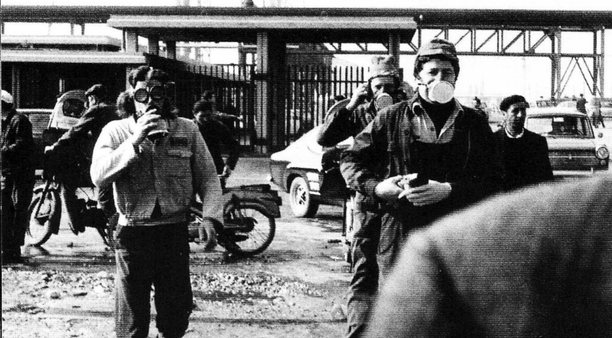
Anti-colonialist thinker, writer and revolutionary Frantz Fanon died fifty years ago today, on December 6, 1961
To mark the anniversary, here's an extract from Jean-Paul Sartre's preface to The Wretched of the Earth, published in Fanon's final year:
Not so very long ago, the earth numbered two thousand million inhabitants: five hundred million men, and one thousand five hundred million natives. The former had the Word; the others had the use of it. Between the two there were hired kinglets, overlords and a bourgeoisie, sham from beginning to end, which served as go-betweens. In the colonies the truth stood naked, but the citizens of the mother country preferred it with clothes on: the native had to love them, something in the way mothers are loved. The European élite undertook to manufacture a native élite. They picked out promising adolescents; they branded them, as with a red-hot iron, with the principles of western culture, they stuffed their mouths full with high-sounding phrases, grand glutinous words that stuck to the teeth. After a short stay in the mother country they were sent home, whitewashed. These walking lies had nothing left to say to their brothers; they only echoed. From Paris, from London, from Amsterdam we would utter the words ‘Parthenon! Brotherhood!' and somewhere in Africa or Asia lips would open ... thenon! ... therhood!' It was the golden age.
It came to an end; the mouths opened by themselves; the yellow and black voices still spoke of our humanism but only to reproach us with our inhumanity. We listened without displeasure to these polite statements of resentment, at first with proud amazement. What? They are able to talk by themselves? Just look at what we have made of them! We did not doubt but that they would accept our ideals, since they accused us of not being faithful to them. Then, indeed, Europe could believe in her mission; she had hellenized the Asians; she had created a new breed, the Graeco-Latin Negroes. We might add, quite between ourselves, as men of the world: ‘After all, let them bawl their heads off, it relieves their feelings; dogs that bark don't bite.'

It is our sad duty to announce the loss of Dr David Macey, translator and writer. A much respected and admired Verso author and champion of Francophone thought in the English speaking world, he will be greatly missed. His colleague, Professor Diana Holmes of the School of Modern Languages and Cultures at the University of Leeds, has written the following on his passing:
It is with great sadness that the French Subject groups at the Universities of Leeds and Nottingham report the death of Dr David Macey. David had been for many years a highly esteemed research associate at Leeds, and in 2010 was appointed Special Professor at Nottingham. David Macey, born in Sunderland in 1949, studied at University College London and became a highly acclaimed writer and translator particularly in the field of contemporary French philosophy and political thought. Among his numerous and influential publications, many of them widely translated, were Lacan in Contexts (1988), The Lives of Michel Foucault (1993), The Penguin Dictionary of Critical Theory (2000), Frantz Fanon: A Life (2000 - described by the New Statesman as 'the year's biographical tour de force'), and Michel Foucault (2004). He translated over sixty books from French, including Michel Foucault's Society Must be Defended (2003), and more recently Christian Baudelot and Roger Establet, Suicide (2008) Jean-Claude Kauffmann, The Single Woman and the Fairy-Tale Prince (2008), Boris Cyrulnik, Resilience (2009), and Michel Wieviorka, Violence (2009). David was the husband of Professor Margaret Atack (University of Leeds), and the father of Aaron, John and Chantelle.