This time a year ago, Occupy camps across the country found themselves dismantled, handcuffed, and power-washed away in a move coordinated by several city administrations, forcing the network of activists and anti-capitalists who once gathered in those public spaces to find alternative modes of protest.
A year later, at least here in New York, that network is leaping into action with a speed and force that's caused even the apparatus of the state -- FEMA and the National Guard, most notably -- to recognize Occupy Sandy and on some occasions seek its aid. Its a testament, at the very least, to the organizational prowess of a movement that has been continuously churning out projects, if not media-mandated spectacle, throughout 2012.
Sarah Leonard, one of the editors of last year's Verso title Occupy!: Scenes from Occupied America and a member of the Dissent Magazine team, recently surveyed the post-election landscape.
A year ago this Monday, a few hundred young protestors bed down in lower Manhattan to protest the corruption of America's political, social, and economic institutions. Occupy Wall Street's grievances have been famously diverse, but as the movement rounds the corner into its second year it can claim many victories: a world-wide network of over one thousand self-identified occupations, a vast ecology of movement-generated media, a worker-owned cooperative, measurably successful campaigns in collaboration with New York-based activist groups against racial profiling and unfair housing practices, and, quite recently, a report investigating the illegal practices of the New York Police Department throughout the year.
There's quite a bit to celebrate, and this weekend in New York activists from across the country converge on the financial district to ring in Occupy's new year. If you're in New York, we invite you to attend one or all of these events with us.
The Onion Weekender recently featured our in-house champion of castration anxiety:

The answers are here. We interns scoured our Žižek backlist to uncover his hints for YOU.
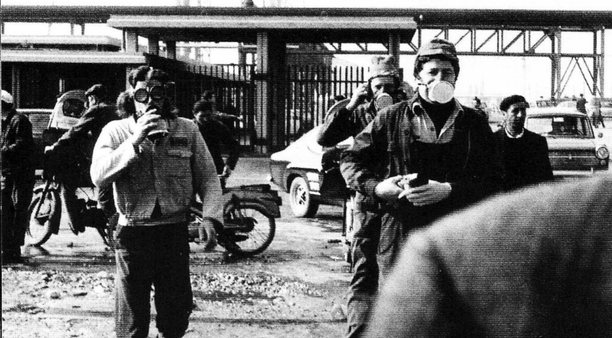
The 1st of May marks International Workers' Day, a festival of working-class self-organisation stretching back over 130 years. It was originally inaugurated to commemorate the "Haymarket Massacre" of 1886 in Chicago, where a bomb thrown during a worker's strike kicked off a police crackdown followed by a period of anti-labor hysteria.
In 1890, the first internationally co-ordinated demonstration for an 8-hour day was held, in commemoration of those killed in the massacre, and those eight anarchists executed on trumped-up charges after the event.
Here, Verso staff present "A Reading List for May Day", looking at the radical history of the festival in the European and North American labor movements, and how that spirit lives on in grassroots workplace struggles.
In a new article for The Nation, Occupy! co-editor Astra Taylor discusses the challenges faced by Occupy Wall Street in harnessing both mainstream media and social networking sites to disseminate information about itself, further complicated by the principles of transparency that undergird the movement. Reflecting on the initial success of "savvy social media use and name-brand coverage," she notes:
But now, as Occupy endeavors to find its footing in a post-encampment phase, it may need a new approach. The limitations of social media and the downside of total transparency are revealing themselves just as mainstream media attention is waning. If Occupy doesn’t become more strategic about the images and messages it projects, the movement may be left talking to itself.
Visit The Nation to read the article in full.