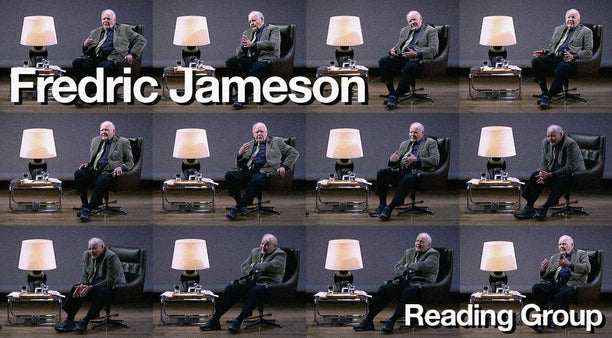
Slavoj Zizek in an interview for Germany's Deutsche Welle television, talking about Occupy, communism and the need for a reinvention of democracy.
The November/December issue of the New Left Review has been released, and includes the following essays:
Mike Davis: Spring Confronts Winter
Against a backdrop of world economic slump, what forces will shape the outcome of contests between a raddled system and its emergent challengers? Mike Davis examines echoes of past rebellions in 2011's global upsurge of protest.
Mike Davis is author of Planet of Slums.
Robin Blackburn: Crisis 2.0
Internationally, austerity measures have resulted in unemployment, stagnation, the imposition of technocracies, the destruction of welfare systems and a collapse in global demand. Robin Blackburn outlines some radical transitional policy responses that could address the underlying causes of the financial crisis.
Robin Blackburn is the author of Age Shock: How Finance is Failing Us and The American Crucible.
Perry Anderson: Magri's Farewell
Perry Anderson looks back upon the life and work of Lucio Magri, the Italian revolutionary and writer who died last year. An incisive critic of the PCI from both inside and outside of the Party, Anderson traces Magri's unique synthesis of theory and popular struggle from the Hungarian Revolt to the Iraq War, including his last work, The Tailor of Ulm.
Visit the New Left Review website to read the essays in full (subscribers only)
On reading Stephen Graham's Cities Under Siege, Nicholas Lezard is gripped with an uneasy fear about the spread of military strategies from warzones to domestic cities in the US and Europe. The fact the book is well referenced and the author "knows whereof he speaks ... has the facts at his fingertips, and he is able to make connections" only makes matters worse, as he explains in his review for the Guardian.
The combination of mainstream US politicians' contempt for cosmopolitan populations, increased urban surveillance and the generalisation of Israel's strategies against Gaza—described by Graham as "a mere ‘terrorist infrastructure’ to be destroyed in toto”—raise for Lezard a terrifying spectre of militarised dystopian state so real that "you begin to wonder whether books like this will be allowed to be published for much longer."
The prospect of this nascent potential cityscape of political violence, "the kind of society whose aim is to monitor and control every single inhabitant", far from scaremongering is already underway:
Look, you're just going to have to read this book. Because what's happening in Baghdad and other contested or occupied cities - not just the surveillance, but the militarisation too - is going to happen here. In some cases it already is, or there are in place contingency plans for it, should serious trouble arise.
Visit the Guardian to read the review in full.