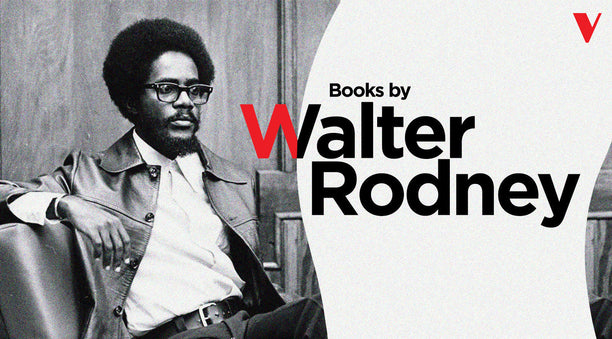
Judith Butler, author of Frames of War and Precarious Life, visited Occupy Wall Street to lend her support to the protesters there. In a rallying speech, amplified through the human microphone, she gave her thoughts on the reception of the movement and its demands.
I came here to lend my support to you today, to offer my solidarity, for this unprecedented display of democracy and popular will. People have asked, 'So what are the demands? What are the demands all these people are making?' Either they say there are no demands and that leaves your critics confused - or they say that the demands for social equality and economic justice are impossible demands. And impossible demands, they say, are just not practical.
If hope is an impossible demand, then we demand the impossible. If the right to shelter, food and employment are impossible demands, then we demand the impossible. If it is impossible to demand that those who profit from the recession redistribute their wealth and cease their greed then yes, we demand the impossible.
But it is true that there are no demands that you can submit to arbitration here because we are not just demanding economic justice and social equality, we are assembling in public, we are coming together as bodies in alliance, in the street and in the square. We're standing here together making democracy, enacting the phrase 'We the people!'
A video of Butler delivering her speech at Occupy Wall Street is available below.
A review of Laura Oldfield Ford's acclaimed Savage Messiah appears in the article 'Graphic novels shake off the superheroes' in the Herald Scotland. In the piece, the reviewer emphasises the unique style of Ford's artwork:
Savage Messiah is a gather-up of Oldfield Ford's psychogeographical fanzines that collage black-and-white photocopied photographs of decaying bits of London with her own pencilled drawings of people she meets.
The main characters of Savage Messiah are social outcasts who are kept at the margins of the flashy, gentrified, greed-driven twenty-first century London:
punks and skins, squatters and shell-suited working class who live in the bits of the capital city that have yet to be reclaimed by the moneyed middle classes.
Who could have envisioned Occupy Wall Street and its sudden wildflower-like profusion in cities large and small?
John Carpenter could have, and did. Almost a quarter of a century ago (1988), the master of date-night terror (Halloween, The Thing), wrote and directed They Live, depicting the Age of Reagan as a catastrophic alien invasion. In one of the film’s brilliant early scenes, a huge third-world shantytown is reflected across the Hollywood Freeway in the sinister mirror-glass of Bunker Hill’s corporate skyscrapers.
They Live remains Carpenter’s subversive tour de force. Few who’ve seen it could forget his portrayal of billionaire bankers and evil mediacrats and their zombie-distant rule over a pulverized American working class living in tents on a rubble-strewn hillside and begging for jobs. From this negative equality of homelessness and despair, and thanks to the magic dark glasses found by the enigmatic Nada (played by “Rowdy” Roddy Piper), the proletariat finally achieves interracial unity, sees through the subliminal deceptions of capitalism, and gets angry.
Very angry.
Andrew Blake of the Independent has reviewed The Beach Beneath the Street, a fresh history of the Situationist International, commending its account of situationism as "a far more comprehensive overview than the usual defence of its best-known publication, Guy Debord's The Society of the Spectacle". Praising Wark's clarity in showing that "there was far more to Situationism than one clever book", Blake argues that Situationist ideas are still as relevant today as at its founding:
Neither the Tottenham looter or the "kid with the BitTorrent account" identified by Wark may be consciously opposed to the Society of the Spectacle, but their challenges indicate that we should continue to take Situationism seriously in thought, word, and deed.
In a piece on Occupy Wall Street for Asia Times Online, Pepe Escobar also recommends Situationism and The Beach Beneath the Street for their relevance to contemporary political movements.
At Zuccotti Park - Occupy Wall Street's headquarters in lower Manhattan - there's a free public library, with books donated by everyone who feels like it. A good first step would be for people to supply a good many copies of The Beach Beneath the Street, by McKenzie Wark, a gripping history of the Situationists - the key conceptual group led by Guy Debord at the heart of May 1968.
Whatever one thinks about the British imperial past and its legacy, the circumstantial evidence of the crimes committed by British troops and officers overseas collected by Richard Gott in his Britain's Empire: Resistance, Rebellion and Repression can no longer be ignored. As Gavin Bowd points out in a review for the Scotland on Sunday, Britain's Empire is "a pungent and provocative book ... a rich compendium of revolt." Gott sheds light on how the British Empire was "the fruit of military conquest and brutal wars involving physical and cultural extermination of subject people." Reminding us of horrific episodes (e.g. the fact that white settlers in Australia "put strychnine in flour for Aborigines"), Britain's Empire powerfully debunks "the kind of glorious ‘narrative history' that Michael Gove has been calling for in British schools."
The distance between Gott's account and the official narrative on the British Empire is also stressed by Stephen Howe in a review for the Independent. In Howe's view, Britain's Empire is "much at odds with what remains of the mainstream view" about the British Empire—that is to say, the apologetic narrative that claims that the Empire was a civilizing enterprise. Writing from the perspective of the academic historian, Howe, a Professor in the History and Cultures of Colonialism at Bristol University, finds some shortcomings in Gott's book: for example, he points to the allegedly patchy nature of the bibliographic references. Nonetheless, Britain's Empire stands out as a passionate counter-history of the British imperial past, especially compared with other recent books geared to the general public such as Jeremy Paxman's Empire: What the World Did to the British and Kwasi Kwarteng's Ghosts of Empire. In his review, Howe points out how
Paxman seems more concerned to recall horrors committed on ‘us' by the ‘natives', and to reassure that most of those who ran the empire were not really such bad chaps after all.