The Making of Global Capitalism is making waves across the UK and Europe. As Adam David Morton, Associate Professor in Political Economy and co-Director of the Centre for the Study of Social and Global Justice (CSSGJ) at the University of Nottingham, notes on his blog, "the book is rightly heralded as a groundbreaking assessment of American empire in shaping global capitalism." Furthermore:
This is a political economy of American empire that rivals the work of Eric Hobsbawm in its accessibility and its forensic grasp of the intellectuals of statecraft (referring to a whole community of American state bureaucrats, leaders, foreign policy experts, and advisors who comment upon, influence, and conduct the activities of statecraft) essential to the making of global capitalism.
Lighting a Torch Within: Anti-colonial Israeli Support for BDS[1]
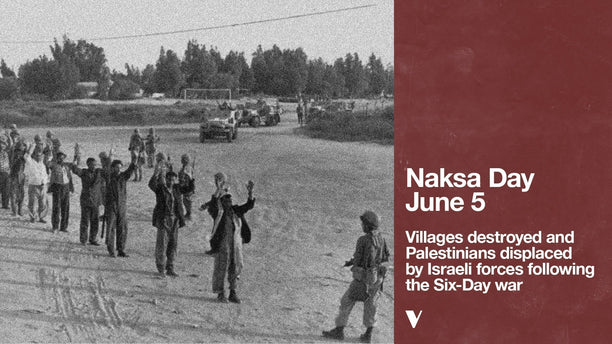
The historic call by Palestinian civil society for boycott, divestment and sanctions against Israel until it fully complies with its obligations under international law contains a rarely noticed dimension inspired by struggle against South African apartheid. It invites “conscientious Israelis to support this Call, for the sake of justice and genuine peace,”[2] thereby confirming that principled anti-colonial Jewish Israelis who support the Palestinian people’s inalienable right to self-determination, and who uphold freedom, justice, and equality for all as the bases for a just, comprehensive, and sustainable peace, are regarded as partners in the struggle.
Principled Israeli anti-colonialists committed to Palestinian rights as stipulated in international law have played a significant and growing role in the struggle for Palestinian rights, despite their still small numbers. Many of them, aside from their unequivocal commitment to comprehensive Palestinian rights, realize that Israelis cannot possibly have normal lives without first shedding their colonial character and recognizing Palestinian rights. The words of the Brazilian educator, Paulo Freire, on how the oppressed can also re-humanize their oppressors, are relevant here:
Because it is a distortion of being more fully human, sooner or later being less human leads the oppressed to struggle against those who made them so. In order for this struggle to have meaning, the oppressed must not, in seeking to regain their humanity (which is a way to create it), become in turn oppressors of the oppressors, but rather restorers of the humanity of both.[3]
It’s time. Long past time. The best strategy to end the increasingly bloody occupation is for Israel to become the target of the kind of global movement that put an end to apartheid in South Africa.
In July 2005 a huge coalition of Palestinian groups laid out plans to do just that. They called on “people of conscience all over the world to impose broad boycotts and implement divestment initiatives against Israel similar to those applied to South Africa in the apartheid era.” The campaign Boycott, Divestment, and Sanctions—BDS for short—was born.
Every day that Israel pounds Gaza brings more converts to the BDS cause, and talk of ceasefires is doing little to slow the momentum.1 Support is even emerging among Israeli Jews. In the midst of the assault, roughly 500 Israelis, dozens of them well-known artists and scholars, sent a letter to foreign ambassadors stationed in Israel. It calls for “the adoption of immediate restrictive measures and sanctions,” and draws a clear parallel with the anti-apartheid struggle. “The boycott on South Africa was effective, but Israel is handled with kid gloves ... This international backing must stop.”
Yet many still can’t go there. The reasons are complex, emotional, and understandable. And they simply aren’t good enough. Economic sanctions are the most effective tools in the nonviolent arsenal. Surrendering them verges on active complicity. Here are the top four objections to the BDS strategy, followed by counterarguments.