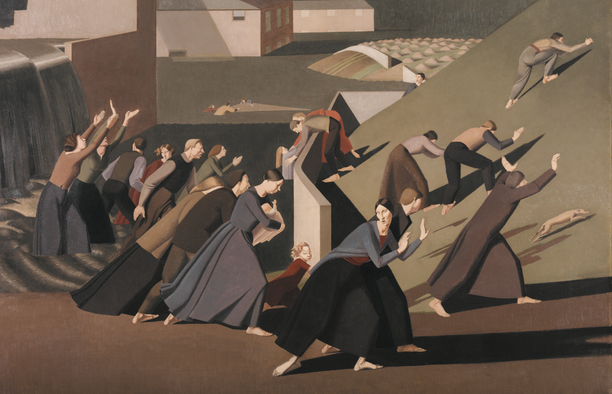
From Philosophy Football:
Arab children,
Spring rain,
Corn ears of the future,
You are the generation that will overcome defeat. —Nizar Qabbani
For eighteen days so many of us were glued to the TV screens as a revolt unfolded that shook the Arab world—and beyond. When Mubarak finally resigned, Philosophy Football read an article by Tariq Ali on the Verso website and was inspired to produce a fundraising solidarity T-shirt.
Slavoj Žižek's commentary on recent events in Egypt and Tunisia highlights what much of the mainstream western press, and especially statements by US and UK politicians, have ignored—the universal nature of the protests, and the popular will for freedom. Speaking on Al Jazeera last week, he said:
Where we are fighting a tyrant, we are all universalists. We are immediately in solidarity with each other. That's how you build universal solidarity ... it's the struggle for freedom. Here we have a direct proof that a) freedom is universal and b) especially proof against the cynical idea that Muslim crowds prefer some kind of religiously fundamentalist dictatorship or whatever, no! What happened in Tunisia, what happens now in Egypt, it's precisely this universal revolution for dignity, human rights, economic justice. This is universalism at work.
Library Journal has published an early review of The Letters of Rosa Luxemburg—"the most comprehensive [collection] published in English, with over two-thirds of the letters translated here for the first time" ...
This English-language edition of selected letters of Polish-born Marxist thinker and founder of the German Communist Party, Luxemburg, who was assassinated in 1919, is the most comprehensive published in English, with over two-thirds of the letters translated here for the first time. Described as a companion to Verso's projected 14-volume "Complete Works of Rosa Luxemburg," it is based on the German Herzlichst, Ihre Rosa (Most Warmly Yours, Rosa), with 40 letters added to the 190 in that volume. The letters (originally in German, Polish, and Russian) will give informed English-language readers new access to the intellectual, political, and personal life of a leading Marxist theorist and activist. The recipients include political associates Leo Jogiches (also her lover for a time), Karl Kautsky, Karl Liebknecht, and Clara Zetkin.
Visit Library Journal to read the review in full. The Letters of Rosa Luxemburg will be launched in New York on March 14 at NYU's Tishman Auditorium.
In his article "Egypt's joy as Mubarak quits" for the Guardian, Tariq Ali quotes the Arab poet Nizar Qabbani, remarking that he would have been happy to see his prophecy fulfilled:
Arab children,
Corn ears of the future,
You will break our chains.
Kill the opium in our heads,
Kill the illusions.
Arab children,
Don't read about our suffocated generation,
We are a hopeless case,
As worthless as a water-melon rind.
Don't read about us,
Don't ape us,
Don't accept us,
Don't accept our ideas,
We are a nation of crooks and jugglers.
Arab children,
Spring rain,
Corn ears of the future,
You are the generation that will overcome defeat.
Following quick on the heels of publication of Russell Jacoby's review of Erik Olin Wright's Envisioning Real Utopias in Dissent, Michael Burawoy has written a detailed reply stressing the importance of Wright's project and rescuing it from the tangle of Jacoby's at times ad hominem attack, an excerpt of which reads:
Wright seems to know nothing about the history of utopian thought, communities, or cooperatives. He refers to exactly one book in the utopian tradition, Martin Buber's 1949 Paths in Utopia. Buber's book closed with a discussion of the kibbutz, a subject that would seem to call out to Wright. After all, the kibbutz is a "real utopia" with a socialist ethos and decades of practice. Are there lessons to be found here? Daniel Gavron's suggestive book The Kibbutz, subtitled "Awakening from Utopia," sought to appraise its past and future. Wright says nothing about the kibbutz or the literature on it. Nor does he say much about the "real utopias" in Brazil, Canada, and Spain. He says little about anything. The empirical information he provides is perfunctory at best. His command of Marxism seems limited. His historical reach extends to his own earlier works. His vast theoretical apparatus is jimmy-rigged and empty. The graphs are inane, the writing atrocious. To call this book dull as dish water maligns dish water.
Burawoy argues that, to the contrary, Erik Olin Wright is a model of meaningful empirical engagement, in a profession that is otherwise more remote than ever from the real world:
The context of [Wright's] project is important. These days, social scientists are concerned with what is, perhaps with what has been, but very rarely with what could be. We spend our time building elaborate explanatory models of how things work, albeit with limited success—as we know from the mess economists have made of the world. The limitations of social science have led some to abandon it altogether, while others have intensified their commitment to an ever-purer science, remote from the concrete world in which ordinary people live. Most social scientists continue to tread the blind alleys of positivism, and those who deviate from this path often turn to navel gazing or esoteric modeling.
Burawoy is careful to acknowledge Jacoby's "own important contributions to the study of utopias," but cannot avoid the conclusion that,
Sadly in his review [Jacoby] chose to ridicule Wright rather than to engage constructively with one of the most important projects of twenty-first century social science. Jacoby loves to be a bad boy, but here he is just an anti-intellectual.
Visit Dissent to read Jacoby's review and Burawoy's response in full. And should you feel so inclined, you can also read Jacoby's reply to Burawoy's response.
For other worthwhile responses to Jacoby's review, please see "Disingenuous Men Write Disingenuous Reviews" and "Dueling Utopias."