Political Affairs presents a consideration of John Nichols' new book, The "S" Word, which highlights the importance of Socialism as both an idea and as a movement:
Nichols connects the radical and 20th century American liberal traditions and movements with the Socialist movement, portraying such figures as American Revolutionary hero Tom Paine and Emma Lazurus, whose poem graces the Statue of Liberty, as part of the larger socialist tradition ... While one might take issue with some of Nichols' characterizations of Tom Paine and Abraham Lincoln in regard to their relationship to socialist traditions, Nichols nevertheless presents important sides of them which are usually omitted in traditional accounts - in the case of Paine, an almost total omission, except for a few quotes from Common Sense and sometimes from the American Prospect.
Paul Mason's lecture at the LSE entitled 'Phase Three of the Global Crisis' was delivered to a packed hall.
The BBC Newsnight economics editor's book Meltdown gives his account of the 2008 crash from the front row on Wall Street and the Square Mile as the "weatherman in a hurricane." But London's West End Extra reports that the audience was most interested in Mason's "constant references to a once obscure economist Hyman Minsky."
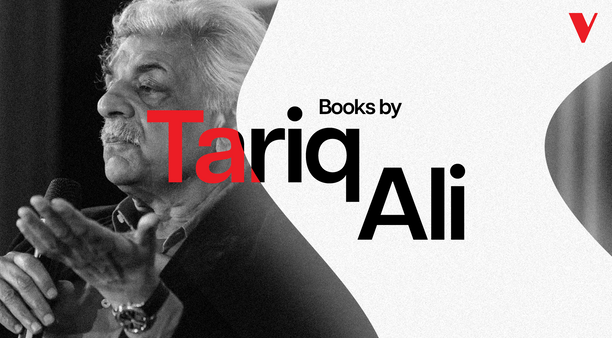
In a series of interviews and commentaries this week, Tariq Ali points to the uprisings that continue in Egypt (today has been named "Day of Departure" in Cairo with hundreds of thousands returning to the streets) as
a rude awakening for all those who imagined that the despots of the Arab world could be kept in place provided they continued to serve the needs of the West and their harsh methods weren't aired on CNN and BBC World.
As illustration of the West's penchant for despots, this particular report from Ali not only lists Israeli Prime Minister Benjamin Netanyahu's pleas to officials in Washington to delay Hosni Mubarak's departure from Egypt but also the French government having seriously considered sending its paratroopers to save former President Zine El Abidine Ben Ali in Tunisia, and Former UK Prime Minister Tony Blair having described the Mubarak as a "force for good."
For all those who missed André Schiffrin in conversation with Keith Gessen at The New School in New York: C-Span's taped coverage is now live online. Schiffrin, founder of The New Press, and Gessen, editor-in-chief of n+1, spoke about Schiffrin's career in publishing, how today's publishing moment feels different from those of the past, alternative publishing models, and Schiffrin's acclaimed new book, Words and Money.
Visit C-SPAN's Book TV to watch the interview.
The Guardian's Comment is Free presents the idea of communism to its readers with an edited extract entitled "Reclaim the common in communism" from Michael Hardt's chapter in The Idea of Communism. The book, edited by Slavoj Zizek and Costas Douzinas, is a collection of writings by leading radical intellectuals to reimagine communism for the 21st century.
Hardt examines the concept of the common in relation to communism, arguing that the
notion of the common can help us understand what communism means - or what it could mean. Marx argues in his early writings against any conception of communism that involves abolishing private property only to make goods the property of the community. Instead communism properly conceived is the abolition not only of private property but of property as such. It is difficult, though, for us to imagine our world and ourselves outside of property relations. "Private property has made us so stupid and one-sided," he writes, "that an object is only ours when we have it." What would it mean for something to be ours when we do not possess it? What would it mean to regard ourselves and our world not as property? Has private property made us so stupid that we cannot see that? Marx tries to grasp communism, rather awkwardly and romantically, in terms of the creation of a new way of seeing, a new hearing, a new thinking, a new loving - in short, the production of a new humanity.
Marx here is searching here for the common, or, really a form of biopolitical production put in the hands of the common. The open access and sharing that characterise use of the common are outside of and inimical to property relations. We have been made so stupid that we can only recognise the world as private or public. We have become blind to the common. Communism should be defined not only by the abolition of property but also by the affirmation of the common - the affirmation of open and autonomous production of subjectivity, social relations, and the forms of life; the self-governed continuous creation of new humanity. In the most synthetic terms, what private property is to capitalism and what state property is to socialism, the common is to communism.
Visit the Guardian to read the article in full.