Recently, we have seen hip hop become prominent in political struggles in Senegal and across the Middle East. In a new podcast, Caspar Melville, editor of the New Humanist, talks to Sujatha Fernandes, author of Close to the Edge: In Search of a Global Hip Hop Generation, about the way hip hop interacts with local politics, the issue of rap's commercialization, whether hip hop has revolutionary potential, and Fernandes's 11 year search for a global hip hop generation.
Visit Pod Academy to listen to the podcast.
Fernandes includes some songs from some of the acts she writes about in the book, which you can check out below:
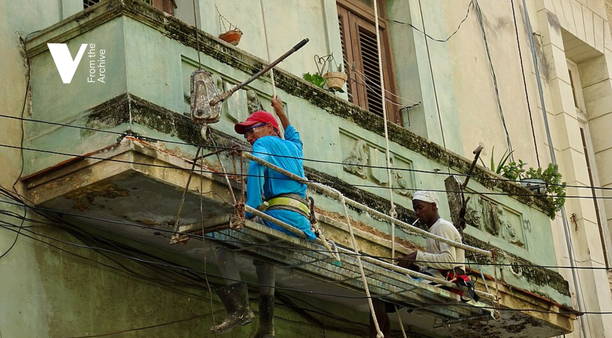
1. 'Se Busca' by Obsesion, a husband and wife duo from Havana, Cuba.
It was bound to end in disaster: two ideologues, one a communist and the other a neo-conservative, "do battle" over a skype link from a house in England where Assange is held under house arrest.
The Lives of Things by José Saramago is published today, the 38th anniversary of Portugal's Carnation Revolution. One of the stories, Revenge, is published today in the Morning Star:
The boy was coming from the river. Barefoot, with his trousers rolled up above his knees, his legs covered in mud.
He was wearing a red shirt, open in front where the first hairs of puberty on his chest were beginning to blacken. He had dark hair, damp with the sweat that was trickling down his slender neck. He was bent slightly forward under the weight of the long oars, from which were hanging green strands of water-weeds still dripping. The boat kept swaying in the murky water, and nearby, as if spying, the globulous eyes of a frog suddenly appeared. Then the frog moved suddenly and disappeared. A minute later the surface of the river was smooth and tranquil and shining like the boy's eyes. The exhalation of the mud released slow, flaccid bubbles of gas which were swept away by the current. In the oppressive heat of the afternoon, the tall poplars swayed gently, and, in a flurry, like a flower suddenly blossoming in mid-air, a blue bird flew past, skimming the water. The boy raised his head. On the other side of the river, a girl was watching him without moving. The boy raised his free hand and his entire body traced out some inaudible word. The river flowed slowly...
Visit the Morning Star to read the full story .
An interview by Elizabeth Floyd Mair with Juan González ran in the Times Union in Albany, NY on April 19th to coincide with González's appearance at Sanctuary for Independent Media in Troy, NY, where he spoke about the history of media and oppresion.
Q: What do you think of the term "the liberal media"?
A: The "liberal media" myth, like most stereotypes, contains a kernel of truth, but ends up being a huge distortion of a complex reality. The class divide in our media system is far more defining than the left-right political divide. Most journalists in the commercial media have become somewhat divorced from the daily problems of ordinary Americans. They therefore give far less attention and coverage to the "other" America, those less privileged and less powerful. And they give disproportionate attention and coverage to the 1 percent celebrities, successful businessmen, powerful government figures, and so forth.
Read the full interview here.
Did you miss the opportunity to register to attend "Rebel Cities: Occupation, the Commons and Urban Democracy," David Harvey and David Graeber's talk at CUNY Grad Center this Wednesday?
Never fear, now's your chance to win tickets to the sold out event. We're giving away front-row seats to two lucky Harvey fans, who write to us with the following:
Write to us in the comments section of this blog post with your favorite David Harvey quote. No more than four lines, please, and with title of book, page number and copyright date. If your quote is from an article, please include name of publication, page number and copyright date.
We'll choose two people at random to win. To be considered, your quote must appear in the comments section of this blog post. Winners will be announced Wednesday, April 25th at 12pm.
Good luck!