
Why Suite (212)?
Why make a political arts programme? Juliet Jacques and Tom Overton discuss today's arts broadcasting and left-wing podcast scenes.
Why make a political arts programme? Juliet Jacques and Tom Overton discuss today's arts broadcasting and left-wing podcast scenes.
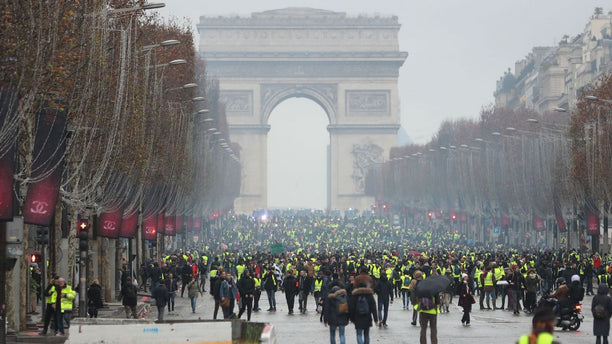
The Gilets Jaunes protests have rocked France over the past month, opening up new spaces in contemporary European politics. Yet, the left's reaction to it has either been to passively follow the protests, or to question some of its reactionary articulations. What does this reaction say about the current impasses of left politics, and political strategy today?
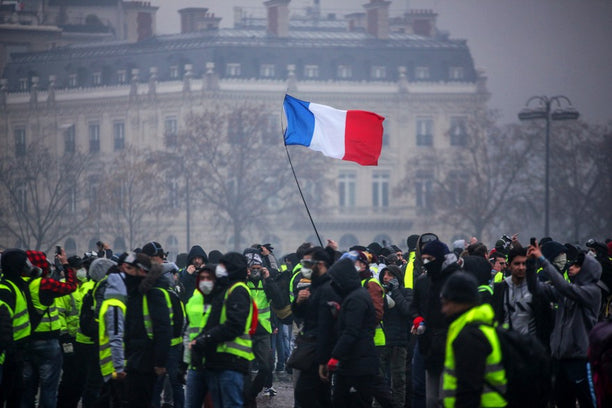
With its background in responses to the flurry of reforms that Emmanuel Macron has sought to push through since 2017, the Gilets Jaunes has already become a major political event in Europe. In this article, Cedric Durand looks at the background to the movement, and asks where it might be heading.
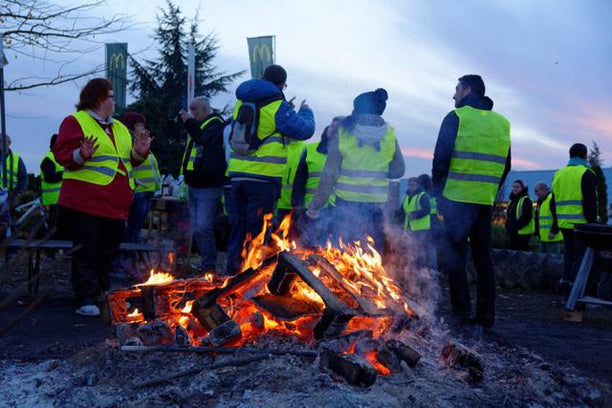
Is it possible for a future government to be as devoted to the people as the current French government is to the 1%? In this article, Eric Toussaint puts forward a series of proposals to those currently struggling on the ground, and argues that a future Left government can only begin to remedy the harm caused by neoliberal policies, if it takes a collectively elaborated programme as its basis.
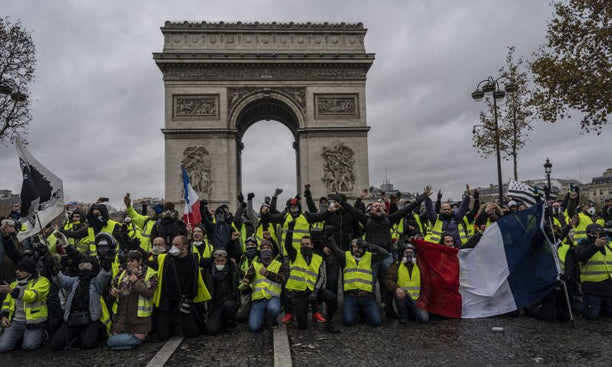
The demands of the gilets jaunes movement centre on work-related measures such as increasing the minimum wage and limiting short-term contracts. Despite converging interests, France's trade union leadership has largely remained quiet. In this article, Étienne Penissat and Thomas Amossé address this silence and urge organised trade unions to rebuild ties with the subaltern workers in the fluorescent vests.

From the continuities with Yeltsin’s disaster capitalism, the rise of the oligarchs to Putin’s ‘vertical of power’ in the post-Soviet state – what future is possible in Russia?
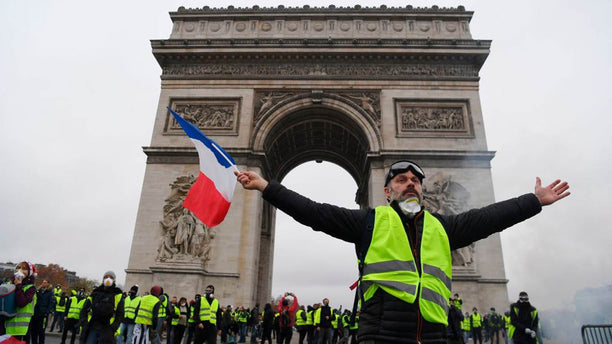
In this interview with Philippe Petit, Alain Supiot discusses the gilets jaunes protests and the urgent need to re-align the exercise of power with the rich and diverse experiences of people's lives.
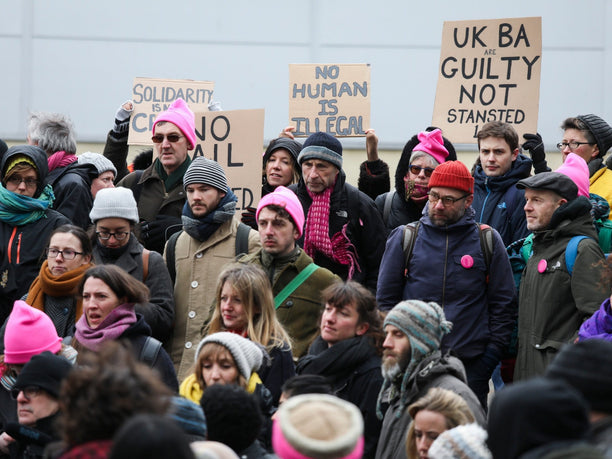
The Stansted 15, who peacefully blocked a mass deportation flight in March 2017, were convicted on Monday under the Aviation and Maritime Security Act. They face up to life in prison and await sentencing in February. Luke de Noronha and Tanzil Chowdhury reflect on their conviction and its profound significance for all of us.
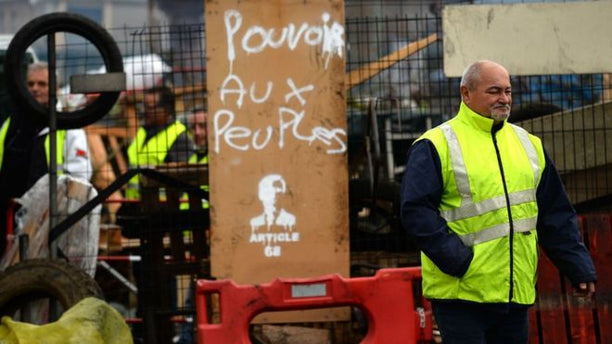
The gilets jaunes are completely of this age, that of the Arab spring, the occupied squares and the ZAD." Alain Bertho, author of The Age of Violence, on the Gilets Jaunes.
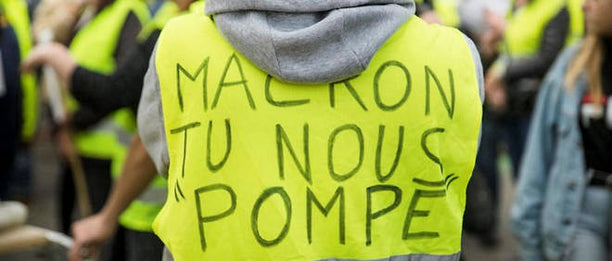
Philosopher Frédéric Gros on the Gilets Jaunes protests.
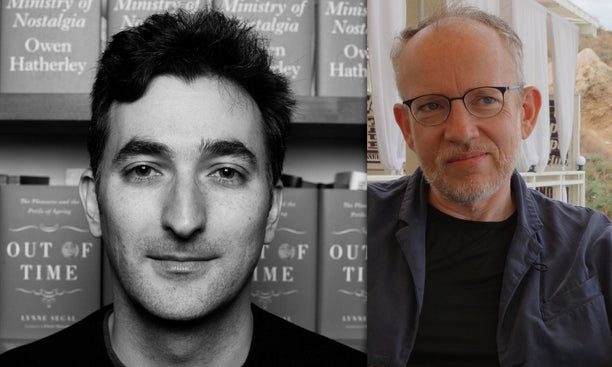
How can we understand Russia beyond the larger-than-life figure of Vladimir Putin?
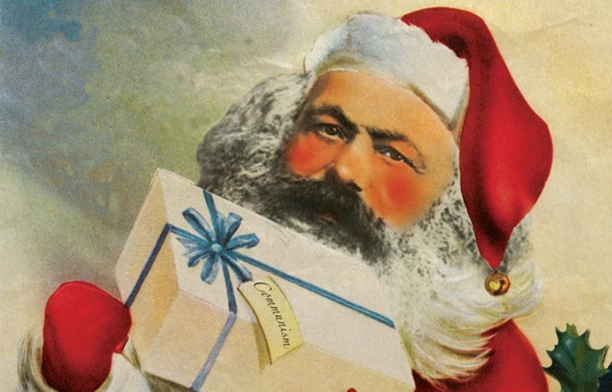
What is the true, revolutionary meaning of Christmas? In this article, originally published in the Christmas 1969 edition of Black Dwarf, Fred Halliday analyses the dialectic of Christmas in which the desire for happiness is marshalled into a tool of subjection (and alcoholic oblivion).