
Video: Anton Jäger discusses Hyperpolitics
Anton Jäger and Oliver Eagleton discuss Anton's latest book, Hyperpolitics.
Anton Jäger and Oliver Eagleton discuss Anton's latest book, Hyperpolitics.

Rebels, pirates, and fearless revolutionaries!

On April 7 in NYC, Verso will host a panel discussion on Paul Heideman's Rogue Elephant. He will be joined in conversation by Kim Philips-Fein, Doug Henwood, and Anand Gopal.

A letter from Toufic Haddad, a Palestinian-American writer and scholar, with an update on his case against his dismissal from a UK-funded institute in Jerusalem.

Leopoldina Fortunati and Sara R. Farris discuss the new English edition of The Arcana of Reproduction.

Ilan Pappe on US and Israeli immorality and why Palestine lies at the heart of the war on Iran.
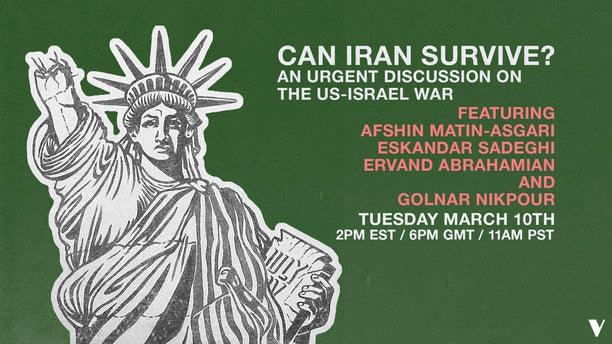
Verso was joined by Afshin Matin-Asgari, Golnar Nikpour, Eskandar Sadeghi-Boroujerdi, and Ervand Abrahamian for an urgent discussion on the US-Israel war in Iran.
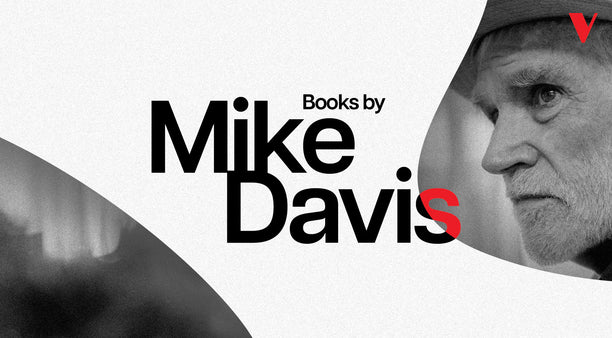
"Davis’s drive was always towards action, struggle, and solidarity – in brief, the politics of continual and transformative resistance, of “radical hope.” He lit the torch; it’s time for us, now, to carry it on." - Ciarán O'Rourke

"Iranians have been denied [...] the ability to inhabit a thinkable history". Anthropologist Shahram Khosravi on Iranian life under constant rupture.
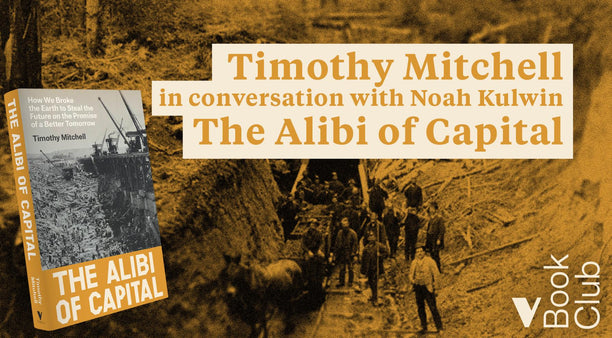
How we broke the Earth to steal the future on the promise of a better tomorrow.

“Hjorth writes with the feminist bluntness of Annie Ernaux, the psychic precision of Javier Marías and the lyrical repetitions of Jon Fosse.” - The New York Times
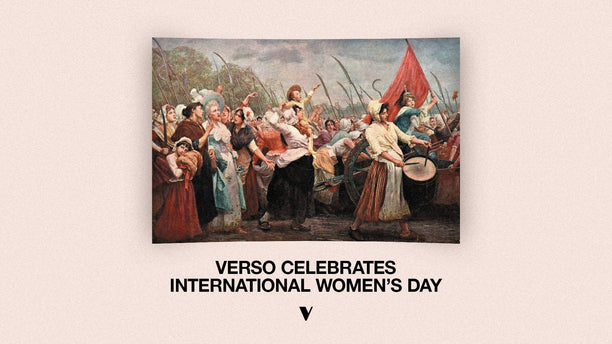
Take 30% off revolutionary feminist texts.