
Davis, Mike
DAVIS, MIKE (1946-2022). The author and activist was best known for his book about Los Angeles, City of Quartz: Excavating the Future in Los Angeles (1990). Marshall Berman, reviewing the book for The Nation, said it combined “the radical citizen who wants to grasp the totality of his city’s life, and the urban guerrilla aching to see the whole damned thing blow.” And the whole thing did blow, two years after the book was published. When the Rodney King riots broke out in Los Angeles in 1992, Davis was proclaimed a prophet; he said all he had done was pay attention to what was happening in the city.
Davis was a ‘sixties person, but he didn’t come from a liberal or left background. Michael Ryan Davis was born in Fontana and grew up in the majority white, suburban community of Bostonian, California.
His father was a meat cutter and a conservative, and as a young patriot, Mike briefly joined the Devil Pups—the Marine Corps’ version of the Boy Scouts. His life was changed by the civil rights movement. In 1962, when he was a junior in high school, a Black activist married to his cousin took Mike to a protest organized by the Congress for Racial Equality (CORE), picketing an all-white Bank of America branch in San Diego. Soon he was volunteering in the CORE office there. He started college at Reed, but left to go to work full-time for Students for a Democratic Society (SDS). In New York, he worked with Todd Gitlin organizing an anti-apartheid protest at Chase Manhattan Bank in 1965, then went to Los Angeles in 1966 to become the lead organizer for Southern California. In 1968, he joined the Southern California District of the Communist Party, headed by Dorothy Healey, after she declared solidarity with the “Prague Spring” and opposition to the Soviet invasion of Czechoslovakia. Healey became the most lasting political influence of his life. He left SDS after the rise of the Weathermen and their 1969 "Days of Rage."
In the meantime Davis worked as a truck driver, participated in the Teamster Wildcat Strike in Los Angeles in 1971, and returned to school at the University of California, Los Angeles, where he studied Marxism with history professor Bob Brenner. After three years he got a fellowship to study history in Edinburgh. His intellectual career began in 1974, when he met Perry Anderson, then editor of the New Left Review (NLR). The Eton-educated Anderson saw the promise in the truck-driving student from Southern California and offered Davis a full-time job at the NLR in London. He stayed for six years. His first two published articles appeared in the NLR at the end of 1980; they became the basis of his first book, Prisoners of the American Dream: Politics and Economy in the History of the U.S. Working Class (1986, 1999, 2018).
Davis returned to Los Angeles in 1987 and wrote City of Quartz. His next book, Ecology of Fear: Los Angeles and the Imagination of Disaster (1998), reached number one on the bestseller list. With its stories about fires and floods and the coming end of Southern California’s “seismic siesta,” Ecology of Fear led to further accolades and a MacArthur “genius” grant in 1998 and a Getty Fellowship. The most-quoted chapter, “Let Malibu Burn,” proposed that fire fighting resources be focused on inner-city neighborhoods rather than on protecting mansions on remote hilltops above the coast.
Despite winning these honors, Davis couldn’t get a full-time university job in the city that was his home. He taught classes at California Institute of the Arts and the Southern California Institute of Architecture, and then the University of Southern California history department sought a tenured professorship for him. But the institution’s administration turned them down. Davis left town for his first tenured job — at the State University of New York at Stony Brook, 2000-2002. With the money from the MacArthur award, he bought a house on the Big Island of Hawai`i, north of Hilo. There, with his wife Alessandra Moctezuma and two little kids, he wrote Late Victorian Holocausts: El Niño Famines and the Making of the Third World (2001), probably his most original book, analyzing the famines that killed 50 million Asian and African imperial subjects in the 1870s and 1880s, and how global climate shifts — the “mystery of the monsoons” — and their “murderous accomplices” among the colonial powers combined to create a new world economy.
Davis said he wrote about what scared him the most, and in 2005 he published The Monster at Our Door: The Global Threat of Avian Flu, the fruits of his studies of virology and what he called the “viral asteroids” threatening humanity. That seemed exaggerated and overdone — until covid arrived in the winter of 2020. Next came Planet of Slums: Urban Involution and the Informal Working Class (2006), analyzing what he called “a watershed in human history, comparable to the Neolithic or Industrial revolutions: For the first time the urban population of the earth will outnumber the rural.”
Davis returned to Southern California to a tenured position in the history department at the University of California, Irvine in 2002, living in San Diego, and then moved to University of California-Riverside’s Creative Writing program 2008-2016. In 2014 he recruited Jon Wiener to co-author what became his last book, Set the Night on Fire: L.A. in the Sixties (2020), a movement history centering on young Black and Latino activists before and after the Watts uprising, and including chapters on the women’s movement, gay liberation, the anti-war movement, and the city’s counterculture institutions.
Davis also wrote regularly, mostly for the NLR and The Nation, about the movements of the day: against the Iraq War, and in support of Justice for Janitors in L.A., then the Occupy movement, then Black Lives Matter. He was diagnosed with esophageal cancer in 2016; treatment kept him alive and working until 2022.
His other books include Magical Urbanism: Latinos Reinvent the U.S. Big City (2000); Buda's Wagon: A Brief History of the Car Bomb (2007); Old Gods, New Enigmas: Marx's Lost Theory (2018); and two collections of essays: Dead Cities, And Other Tales (2003) and In Praise of Barbarians: Essays against Empire (2007). He also published two children’s books, Land of the Lost Mammoths (2003) and Pirates, Bats, and Dragons (2004).
Further reading
Arellano, Gustavo. “Mike Davis has terminal cancer. But his big worry is what is happening to our world.” Los Angeles Times, July 22, 2022.
Clark, T. J. “On Mike Davis.” London Review of Books, 17 November 2022
Dean, Sam. “Mike Davis is Still a Damn Good Storyteller.” Los Angeles Times, July 25, 2022.
Shatz, Adam. "The American Earthquake – Mike Davis and the Politics of Disaster" Lingua Franca, September 1997.
Wiener, Jon. "LA Story: Backlash of the Boosters." The Nation, February 22, 1999.
Book strip #1
Book strip #2
-
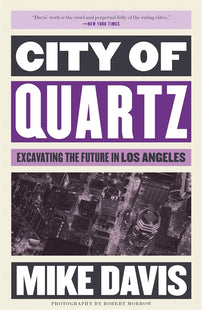 No metropolis has been more loved or more hated. To its official boosters, "Los Angeles brings it all together." To detractors, LA is a sunlit mortuary where "you can rot without feeling it." To Mi...
Book strip #3
-
 Counterpointing Los Angeles’s central role in America’s fantasy life – the city has been destroyed no less than 138 times in novels and films since 1909 – with its wanton denial of its own real his...

Book strip #4
-
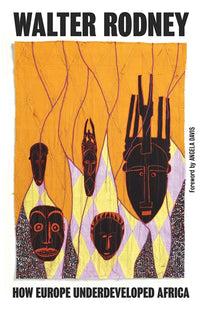 How Europe Underdeveloped Africa is an ambitious masterwork of political economy, detailing the impact of slavery and colonialism on the history of international capitalism. In this classic book, R...
