Laura Oldfield Ford's Savage Messiah, collecting issues of her acclaimed art zine that charted her psychogeographic drifts through a decaying city, has been reviewed by Bidisha for Notes on Culture, her new online magazine. Bidisha praised the book, describing it as "reportage turned into art of breathtaking precision, political sensitivity and power." In a rich and engaging review, Bidisha gave her thoughts on the nature of Ford's artistic project in Savage Messiah and why the zines are so effective.
Ford observes, sketches and photographs these areas, which are simultaneously forgotten and earmarked for exploitation, making notes and speaking to residents. The result is not straight reportage or urban landscape recording but reality with the zoom lens sniper eye tuned to the max. The cracks in walls, the scrubby greenery growing between slabs, the broad backs of massed riot police and the sad, scratchy graffiti cut into the page with intense monochrome menace. There is, appropriately, a savagery and sharpness underlying Ford's work, equal parts anger, despair, love and urgency. The images are beautiful and terrible: fantasy figures of fashion brand advertising on hoardings next to blocks of flats with smashed out windows.
Slavoj Žižek has been interviewed by Al Jazeera to give his unique perspective on the tumultuous changes happening in the world financial and political systems. In an extensive conversation with Tom Ackerman, Žižek discussed the Arab Spring, London Riots and the Occupy movement, as well as the various financial and political crises across the world from Europe to India. Throughout the discussion, Žižek explored the themes of violence across the political spectrum and his irresistible desire to provoke friends and enemies alike.
Visit Al Jazeera to view the interview in situ.
Žižek also visited St Marks bookshop to discuss his views on the Occupy Wall Street protest.
Prize-winning writers Margaret Atwood and Helen Simpson, contributors to I'm With The Bears: Short Stories From a Damaged Planet a collection themed around climate change, appeared on BBC Radio 4's Open Book program in conversation with Mariella Frostrup. Atwood read an excerpt from her story in the anthology,'Time Capsule Found on a Dead Planet' and Simpson read from 'Diary of an Interesting Year', before both authors discussed their writing practice.
Framing their discussion in light of the popular trend in contemporary fiction for environmental disaster fiction, exemplified by Cormac McCarthy's The Road, they considered the challenges of making issue based fiction attractive to audiences who may be wary of feeling sermonized to. Simpson acknowledged the difficulty, commenting: "moralizing, that's about as popular as telling someone they need to lose weight. It's the nagging and being preached at element that is very hard to avoid around this subject".
The legacy of the history and historiography of the 1915 Armenian genocide is a fraught one. Ece Temelkuran's Deep Mountain: Across the Turkish-Armenian Divide, an exploration of the controversial subject of the living history and continuing denial of the Armenian genocide, has attracted both high praise and strong criticisms from different quarters.
For the New Left Project, Jamie Stern-Weiner describes Deep Mountain as "a thoughtful reflection on the personal and communal politics of nationalism". Introducing his interview with Temelkuran, he summarizes his thoughts on the book thusly:
Its value, in my view, lies primarily in its exposition of the subjective experience of nationalism and the ways in which personal and communal identity can become bound up with political demands.
While Stern-Weiner's views are characteristic of the more positive reviews, the book has also garnered a response of a very different kind. G. M. Goshgarian writing for New Politics has penned a scathing attack on the book which he deems as "genocide denial light". In an in-depth and comprehensive piece, he explains that he was baffled as to why Verso had published a book that, in his words, could be best be likened to "latter-day national- socialist treatments of the holocaust". With the aim of facilitating an open dialogue on this sensitive issue, it is interesting to present his critique here. Goshgarian hopes that his review will add to a wider discussion that "may help spark a badly needed clarification of the ambiguities muddying the political and ideological movement that has spawned Temelkuran's book."
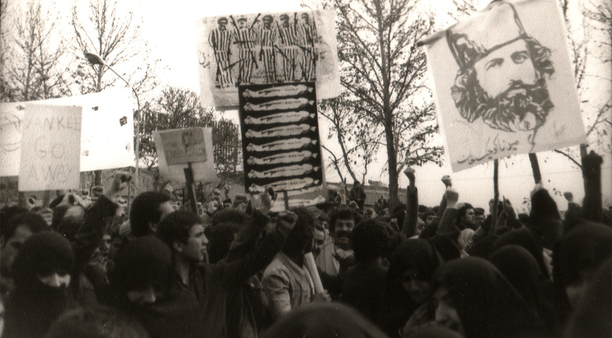
Tariq Ali, author of Obama Syndrome, has written a piece for the Sunday Herald on the ninety-nine percent protesters at Occupy sites around the world, but most famously at Occupy Wall Street. In it he compares this fledgling activist movement with the mass protests of the past. A section of the article is reproduced here:
"A map of the world that does not include Utopia is not worth glancing at," wrote Oscar Wilde, "for it leaves out the one country at which humanity is always landing. And when humanity lands there, it looks out, and seeing a better country, sets sail. Progress is the realisation of Utopias." The spirit of that 19th century socialist is alive among the idealistic young people who have come out in protest against the turbo-charged global capitalism that has dominated the world ever since the collapse of the Soviet Union.
The Occupy Wall Street protesters who have taken up residence at the heart of New York's financial distract, are demonstrating against a system of despotic finance-capital: a greed-infected vampire that must suck the blood of the non-rich in order to survive. The protesters are showing their contempt for bankers, for financial speculators and for their media hirelings who continue to insist that there is no alternative. Since the Wall Street system dominates Europe, local versions of that model exist here too. (Interestingly it was the Wall Street occupiers rather than the indignados of Spain or the striking workers of Greece who had an impact in Britain, revealing once again that the real affinities of this country are Atlanticist rather than European.) The young people being pepper-sprayed by the NYPD may not have worked out what they want, but they sure as hell know what they're against and that's an important start.