Nation of Terrorists
Matthew Wolfe on the use of domestic terrorism charges against activists, from the Earth Liberation Front to Prairieland.

Late on the night of July 4, 2025, a group of eleven protesters walked up to the outside of the Prairieland Detention Center in Alvarado, Texas and began setting off fireworks. Prairieland serves as a holding facility for immigrants recently detained by ICE. Conditions inside the facility were widely reported to be inhumane. One woman, arrested on a warrant for an open traffic ticket, told the Washington Post that, due to a lack of beds, she was forced to sleep on a thin mat over a concrete floor. Another recalled being denied medical care and that the facility’s filthy tap water had “things swimming in it.” The fireworks, as the participants later testified, were part of a “noise demonstration,” a spectacle intended to show solidarity with detainees and bring attention to the Trump administration’s architecture of mass deportation. Hearing the booms, a confused jail staffer called 911, and local law enforcement was dispatched to the scene. Shortly after they arrived, a police lieutenant, spotting a man in a neon green gaiter holding a rifle, leveled his handgun and ordered the suspect to the ground. The man, a former Marine reservist, fired several shots in the direction of the officer, hitting him in the left shoulder above the clavicle.
In the aftermath, the protesters, including the former reservist, were arrested. Notably, so too were eleven other defendants who did not attend the protest at Prairieland but were accused of assisting the demonstrators in various ways. Among those in the latter category was Daniel Sanchez-Estrada, husband to one of the on-site protesters, who was indicted for moving a box of his wife’s anarchist literature – an effort, prosecutors claimed, to hide incriminating evidence. Another defendant was arrested for deleting a friend from a group chat. Federal officials would later describe the fireworks as “explosives” and contend the demonstration was actually a planned ambush designed to lure law enforcement officers to their deaths. As punishment, the defendants were sentenced to a combined 556 years in prison. For transporting his spouse’s zines, Sanchez-Estrada, convicted of “conspiracy to corruptly conceal documents,” received 30 years. Fifteen of the Prairieland defendants were also, in addition to other charges, indicted for providing “material support” to terrorists.
The Prairieland case was a signal moment in the Trump administration’s war on dissent, marking the first time it chose to bring terror charges against domestic political opponents. It will not be the last. Last September, several months after the shooting, Trump issued an executive order declaring “antifa” a domestic terrorist organization.[1] A few days later, he issued a directive – the National Security Presidential Memorandum, or NSPM-7 – instructing federal law enforcement agencies, including Joint Terrorism Task Forces, to counter a recent rise in “domestic terrorism” and “organized political violence.” An overtly partisan document, the NSPM-7 makes no mention of right-wing violence but cites the assassination of Charlie Kirk and attacks on ICE officers as grounds for new investigations into “anti-fascist” groups. Such groups, it notes, can be identified by their espousal of “anti-Americanism, anti-capitalism, and anti-Christianity … extremism on migration, race, and gender” and “hostility towards those who hold traditional American views on family, religion, and morality.” While in recent years prosecutors have shown an increasing willingness to pursue domestic terrorism charges against protesters, the NSPM-7 represents a frightening shift in federal policy, one in which the formidable apparatus of the national security state is now aimed directly at the left.
As observers of the Prairieland case have pointed out, “antifa,” “material support,” and “terrorism” have, in the hands of the state, become distressingly limber phrases. “Antifa” now functions as a catch-all term for any left-ish demonstrator – that is, anyone who is plausibly anti-fascist. Faiza Patel of New York University’s Brennan Center, meanwhile, notes that “material support” for terrorism could be interpreted as broadly as buying a protester a meal or donating money.[2] Indeed, after the attacks of September 11, hundreds of Muslims were prosecuted under the material support law for alleged assistance to groups like Al-Queda and ISIS, often on deeply flimsy pre-texts. More than that, such putative supporters of terrorism are now understood as terrorists themselves. In public statements, prosecutors repeatedly referred to not just the shooter, but every defendant – even the husband lugging zines – as domestic terrorists. More recently, the Trump administration has branded a wide number of political opponents as terrorists. Former Attorney General Pam Bondi labeled arsonists who set fire to Tesla cars, dealerships, and charging stations as domestic terrorists. The term has also been liberally applied to anti-ICE protesters, as well as immigrants themselves. The designation potentially implicates a huge section of the population, over half of which disapproves of ICE’s enforcement of immigration law.
A word once reserved for lethal bombings and assassinations is now routinely employed to describe actions in which not even property was damaged. This linguistic creep is no accident. For the right, charging, legally and rhetorically, its enemies with terrorism has significant tactical advantages, serving to delegitimize political opponents, criminalize protest, and justify aggressive repression.
To some degree, the eagerness with which the Trump administration has wielded the designation “terrorist” against domestic opponents points to the word’s inherent vagueness and the political opportunism baked into the history of its use. Attempts to comprehensively define the term have not infrequently led scholars to simply throw up their hands. A viable definition of terrorism, declared the historian Walter Laqueur, “does not exist nor will it be found in the foreseeable future.” U.S. law enforcement has hardly managed to devise a precise definition themselves. The FBI, for example, drawing from the Code of Federal Regulations, describes terrorism as “the unlawful use of force and violence against persons or property to intimidate or coerce a government, the civilian population, or any segment thereof, in furtherance of political or social objectives.” The definition raises a number of sticky questions, such as, for example, in the case of foreign acts, “unlawful” under whose law? What constitutes “violence” against inanimate property? Such semantic ambiguity opens a vast space for law enforcement to insert their preferred conception of what does and doesn’t qualify as terrorism.
Considering the word’s historical usage provides firmer ground for understanding the state’s current posture towards domestic activists. A half-century ago, the term underwent a remarkable shift. As the sociologist Lisa Stampnitzky observes in her essential book Disciplining Terror, through the late 1960s terrorism was broadly understood as a tactic employed by both subaltern insurgents and states. Perpetrators of politically motivated violence, even those who killed civilians, were, in public discourse, generally considered “rational, sometimes even honorable, actors.” One might not agree with the Weather Underground or the FALN but their actions had a discernable political logic: there was a reason behind their bombs.
Beginning in the 1970s, however, a new batch of self-described terrorism experts refitted the word to designate a novel, monstrous figure. Not merely wicked, The Terrorist was pathologically irrational, trafficking in violence absent of any higher purpose beyond the spread of mayhem. There were no political motives behind the terrorist’s actions—and to ask after them was to expose oneself as a terrorist sympathizer. The terrorist could only be condemned as senselessly evil and targeted accordingly. “Rather than simply judge terrorists’ reasons as unworthy,” Stampnitzky notes, “the terrorism discourse places such actions outside the realm of moral consideration entirely.” The designation of “terrorist,” then, is less a description than a bid for delegitimization. Such delegitimization, among its other consequences, morally licenses states to enact extreme measures of repression, including extrajudicial violence, against the threatening parties. The Trump Administration, for example, has justified its recent lethal strikes against alleged drug smuggling boats in the Caribbean and eastern Pacific – which, as of this writing, have killed at least 223 people without any form of due process – by arguing that we are fighting not just drug smugglers but “narcoterrorists.”
Who the state designates as a terrorist involves considerable discretion and offers a window into both its aims and its fears. As I recount in my book, Fires In The Night, in the early 2000s the FBI deemed the country’s most dangerous domestic terrorism threat to be not libertarian militias or white supremacists or abortion clinic bombers, but, rather, the Earth Liberation Front, or ELF – a group that killed precisely no one. The ELF was a leaderless group dedicated to aggressive sabotage against institutions responsible for destroying the planet, often through the use of targeted arsons. Over a period of five years in the 1990s and early 2000s, a single cell of the ELF, arising out of the radical environmentalist movement of Eugene, Oregon, set fire to slaughterhouses, lumber companies, SUV dealerships, and even a mountaintop ski resort in Vail, Colorado. While the method was dangerous, the ELF took precautions to make sure no people were physically injured by the fires.
Despite killing no one, the ELF was understood by the FBI – and much of the media – as a terrorist group, or, more specifically, an ecoterrorist group. The very term “ecoterrorism,” describing any form of violence or property destruction accomplished in defense of the environment, was itself a product of a concerted rhetorical campaign by the industry lobbyist Ron Arnold, who aggressively pushed for the term’s adoption through op-eds, interviews, and a slush fund of money provided by Exxon and other corporate donors. While other forms of specialized political violence lacked an equivalent turn – attempts to burn down abortion clinics were not, for example, called abortio-terrorism – ecoterrorism became an accepted category within the Bureau, framing not just the ELF but a vast number of activists who resorted to even minor sabotage as terrorists. Like the NSPM-7, directing federal law enforcement to focus investigations on “antifa” terrorists, this framing primed the FBI to prioritize investigations into environmentalists. In some cases, punishments were clearly intended to scare off future activism. In 2001, the activist Jeff Luers, was sentenced to 22 years in prison for setting fire to a single SUV, singeing two others, as a symbolic protest against global warming.
[book-strip index="1"]
Often markedly disproportionate to the supposed crimes, the draconian sentences handed down during the “Green Scare” communicated a specific anxiety and intention on the part of the state. In part, the FBI’s heightened attention to the ELF and other radical environmentalists arose in the rubble of September 11th. Having failed to prevent the attacks, the FBI adopted a more proactive posture intended to thwart crimes – in particular, terrorism – before they occurred. In interviews, FBI counterterrorism officials said that they ranked the ELF as the country’s most dangerous domestic threat out of, in part, a fear of the unknown. Compared to abortion clinic bombers and right-wing militias, the Bureau had relatively little experience with radical environmentalists. Even if the ELF hadn’t killed anyone yet, the FBI imagined that, one day, they might.
Such a logic of pre-emption has, of course, been part of the Bureau’s DNA since its earliest days when Hoover aggressively sought to repress left-wing individuals and organizations he believed prone to revolutionary bloodshed. (Hysterical at the specter of revolution, Hoover targeted many groups firmly committed to nonviolence such as Martin Luther King Jr.’s Southern Christian Leadership Conference and Cesar Chavez’s United Farm Workers). It was these repressions, in tactic and strategy, Daniel Chard argues, that would form the foundations of American counterterrorism, whose core tenet, too, became the prevention of anticipated savagery.
This anxious logic (and specter of impending revolutionary violence) applies to the ongoing federal campaign against the left. Like the Green Scare, the charges may at times be based on instances of law breaking, but the punitiveness of the sentencing is designed to stifle future activism. Moreover, its projections are more palpably hysterical and inflated, articulating a particular form of right-wing paranoia. Last December, FBI national security official Michael Glaseen testified before Congress that “antifa” was, domestically, the Bureau’s “primary concern right now” and “the most immediate, violent threat.” (It has been linked to exactly one killing in the last twenty-five years, when, in August 2020, a mentally unstable activist who self-identified as anti-fascist shot a member of the right-wing group Patriot Prayer during a street clash in Portland, Oregon.) The administration’s recent National Counterterrorism Strategy document, authored by White House advisor Sebastian Gorka, lists “violent left-wing extremists” as threats equivalent to drug cartels and Islamist terrorists and declares an intention to “neutralize” violent secular political groups whose ideology is “anti-American, radically pro-transgender, and anarchist.” Even if there is little evidence of “antifa” violence, the FBI seems to imagine that anti-fascists will, if not repressed, kill in the future. In June, the Department of Justice charged 15 protesters in Minnesota who they stated had “violently” opposed immigration law enforcement, despite citing no injuries, by “stalking agents” and throwing hunks of ice at their vehicles. Minnesota U.S. Attorney David N. Rosen claimed the protesters had “antifa” ties.
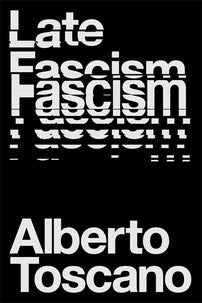
What should we make of this cocktail of hyperbolic suspicion, cynical maneuvering, and accelerating repression? In his book Late Fascism, Alberto Toscano resuscitates Herbert Marcuse’s concept of “preventive counterrevolution”: a reaction by the state intended to defend against a feared revolution, which, however, has not taken place and doesn’t stand on the agenda at the moment.” This concept, as Toscano notes, was taken up by Marcuse’s student Angela Davis to analyze the repressive tactics employed by the state against racialized communities whose existence was deemed threatening. Today, we could note the proximity between charges of terrorism leveled at domestic activists, the expansion of ICE, and the specter of the Islamist and “narco-terrorist.” As it has been since at least the 1970s, the charge of “terrorist” today is intimately bound up in dynamics of racialization. At the state level, the right-wing governments of Florida and Texas have labeled the Council on American Islamic Relations, or CAIR, a Muslim civil rights group, as a terrorist organization. Speaking to the press earlier this year, Secretary of Homeland Security Kristi Noem referred to both Renee Good and Alex Pretti, killed separately while protesting ICE raids in Minnesota, as having committed domestic terrorism. The notion of a mother of three and a skinny, bespectacled nurse – whose only crime was showing up to demonstrate against a balaclava’d secret police – being, somehow, terrorists was a hard sell to the public. But, like the charging of the Prairieland defendants, it was intended to smear activists combating an ethno-nationalist project.
Beyond the loosely defined “antifa,” exactly which political opponents the Trump administration considers to be terrorists remains a secret. In February, former Attorney General Pam Bondi stated before a Congressional subcommittee that, per the NSPM-7 memo, the Department of Justice has assembled a secret list of what it considers to be “domestic terrorist organizations” — a definition loose enough to include any individual or group suspected of engaging in offenses including trespassing, vandalism, the identification of police officers, and “civil disorder. But what we know is that the repression tied to the “terrorist” slander has entered a frightening new phase. The longest prison sentence handed to an ELF defendant, for their role in destroying millions of dollars worth of property, was 13 years in prison. Prairieland protesters who destroyed nothing received 50 years. A politics adequate to the moment will have to contrive a means of confronting this dangerous label head-on.
Matthew Wolfe is a postdoctoral researcher at New York University’s Institute for Public Knowledge and the author of Fires In Night: The Earth Liberation Front, The FBI, and a Secret History of Eco-Sabotage.