Ghosts and Ancestors
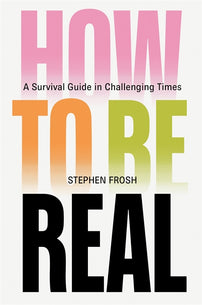
An excerpt from Stephen Frosh's new book, How to be Real.

[book-strip index="1" style="buy"]
The past, if not properly mourned, can come back to haunt us. Let me start with one example. In October 2018, Jair Bolsonaro, a far-right politician, was elected president of Brazil. The election campaign had been violent and characterised by widespread protests, street movements, and claims of corruption all round. It took place in the aftermath of what was dubbed a ‘legislative coup’ through which the then president, Dilma Rousseff, who belonged to the leftist Workers’ Party, was impeached and removed from office. In the presidential election, Bolsonaro was regarded as a candidate of the militaristic right, and he certainly fitted that role, celebrating Brazil’s civil-military dictatorship of the 1960s and 1970s and cannily playing on a public desire for a stable society. A specific instance captures both the shamelessness and brutality of Bolsonaro’s candidacy. During the impeachment process, when parliamentarians had to cast their vote, Bolsonaro dedicated his to ‘the memory of Colonel Carlos Alberto Brilhante Ustra, the dread of Dilma Rousseff’. Ustra had been chief of Brazil’s secret service in São Paulo and as such was responsible for torture, murder and disappearances; indeed, he was the only member of the military to be subsequently convicted of murder. As Bolsonaro knew full well, Dilma Rousseff had herself been the victim of torture at that time.
How could someone who so openly advocated torture and cruelty, who glorified a destructive regime of this kind, be elected as president of a major country? Obviously, there are many answers to this question, relating to economic decline, corruption, populist nationalism, American Trumpism and so on. But there is an additional factor, less extensively commented upon, that may play a part.
Here is a brief extract from an interview with a psychoanalyst who participated in the Truth Commission of Brazil, set up by President Rousseff before she was impeached. The psychoanalyst, invited by the president to join the commission, focused her work on the impact of the 1964–85 dictatorship on the indigenous people of the Amazon. In an interview in 2016, carried out as part of a research project on psychoanalysis during the dictatorship, we asked this psychoanalyst about her experience and in particular what overall effect she thought the Truth Commission had had. Her response (in the original English) was definite:
I think it was near zero, I was very disappointed. Brazil was the last [Truth Commission] from the countries in Latin America and everybody, the young people who had not lived in it and the old people, the ones who were not victims, had forgotten the dictatorship ... In my personal research, sometimes I talked to someone at the bus station or on the streets by curiosity, [saying] I was from the Truth Commission. [For] most people I spoke to in the streets the dictatorship was better than now, there was not a mess, things were in order and they were right to arrest those communists.
Our psychoanalyst notes how ‘most’ ordinary citizens (‘someone at the bus station’) remembered or imagined the dictatorship as a better time, seeing it as more orderly and free of disruptive communists. This is after she has introduced herself as a member of the Truth Commission, so the reaction is undoubtedly meant to antagonise and impress. There is of course nothing systematic about this: the psychoanalyst is clear that she was engaging in ‘personal research’, but she is also a practised observer and political thinker well known in Brazil, and so we might give some weight to her testimony. It fits into something else, in any case: the question of what it takes to mourn a period of violence in such a way that it does not recur.
In Brazil, the dictatorship did not come to a dramatic close as it did in some other Latin American countries. It rather faded away, and its end was preceded in 1979 by the Brazilian military president, João Baptista Figueiredo, passing a law that granted a general and unrestricted amnesty to all perpetrators of political crimes, whether they were members or defenders of the civil-military regime or opponents of it. The consequence of this is that no one has been called to account for the violence of that period, even when Truth Commissions have provided evidence. It has also meant that many alleged perpetrators have been able to take refuge in denials. Our psychoanalyst described the scene:
They only said ‘nothing to declare, nothing to declare’, you can do nothing. We had the power to force them to come but not to force them to tell the truth, we are not torturers, we made the question, ‘Nothing to declare, it’s false, no it wasn’t me. Nothing to declare.’
Is it too far-fetched to suggest that the restoration of right-wing rule in Brazil and the nostalgia for the period of the dictatorship are linked to the failure of acknowledgement, mourning and reparation for past oppression? The perpetuation of injustice and refusal to come to terms with past horrors – which for many Brazilians is what they were – is precisely the set of conditions that militates against laying ghosts to rest. These ghosts come back to haunt, and one response is to deny them again, to try to exorcise them by violence. Perhaps we have in Brazil (and elsewhere, but those are other stories) exactly this scenario: our connection to a brutal past leaves us plagued by ghosts that demand recognition and justice; but this is a painful process, requiring openness and the courage to acknowledge the damage that has been done and who bears responsibility for it. Where the social order is insufficiently resilient to achieve this, the ghosts are banished again and in their place appears another kind of repetitive phenomenon, the return of the ‘repressive authority’ that blocks a coming-to-terms with the unquiet remains of the ancestors. This is indicated psychoanalytically under the heading of the return of the repressed and the Death Drive and is perhaps the real danger of intergenerational haunting: that we might try to rid ourselves of ghosts through violence.
If ghosts appear, it is usually because they are trying to communicate something. Otherwise, what is the point of them coming back? If we listen to these ghosts, whether they are disturbing or simply sad, what messages do they bring? In fiction, these are sometimes very specific – where the murder took place, say, or where and from whom to seek help, what task has been left undone and now needs to be fulfilled. The ghost of Hamlet’s father is the classic Shakespearean example, directing Hamlet and the audience to the heart of what is ‘rotten in the state of Denmark’ and fuelling Hamlet’s arguably paranoid thirst for revenge. Sometimes ghosts are imagined as bringing a warning to the living, telling them who to watch out for and what dangerous situations to avoid. The successful romantic film Ghost, from 1990, plays on this idea with the lead character protected by her dead husband. Believing in the concreteness of these messages does require an openness to belief in the occult that strays too far from reason to be very convincing. Ghost is no more than a romantic comedy; but Hamlet is one of the greatest of all plays partly because of the ambiguity about the status of the ghost – whether it is real or a projection from Hamlet’s mind. If we consider the issue more broadly, it is worth taking seriously the sense of something that needs to be put right before the ghost can find rest.
In much recent writing on this topic, loosely termed ‘hauntology’, the things that need to be put right are societal. The sources of the troubles that haunt people are unresolved and often unacknowledged tensions in the social world, perhaps a situation in which the promise that society makes to its members – basically to protect them and offer them sustenance – has been betrayed. Much has been written, for instance, and in many cases very powerfully, about the legacy of slavery in the United States. In one of the most significant novels of the twentieth century, Toni Morrison’s Beloved, this legacy is presented as a ghost story, dealing both with the immediate aftermath of slavery and the resonance of this aftermath for contemporary American society. How has the supposed freedom produced by the abolition of slavery, Morrison’s book asks, hidden the actual continuation of oppression and discrimination, resulting in the perpetuation of anti-Black racism and its immense weight for more than a further century? The ghost that keeps returning in the novel is of the baby killed by her mother to protect her against being re-enslaved (a genuine historical occurrence); but it is also, palpably, the ghost of slavery itself, still haunting the American body politic in inescapable ways.
Beloved is, obviously, a novel in which being haunted by an actual ghost can be imagined as a real event. We are at liberty to take this literally or symbolically, or both. If we think about it psychosocially, however, mixing psychological and sociological perspectives, we can perhaps see that it brings to light how unspoken and suppressed societal iniquities can continue to make themselves felt, to insist on themselves, until they begin to be recognised. The Black Lives Matter movement, for instance, can be understood in part as an explosive resistance to anti-Black racism that has certainly not come from nowhere – the civil rights and Black Power movements of the 1960s and 1970s are just two examples of its precursors – but which represents the resurgence of a spectre that has haunted American society (and, of course, other societies too) precisely because the injustices it names have not been put right. Other postcolonial demands for reparative justice of one kind or another, sometimes material and usually involving formal apologies and acknowledgement of the continuing profits derived from historical wrongdoings, can also be seen in this way, even if they are not always quite as clearly ghostly in their appearance. And I have already said elsewhere about how haunted the post-Holocaust world is, how the second-generation descendants of both survivors and perpetrators have often had to feel their way blindly towards the experiences they know have affected them but which they have not had ‘permission’ to really put in their place.
This example of the descendants of perpetrators is especially revealing due to the different levels on which it operates. On the social and national level, we know that the denial of responsibility by post-war Germany and the covering-over of the reinstatment of Nazi functionaries in its legal, civil service, political, cultural, educational and health systems – the rapidity, that is, with which the slapdash process of ‘de-Nazification’ was abandoned – only began to be reckoned with in the 1970s. Even then, it was controversial within Germany to acknowledge the Nazi terror and the responsibility of the whole society for allowing it to thrive. Chancellor Willy Brandt’s famous Warschauer Kniefall, his gesture in 1970 of kneeling at the memorial to the Warsaw Ghetto uprising, was deeply unpopular among a large section of the West German public who, neglecting to notice the murderous events it was recognising, saw it as bringing their country into disrepute. Yet if rampant denial was characteristic of the generation that had lived through the Second World War, the second and perhaps especially the third generation of post-war Germans gave ample and sometimes violent evidence of having been haunted by the unspoken histories of their predecessors. These descendants were driven to ask questions about the silence in which the immediate past was shrouded and often ended up challenging their parents or grandparents. The effects of all this continue today. On the one hand, Germany, like many European countries, is plagued by backward-looking extreme right-wing nationalists still in thrall to an imagined past of greatness; on the other, Germany has done more than many countries – perhaps most notably Austria, which is the closest comparison – to acknowledge its culpability through memorialisations and (eventually) material reparations. Both responses are haunted by a stain that will never go away, and that passes down the generations so that even people who have no conceivable link with this past must find ways of responding to it. Germany’s unqualified commitment to supporting Israel, and the difficulty this creates when criticism of Israeli actions is needed, is another example of the hold that the past can have over present politics.
Ghosts speak about the injustices that have been perpetrated and that have not been resolved by societies that refuse to face up to their past, and in that refusal fail to recognise present iniquities. As the example of post-war Germany illustrates, this is not just an intellectual encounter with the ghosts of the past. For the children and grandchildren of Nazi Germany, it has often been a deeply personal, emotional experience to come up against the silence of their parents or grandparents and to realise just what they may have done, whether as active Nazis or as members of what has come to be called a ‘bystander society’. This has been studied carefully in some important scholarly works, such as Mary Fulbrook’s Bystander Society, it has also been explored by writers reflecting on their own discoveries of the histories of their German ancestors and subsequent struggles to come to terms with them. For example, Jennifer Teege, a Black, Hebrew-speaking German who in her thirties found out by accident that her grandfather was Amon Goeth, the commandant of Płaszów concentration camp (portrayed graphically in Steven Spielberg’s 1993 film Schindler’s List), and that her beloved grandmother had been his mistress, was pitched by this discovery into a deep psychological crisis. The psychoanalyst and historian Roger Frie launched into a historical investigation of denial in post-war Germany after uncovering his grandfather’s Nazi connections. There have also been several documentary films about the tension between denial and acknowledgement of the actions of Nazi parents, notably Philippe Sands’s 2012 film My Nazi Legacy, which explored the differing responses of the sons of Hans Frank, who as governor general of Poland was directly responsible for the destruction of the Jews there, and Otto von Wächter, governor of Galicia and Frank’s deputy. Frank’s son Niklas, a well-known German journalist, is renowned for his condemnation of his father, a standpoint that came to very public notice with the publication in 1987 of his book Der Vater: Eine Abrechnung (‘The father: A settling of accounts’ – translated into English in 1991 as In the Shadow of the Reich). Von Wächter’s son Horst, on the other hand, is shown in the film as wriggling out of this: he is troubled (that much is clear), he sees what was done, but his own father, he believes, was fundamentally a good man who had no real choice. He argues that we have to understand how resistance to the Nazi decrees was not easy, even for a Nazi. Despite considerable pressure from Niklas Frank and Philippe Sands himself, Horst von Wächter maintains this position throughout the film; he is shown receiving with pleasure the admiration for his father expressed by some Ukrainian neo-Nazis.
For the people on the ‘other’ side, the survivors of atrocities ranging from the Holocaust to South African apartheid to genocides in different places around the world, the ghostly apparitions are of a different nature. Nevertheless, some elements of their general structure are shared. Something has not been done to make good the damage, to ascribe responsibility to where it belongs and to achieve recognition of what people have gone through. In the case of survivors, the struggle to be heard has in many contexts been immensely challenging. Their haunting is connected to the genuine silence that followed this experience of being silenced: having spoken to deaf ears, the survivors often withdrew. For this reason, and also as a protective strategy, they often did not unburden themselves within their families, leaving a vacuum that their children were aware of but did not know how to fill. Alternatively, some survivors projected into the next generation a demand for them to repair the damage that had been done, perhaps to make up for their own difficult lives, or even at times as an ‘answer to Hitler’, a statement about survival. Intense investment in their children, over-protectiveness, anxiety, expectations of high achievement: these and similar demands, both consciously and unconsciously transmitted, are reported by many of the second generation. Eva Hoffman writes, from her own experience:
The parents so often hoped for rescue. They invested so much in these children, and imbued them with so much yearning. To replace – revive – the dead ones; to undo the losses; to repair the humiliations wrought by the abusers; to provide the redress of unconditional love and protection against deadly danger.
For those next generations, sometimes driven to distraction by their parents’ behaviour and by what they suspect but do not know, the haunting is often profound. These ghosts are saying, ‘repair the world for us’, an injunction that may be unachievable, especially when the recipient has all their own normal human uncertainties and vulnerabilities, now magnified by those they have received from their parents.
Ghosts of these kinds, the haunting remains of past suffering, need to be recognised for what they are: living remnants that keep injustices alive until something is done about them. In this respect, they can also be thought about in relation to the concepts of ‘melancholia’ and ‘trauma’. In both these states, what is being described is a set of experiences that remain ‘unprocessed’, unavailable to the kind of thinking integrated with emotion that is necessary for coming to terms with indigestible events. In trauma, the big difficulty is of finding ways to convert the here-and-now experience of being overwhelmed by the event into a different experience of that event as past, the subject of distressing memories no doubt, but memories nevertheless. The hard task placed on later witnesses to find ways of listening to trauma narratives that recognise their reality and intensity but also manage to stay with the sufferer is based on the idea that such witnessing can be a path to allowing the trauma to be looked at or symbolised, to make some kind of sense. In this way, a certain ‘difficult knowledge’ can substitute, for both speaker and listener, for what was previously felt to be unbearable.
With ghosts too what is noticeable is the sense of a voice not heard, of something speaking and trying to find a listener so that things might change. There is an event, perhaps a continuing series of events; it is known about yet also not known, because this knowledge is painful either in itself or for how it implicates us or others in culpability. The ghostly reminder, never quite in focus and often at the edge of what is perceptible, calls out to the haunted person or society, demanding a hearing. If this listener can be found, then just as with trauma and melancholia, the possibility arises of some lessening of suffering, a kind of reaching back into the past that then alters the present. In myths and stories, ghosts represent the cries of lost souls who have often suffered violence. Psychologically, this is quite a precise statement: we are haunted by unfinished business related to righting injustices; and finding ways to respond to this might mean not that the ghosts are destroyed, because that would wipe out history, but that they find their appropriate place in the order of things.
[book-strip index="1" style="buy"]
Image: Thorvald Niss, The Drowned Man's Ghost Tries to Claim a New Victim for the Sea. 1932. Via Wikicommons.
Book strip #1
-
 30% off
How to be Real
