Milk and Toxic Dust
Originally published on Ocean-Archive.com, authors Lorenzo Feltrin and Emanuele Leonardi discuss how working-class environmentalism continues to address the intertwined degradation of bodies and the environment.

Phosgene leak at the Petrolchimico plant, 1972, Porto Marghera. Photo by Enzo Manderino. Centro di Documentazione di Storia Locale di Marghera, photographic archives.
This conversation between Adelita Husni Bey, Emanuele Leonardi, and Lorenzo Feltrin traces how ecology in Italy emerged from workers’ struggles—and how, since the 1990s, market-driven “green” governance has worked to sever class questions from ecology writ large. Revisiting Porto Marghera, the ex-GKN workers’ collective, and the tradition of workers’ inquiry, they reflect on health and prevention as collective, political terrains—shifting from the “monetization” of risk to the refusal of harmful production inside and outside factories. See the original post here.
Adelita Husni Bey: Your research struck a deep chord with me, despite the differences that set it apart. I’d like to begin with a question for you, Emanuele. During the “Marx in the Anthropocene” conference held in Venice in March 2025, you argued that the climate justice movement has “lost its class character.” Could you expand on that statement from a historical perspective, also in light of the forthcoming English translation of your 2017 book with Verso? When and how did this disconnection between the class and ecological dimensions take place, and what forces contributed to their separation?
Emanuele Leonardi: In Labour, Nature, Value: André Gorz between Marxism and Degrowth I argue that the politicization of the ecological question arose through workers’ struggles, not despite them. In Italy in particular, the emergence of ecology as a central political issue was the outcome of a period in which labour movements, far from being neutralized, expanded to integrate the question of noxiousness and health within sites of production.
By the late 1980s—and especially with the onset of the 1990s—we entered a phase in which a distinctly capitalist perspective on the environment emerged. We do not inhabit a post-capitalist environment; on the contrary, our environment has become more capitalist than it was in the mid-1970s. Yet, some of the demands first advanced by those earlier movements continue to occupy a central place on the political agenda. Meanwhile, the emergence of transnational climate governance—from the Rio Convention (1992) to the Kyoto Protocol (1997)—consolidated a logic in which economic development and environmental protection were to be pursued in tandem. The ecological crisis was thus reframed as a crisis for capitalism: an opportunity to create new markets and to turn a problem generated by the market into one to be resolved through the market itself.
In my later work with Paola Imperatore, “L’era della giustizia climatica” (Orthotes, 2023), we explored how the climate justice movement—born in constitutive tension with climate governance—emerged at a time when class demands, as they had developed during the anti-authoritarian cycle of struggle from 1968 to 1973, had already been relegated to the background. Up until 2015, these movements maintained a relationship of critical proximity with the United Nations: on one hand, providing it with political legitimacy, and on the other, attempting to push it beyond the confines of the neoliberal framework.
It was Greta Thunberg, at COP24 in Katowice in 2018, who decisively withdrew from this dynamic of political legitimization.[1] Once the umbilical cord with the United Nations— themselves key providers of legitimacy to the climate justice movement—was severed, people returned to the streets. In 2019, millions of young people mobilized worldwide, from March 15 through November 29.
A major global demonstration was planned for April 24, 2020, which in Portugal and Italy was also meant to mark a moment of convergence with trade unions, coinciding with the anniversaries of liberation from Nazi-fascism and fostering new alliances between activists and workers. Then came the total lockdown: the movement lost its mass character yet gradually began to rediscover the class roots of ecological struggle. A telling sign of this shift came a year after the publication of my book with Paola Imperatore, when Greta Thunberg visited Campi Bisenzio to express solidarity with the Collettivo di Fabbrica Lavoratori ex-GKN.[2]
Between 2019 and 2022—before Russia’s invasion of Ukraine—we were in a relatively favourable ideological moment: after decades of ecological transition “from above”, it finally seemed possible to envision a movement grounded in labour and radical democracy “from below”. With the war, however, that terrain became more fraught: the urgency of the climate crisis could no longer be taken for granted. Today we are witnessing multiple, often opportunistic, attempts to linkrearmament with decarbonization—efforts that have a neutralizing effect on the political and class dimensions of climate justice.
If one accepts rearmament, one effectively abandons the very notion that an ecological transition is possible — indeed, one denies at its root that it represents a desirable and urgent horizon. Conversely, if one accepts that the ecological transition is necessary, then allocating 5% of GDP to rearmament becomes inconceivable. It is perhaps no coincidence that the only country that has tried, not superficially, to grapple with the question of Just Transition is Spain — also the only one to claim that it cannot commit 5% of its GDP to rearmament, given its investment in green policies. I am not necessarily a fan of Sánchez, but he should at least be credited with correctly recognizing the incompatibility between rearmament and transition.
AHB: Lorenzo, your work often explores tensions between environmentalism and trade unions, particularly in contexts such as Porto Marghera. I’d like to ask how these tensions have historically taken shape: the dominant narrative tends to pit unions against environmentalists, especially around factory closures and the defence of employment. Could you expand on how you interpret this opposition today, and to what extent, in your view, these tensions have evolved or been reconfigured over time? We’ve already heard Emanuele’s perspective — I’d be interested to hear whether you would add to or reframe any aspects of his analysis.
Lorenzo Feltrin: Until the late 1960s, the dominant trade-union stance was one of “monetizing health”: the struggle focused primarily on securing hazard pay. However, archival evidence shows that, at least since the postwar years, workers in Porto Marghera had also been calling for changes in production processes — adjustments to machinery and factory layouts, some easier to carry out than others. Yet, at the time, for those designing the plants, the question of workers’ health scarcely registered. These demands collided with the limitations of the period’s preventive culture. A striking example comes from a 1950s CGIL leaflet in which workers demanded “more milk” as a safeguard against toxic dust —a testament both to an emerging awareness and to the limits of the knowledge and protective practices of the time.
In the 1960s, the perspective began to shift, starting with the Turin experience of FIOM-CGIL,[3] in which Ivar Oddone played a key role — one that would also influence Porto Marghera.[4] Following a major strike at the Marghera’s factory known as Petrolchimico in the summer of 1968, Potere Operaio Veneto-Emiliano[5] began to openly confront the issue of refusing toxic working conditions, denouncing the exposure of workers (at the time, the vast majority of the chemical workforce was male, though we should not forget that many roles — from catering to administration — were predominantly held by women). This denunciation extended beyond the factory gates, to the exposure of workers’ families and neighbouring communities, and health began to be understood as a collective right — anticipating, avant la lettre, “working-class environmentalism” as a discourse.
In the 1970s, these demands became intertwined with those of the union Left and of extra-parliamentary groups such as Lotta Continua,[6] which threw itself deeply into these struggles. Alongside Potere Operaio, Il Manifesto[7] also took part in the Political Committee that drafted the emblematic document “Contro la nocività” (“Against Noxiousness”).[8] Out of this emerged a vision that linked struggles inside the factory to those unfolding across the wider territory, encompassing public health and ecology in a broad sense — both within and beyond the workplace — though still marked by significant tensions between the extra-parliamentary groups and the unions.
With the crisis of the chemical sector and the industrial restructuring of 1979–82 — culminating in mass layoffs, including at Porto Marghera — the balance of power shifted, making it increasingly difficult to address environmental protection in truly radical terms. In the 1990s, a rift emerged between the heirs of union representation, who advocated for the continuation of existing production, and territorial committees calling for the closure of the so-called “chlorine cycle”— the plants deemed most polluting and hazardous. Yet both sides shared a common origin in working-class environmentalism. This is evident in the fact that each, within their respective political approaches, sought ways to advance environmental and social rights together. That legacy re-emerges today in experiences such as the Collettivo di Fabbrica GKN, which embodies a renewed synthesis of social and environmental justice.
AH: Considering the deep structural interdependence between fossil capitalism and the means of subsistence of the working class, especially in these contexts, what do you see as the historical potential — and the intrinsic limits — of workers’ environmentalism, or more broadly of grassroots environmentalism, in transforming not only material infrastructures, as the GKN experience is attempting to do, but also the forms of political subjectivity that arise within industrial zones and historically contaminated territories?
EL: You’re raising a crucial issue. Let’s begin with a temporal reference point: as Lorenzo noted, the major crisis in Marghera began to unfold in 1982. In other industrial districts, which reacted differently to the 1973–75 crisis, its effects were felt somewhat later. Still, the key point is that during that period, when people spoke of “occupational blackmail”—the forced choice between wage and health—the wage was still relatively high and accompanied by a degree of social recognition: not only access to mass consumption, but also to welfare and social status.
All the interviews I’ve conducted in Taranto with steelworkers who were employed in the public sector before the major crisis, confirm this. Employment there peaked in 1981, and only in the following years did the awareness begin to set in that “there was no future” —even though, in reality, that future has been continuously prolonged to this day. Workers spoke with pride about walking around, even on Saturdays, wearing their overalls: the word Italsider on their backs was a badge of honor, a symbol of recognition. The children of those who didn’t work in the factory would visit the plants with the workers’ children—and envy them.
Today, however, we are living in the middle of what Lorenzo aptly describes as “noxious deindustrialization”: the wage–health exchange now occurs in a context where health conditions have already deteriorated dramatically compared to the 1970s and 1980s, particularly in the so-called “sacrifice zones”.[9] The level of health one “recovers” when a factory closes today is much lower than that one might have been “regained” had Italsider, or its equivalent, been shut down in 1985 or shortly thereafter. Moreover, the wage involved in that exchange is now far lower and carries no trace of social recognition.
From the standpoint of political subjectivation, I would say that the elements of social desirability embedded in the occupational blackmail of the 1960s–70s were, to some extent, “rational” — at least from an immediate class perspective. At that time, Italy was undergoing a phase of industrial modernization that offered a tangible path out of extreme poverty and precarity. The social elevator still functioned, and the collective aspirations of the expanding working class were tied to the economic boom as a promise of genuine emancipation — even if that promise was not always realized.
Today, it is crucial to conduct research in places where this dynamic seems frozen in place — precisely in Taranto, for instance (I’m thinking of the work of Francesco Bagnardi) — or in other seemingly quiet areas marked by subterranean unrest. The political space in which the wage–health exchange continues to be seen as legitimate is steadily shrinking, losing its coherence. We are approaching a breaking point, beyond which those terms will no longer hold for either side, and it will become necessary to determine whether an alternative can emerge.
From this perspective, GKN is fundamental — not only as a trade-union struggle but as a forge of new imaginaries, as Silvia Giagnoni and Alberto Manconi have insightfully observed.[10] The Collettivo di Fabbrica is grappling with a crucial question: what kind of relationship between labour and the ecological crisis can exist beyond the logic of occupational blackmail? The challenge the GKN struggle faces today is that, while it functions powerfully on the level of imagination, it encounters great difficulty in achieving immediate feasibility — not through any fault of its own, but because institutions and economic actors remain unable, or unwilling, to engage with it on that terrain.
I’d just like to add that the relationship between material conditions and processes of subjectivation must be historicized if we are to grasp it accurately. Fossil capitalism no longer shares a “common destiny” with workers’ incomes, as it did forty years ago. Such convergences are increasingly rare, and it is important to keep that in mind. My political hypothesis is that today, alongside workers’ denialism — the resigned sense that “something is better than nothing” — there is also an embryonic readiness to desert that pact, in search of alternatives which, though still fragile, succeed in mobilizing desire and offering a reasonable practical return. This shift is gradually distancing workers from that proximity to capital which, until quite recently, provided both economic and social returns in exchange for accepting a subordinate role in defining the qualitative composition of production — what is produced, by whom, how, and in what quantities.
[book-strip index="1"]
LF: My book with Verso, Workers and the World: Fighting Ecological Crisis from Within, opens with several instances of acute conflict — situations in which workers from highly polluting factories, threatened with the loss of their jobs, found themselves in near physical confrontation with residents of surrounding communities protesting against external noxiousness. These episodes exemplify the structural interdependence between the reproduction of the working class and the accumulation of capital — a constitutive feature of capitalism that manifests in different ways across historical periods, as Emanuele rightly noted.
Today, we can clearly observe a statistical pattern: a decline in the share of manufacturing employment — that is, factory work — both globally and across many national and local contexts (though not everywhere), coupled with a continuous rise in climate-altering emissions and other forms of noxiousness driving the ecological crisis.
The so-called “jobs-environment dilemma” is often presented as a zero-sum game: on one side, the defense of the environment and public health; on the other, the defence of employment and income. Yet this is a partial interpretation, since there exists both a political and social possibility of transforming production processes so that these dimensions are not in conflict but instead form a positive-sum relationship. However, the depth of transformation required — and thus the scale of struggle and balance of power it presupposes — is often underestimated when discussing a “just transition”, at least as the term has been framed by the United Nations.
Conversely, today’s reality more closely resembles a negative-sum game: we are witnessing a decline in the rate of manufacturing employment (relative to the total labour force), as industrial output fails to grow quickly enough to compensate for the productivity gains generated by technological change. Moreover, the outsourcing model — widespread in various forms across the world — has displaced many workers who were once directly employed in industry into the service sector (cleaning, catering, security, and so on). This is not merely a statistical artifact: jobs in outsourced firms tend to be more precarious and lower paid, marked by greater vulnerability to blackmail and weaker bargaining power — especially in struggles against noxiousness.
To confront this dilemma — between environment and workers’ income — we must first recognize that it is not a natural law but a social effect of capitalism, and therefore open to transformation. The key lies in broadening the notion of class struggle in an intersectional sense, encompassing not only factory workers but all those who, in order to live, must sell their labour power across both productive and reproductive activities, as theorized by Mariarosa Dalla Costa, Silvia Federici, Leopoldina Fortunati, and Selma James.
We must also understand class struggle as taking place simultaneously at sites of production and reproduction. Workplaces are not merely physical spaces but social relations: a public square, for instance, may serve as a site of leisure for some and as a workplace for a delivery rider. Similarly, a public hospital is at once a place of labour for its staff and a site of social reproduction for those who receive care.
On the one hand, within communities — that is, spaces of reproduction — the experience of the ecological crisis is more immediate, and the will to respond more urgent. On the other hand, these reactions can hardly achieve lasting impact unless they also forge connections with workplaces — especially those responsible for the highest levels of pollution.
Conversely, the limitation of struggles against noxiousness within these highly polluting workplaces lies in the fact that, since they are often threatened with closure or relocation, such struggles rarely arise from theoretical conviction alone. They tend instead to emerge during moments of crisis, when the structures dividing different segments of the working class — those organised against pollution in fenceline communities and those employed within polluting industries — become more permeable. It is in these moments that opportunities open up for local political interventions, which must nonetheless cultivate a multiscale ambition — capable of linking struggles at the local, national, and transnational levels.
AHB: In Marghera, Gabriele Bortolozzo is often remembered as a solitary figure who, through painstaking research, examined his colleagues’ medical records and interviewed surviving workers. His dedication laid the foundation for one of the most significant environmental trials in Italian history, in which executives of the petrochemical complex were charged with manslaughter and environmental disaster. Yet this heroic narrative risks overshadowing the wider ecosystem of collective knowledge production that flourished in Porto Marghera during the 1970s, when numerous popular science committees, radical workers’ inquiries, and grassroots research initiatives emerged in response to the growing awareness of industrial toxicity.
One example is FataGaga, a collective of militant researchers, precarious workers, and artists. Another is the “experimental biennium” at the G. Massari Technical Institute in Mestre (late 1960s–early 1970s), where students and teachers transformed technical education into a tool of political investigation, conducting inquiries into local industrial conditions. I’d like to ask whether there are examples of workers’ inquiry that you find particularly relevant in this context. I’m interested in how we might interpret today the legacy of those groups of militant science and forms of grassroots mobilization that approached the care of oneself — and of one’s working and living environment — as a distinctly political process.
This is a question for both of you. Which concrete examples strike you as representative of this kind of experience — not necessarily tied to Porto Marghera, where the focus was on gathering scientific data on environmental noxiousness, but also encompassing other forms of workers’ inquiry that pursue a similar direction today?
LF: As you rightly recalled, Gabriele Bortolozzo has remained — and deservedly so — a key figure in the mobilizations of the 1990s and 2000s, not only because of his untimely death but also due to his remarkable powers of observation, clearly reflected in his book “L’erba ha voglia di vita: Autobiografia e storia politica tra Laguna e Petrolchimico” (Associazione Gabriele Bortolozzo, 1988). Yet that history, in a broader sense, has far deeper roots.
The operaista experience, for instance, began with workers’ inquiries in the classical sense: intellectuals and students engaging with workers to analyse their lived reality. Not about them, but with them — producing forms of knowledge aimed at political mobilization rather than purely academic ends. Naturally, this relationship should not be romanticized: as Romano Alquati notes in the introduction to his book Sulla Fiat e altri scritti (Feltrinelli, 1975), genuine experiences of equal co-research were rare, as they were difficult to realize, especially among less politicized workers.[11]
Two films, in my view, are highly indicative of that period: “Chi lavora è perduto” (1963) by Tinto Brass, set in Venice, which anticipates themes such as the refusal of work; and “La moglie del prete” (1971) by Dino Risi, starring Sophia Loren and Marcello Mastroianni, set in Padua and released the same year Lotta Femminista split from Potere Operaio.[12] Both films capture the profound transformations taking place in the Veneto during those years.
It was on this political, cultural, and social terrain that, in the 1960s, the experience of the medical students emerged — particularly those from the Institute of Occupational Medicine — who, in addition to investigating wages and housing conditions, also questioned workers about the effects of labour on their health.[13]
This period was followed by a form of “inverted workers’ inquiry” carried out by the Collettivo di Lotta contro le Produzioni Nocive (Collective of Struggle Against Nouxious Production), an inter-group led by Augusto Finzi (from the operaistacurrent) together with Michele Boato (Lotta Continua) and other militants. In this case, Montedison workers and technicians stepped outside the factories to investigate the impact of industrial noxiousness on the surrounding communities, thereby constructing a broader field of political intervention. The inquiry was thus conducted by insiders examining the outside, rather than by outsiders arriving at the factory gates to engage with workers.
This experience also highlights the exceptional nature of that period: in many other instances, workers employed in highly toxic plants showed a degree of closure toward the surrounding territory, at times feeling accused of being co-responsible for the pollution — even though, of course, they were not.
EL: When Lorenzo recalled the workerist model of Oddone, Marri, and others, the first example that comes to mind is the painting department at Mirafiori—the earliest of its kind—but I’d like to add some considerations.[14]
The first concerns an important study: the doctoral dissertation of Elena Davigo,[15] now a lecturer in Bologna, which examines the influence of workers’ struggles against toxicity on the creation of the National Health Service, beginning with the SMAL onwards.[16] Moreover, thanks to the work of Carnevale,[17] Giorgi,[18] and many others, we now have a substantial body of material demonstrating how production chains and geographical contexts shaped distinct outcomes. The Mezzogiorno differs from the industrial triangle; Marghera differs from Genoa; and the dynamics between dockworkers and steelworkers shift yet again. The period 1968–1978 is extraordinarily rich from this perspective.
In recent years, with the renewed interest in climate and environmental justice, as well as the proliferation of territorial struggles, attention has once again turned to how these earlier experiences can be transmitted to new generations of activists. After decades marked by unfavourable power relations, the need to reclaim that legacy became evident. From this process, crucial initiatives such as Medicina Democratica and Sapere reemerged — both still published today, though with notable differences.[19]
I’d also like to highlight two other important journals: Inchiesta, closely tied to Emilia-Romagna (Bologna, Modena, Reggio Emilia) and to the most advanced experiences of the 150 ore interpreted through an ecological lens; and Classe – Quaderni sulla condizione e sulla lotta operaia.[20] Notes From Below has recently devoted an entire issue to workers’ inquiry.
In short, while there remains much to rediscover, we are finally seeing the emergence of new studies and publications that bring this political and social heritage back to the forefront. After a period — roughly the first fifteen years of the twenty-first century — during which that method was reformulated in a quasi–self-analytical mode, with considerable reflection on precarity and, within academia, an even greater focus on creative labour, a new cycle has begun. Together with Federico Chicchi, I co-edited a book published by Ombre Corte in 2011 (based on a 2010 conference) titled Lavoro in frantumi (Work in Pieces). A dual orientation had already emerged: on one hand, those presenting examples of self-inquiry into creative labour; on the other, those issuing a warning — implicitly reminding us, “be careful: without a union dimension and tangible improvements in material conditions, it’s no longer workers’ inquiry, but something else.”
In my view, in Italy, the turning point in this paradigm came with research on logistics and food delivery — I’m thinking of the books by Marco Marrone and Giorgio Pirina,[21] but also of other important works, such as those by Carlotta Benvegnù and Francesco Iannuzzi.[22] I’m not listing all the relevant studies here for brevity’s sake, but there are many.
I studied in Bologna in the early 2000s, at a time when the sociology of labour showed relatively little interest in the factory or in “typical” forms of subordination. Witnessing this focus return — thanks also to a new generation of researchers — has been particularly meaningful. For instance, a study on Climate Jobs is soon to be published in the Quaderni di Fondazione Feltrinelli, produced by Fridays for Future Italia at the suggestion of the Collettivo di Fabbrica ex-GKN, in dialogue with the Bolognese FIOM active at Industria Italiana Autobus. Although this dispute unfortunately ended unsuccessfully, it created a shared ground between workers and university-based activists — a space capable of uniting the defense of employment with the imagination of a possible future (one that was ultimately thwarted by the company’s inept and short-sighted ownership).
Finally, last year saw the publication of a special issue of Economia e Società Regionale, which brought together around ten examples of new forms of research on workers’ conditions from an ecological standpoint.
There exists an entire phenomenology of workers’ inquiry that aimed to place all participants on an equal footing. Our own work drew inspiration from that method of co-research developed by Romano Alquati, though other approaches — such as those elaborated in some of the journals I mentioned earlier — are equally compelling and well worth revisiting today.
One final point I believe is significant concerns the GKN case — particularly the first reindustrialization plan, to which Lorenzo and I contributed a postface. It is striking because, whereas in the 1970s it was evident that the process began in the university and the student movement and moved toward the factory — recognizing it as the locus of the social force capable of transcending a system of production rooted in noxiousness — in the case of GKN, the process unfolded almost in reverse. The Collettivo first gathered a small circle of supporters, who in turn built a second, broader network of people active within universities who later made themselves available.
In my view, this was a crucial passage: it revealed that within the university there still existed a nucleus of willingness to engage in such practices. It was fascinating to observe how, once a minimal degree of political agency was regained, a space opened for the construction of shared critical knowledge — a space in which the workers called upon other forms of expertise, inviting them to participate and think collectively.
It is also worth noting that what this experience gave back to us as researchers was a deeper, more complete sense of our own knowledge — the realization that it could, in fact, count toward the concrete improvement of the society in which we live.
[book-strip index="2"]
LF: As for the contemporary evolution of workers’ inquiry, Notes from Below (United Kingdom) can be regarded as the most successful example, particularly for its consistency and continuity over time. I would also mention Plateforme d’enquêtes militantes (France), which has carried out extensive work on the Gilets Jaunes movement and, later, on logistics. In Italy, beyond the case of the riders, the logistics sector stands out — especially through the work of the collective Into the Black Box.
I have also employed this method, albeit briefly. During the pandemic, we founded, in collabouration with ADL Cobas, the Gruppo Nordest di Inchieste dal Basso — a small initiative that conducted several inquiries, some of them instrumental to the campaign opposing the construction of Amazon warehouses on greenfield land in the province of Treviso. The warehouses were planned for 2021, but to this day not a single brick has been laid. We can therefore say that we helped, alongside many other factors — including the bursting of the e-commerce bubble inflated during the pandemic — to halt the project.
In that case, both the work carried out with the Coordinamento No Maxi Polo Casale-Quarto-Roncade, in the semi-rural heart of the Veneto region, and the interviews with Amazon workers were crucial to understanding how the Amazon model exerts pressure on logistics warehouses where the Cobas unions are already active — a model that, in effect, bypasses and replaces earlier forms of struggle. It was a small yet significant experiment in convergence between territorial committees and radical trade unionism.
Incidentally, Francesco Sossai’s beautiful film “Le città di pianura” (2025), set in Northeastern Italy, also explores the cementification of the landscape as a response to the prolonged 2008 crisis — a crisis that disrupted and profoundly transformed the industrial district model which had reached its zenith in the 1990s.
AHB: The central issue is that of prevention and the refusal of toxic work, which both of you have addressed in different ways — on the terrain of political struggle and through your research. To summarize, there exist more formalized or institutionally mediated experiences of grassroots health activism and counter-expertise, such as Medicina Democratica and Sapere, which you have just mentioned.
Medicina Democratica — founded in 1976 from the convergence of workers’ movements and radical health movements — promoted a deeply politicized conception of health, grounded in collective prevention, environmental justice, and workers’ self-determination. It challenged the clinical and individualist model of care, instead seeking to foreground the social and industrial causes of illness, particularly in workplaces and marginalized territories.
The journal Sapere, beginning in the late 1960s, became a platform for militant scientists, technicians, and activists committed to democratizing scientific knowledge and exposing the complicity of official science with the industrial and military complexes.
The question, then, is: how can we understand the shared emphasis of both these experiences on prevention and on the refusal of lavoro nocivo (“harmful work”) as a genuine terrain of political struggle — beyond workers’ inquiry — especially when considered against capitalism’s structural investment in illness as an expanding market? And, in the context of toxic environments and sacrifice zones, what forms of counterpower emerge when prevention becomes not only a medical strategy but also a field of social and ecological resistance?
LF: Some factory committees developed an important understanding that prevention begins with plant design — which meant bringing union struggles to the level of transforming productive technology itself. In this way, even while operating within a capitalist society — and thus remaining compatible with the logic of profit, with all the contradictions that entails — it was still possible to incorporate improvements won through class struggle.
Initially, the operaista group in Marghera criticized this approach, arguing that “in doing so we end up helping capitalism to rationalize itself.” However, the original operaista position — that of rejecting work tout court, according to which the true struggle against toxicity consisted in spending less time in the factory — soon revealed its limits. After all, one can easily imagine a hyper-automated factory employing very few workers, or where workers spend minimal time, that nonetheless continues to reproduce external noxiousness — both through emissions generated during production and through the nature of the products themselves.
It’s no coincidence that, at Petrochimico, workers in those same factories producing PVC developed a particularly advanced line of reasoning, arguing that reducing PVC production was in the working class’s own interest — anticipating Greenpeace’s stance by nearly twenty years. In doing so, they began to pose the fundamental questions of how, what, and how much to produce — recovering a qualitative dimension of labour struggle that, drawing also on Marx, found its parallel in another major experience of those years: the one that, beginning with Ivar Oddone, extended into Medicina Democratica and, in part, Sapere.
EL: The question of prevention recalls what I see as a crucial aspect. One of the defining features of workers’ inquiry and co-research — including those we’ve discussed — has always been the decision to investigate where conflict arises. In other words: when conflict exists, a space opens up, and that space must be explored. From this perspective, prevention was always a kind of positive stake: when conflict emerges, workers begin to recognize the possibility of demanding preventive measures against the harm to which they are exposed.
The key, then, lies in the connection between conflict and forms of prevention — a link that can generate either progress or rupture, depending on the context. And this is precisely what Lorenzo was also emphasizing.
I’ve been reflecting on how to approach what can sometimes appear as a lack of interest, on the part of workers, in their own prevention. A classic example: someone attends a construction safety course but then doesn’t wear a helmet or secure themselves to the scaffolding, and so on. Some colleagues — I’m thinking particularly of Angelo Castellani — have conducted interviews by taking part in these training sessions.[23] One of the most striking findings was that, especially among migrant workers with difficult migration trajectories, there exists a widespread acceptance of the idea that one might die on the job. Hoping not to misinterpret, my impression is that the reasoning often runs something like this: “I’ve already survived something that placed me in extreme danger, so risking my life at work is no big deal.”
Free time away from work — and from those relations of power — is thus perceived as time to be reclaimed: to devote to leisure, self-care, and forms of reproduction not immediately tied to labour. In this context, it becomes almost “reasonable” to think that the time not spent strictly following safety protocols represents, for these workers, time reclaimed for life — even though, in practice, it increases their risk (and this, of course, due to very specific systemic responsibilities).
We therefore find ourselves today in a position where it becomes necessary to investigate the absence of prevention as a possible disposition toward conflict, since this attitude, in my view, is never mere resignation. The hypothesis is that within the gesture of “not caring” about one’s own safety, there often lies an implicit potential for conflict — one that should first be made politically visible, and only then, perhaps, organized.
We’ve begun several small research projects on this theme, in collaboration with trade unions — both confederal and more militant ones. There seems to be genuine interest… we’ll see where it leads.
AHB: The final question concerns our current moment: one defined by remilitarization and a sweeping global reorganization of political, economic, and cultural priorities that is moving decisively away from Just Transition models and, more broadly, from the very notion of ecological transition. As Emanuele noted earlier, we are living through a phase in which public discourse increasingly gravitates toward the reassertion of national and military power, even as we witness the return of noxious development paradigms that, until recently, seemed to have been called into question.
In this context, I’d like to ask: what role can workers’ environmentalism — or grassroots ecology — play, today, in confronting a global restructuring that seeks to naturalize sacrifice zones and the logic of sacrificability itself? What critical tools, forms of resistance, or alternative imaginaries might this form of environmentalism offer in response to a political economy that once again appears to invest openly in war, extraction, and toxicity as engines of development?
In light of your respective work — Emanuele’s, on the question of Just Transition, and Lorenzo’s, on the postcolonial extractive circuits of capital — I’d also like to ask: how do internationalist approaches to climate justice challenge the Eurocentric paradigms of ecological transition? And more broadly, how might a decolonial alliance between labour and ecology take shape today, particularly in relation to the territories you have both studied — North Africa, Southern Europe, and Latin America?
LF: At the moment, I’m working on reconstructing the history of the founding of Porto Marghera from the perspective of raw materials and their provenance — in particular, phosphate. Construction of Marghera began in 1919, in the midst of the Biennio Rosso, when peasants, sharecroppers, and rural labourers across the Veneto region were occupying land and demanding agrarian reform. One of the first chemical factories established in Porto Marghera was Montecatini’s Fertilizzanti plant, then the largest phosphate fertilizer factory in Italy. This industrial expansion provided fascism with the technical means to replace agrarian reform with what Michele Sollai has described as a “fascist green revolution.”
But the expansion of chemistry in agriculture depended on access to phosphate reserves, most of which were located in North Africa. Italian imperialism sought in vain to locate phosphate deposits in Libya, from the time of the occupation up to the eve of the Second World War. The founder of Porto Marghera, Count Giuseppe Volpi of Misrata, served as governor of Tripolitania from 1921 to 1925 and collaborated with Montecatini in mineral exploration across Libya. It was in this context that the genocide of the population of Cyrenaica took place — a history recovered by Ali Ahmida.[24] This event reveals how the colonization of the Global South constitutes the dark underside of the industrialization of the Global North.
In my forthcoming book with Verso, I try to construct a dialogue between operaismo (Italian workerism) and dependency theory, drawing on authors such as Vania Bambirra, Enrique Dussel, and Ruy Mauro Marini. I ultimately argue, following Marini, that although capital accumulation occurs on a global scale, borders between states function as points of discontinuity — enforcing an international division of labour that is both geographically and racially hierarchical, thereby marking stratifications and divisions within the global working class itself.
Indeed, some regions compete on the global market mainly through their dominance of the technological frontier — as is the case with the current Global North, historically constituted through colonization — while others do so through the devaluation of their labour power or natural resources: the so-called Global South. All economies combine these three elements, but in ways that remain hierarchical and unequally distributed.
From this, I have sought to further elaborate reflections on the concepts of ecological transition from above and from below, already outlined in the postface to the ex GKN conversion plan (and later expanded upon in Emanuele and Paola Imperatore’s “L’era della giustizia climatica”). We might propose a periodization that identifies the neoliberal ecological transition from above as the market-driven approach embodied by the COPs. This model failed on both fronts: it neither generated a genuine dynamic of green growth nor succeeded in containing the ecological crisis. From 2008 to 2020, we thus experienced a prolonged crisis of the neoliberal ecological transition from above.
It was precisely within this crisis that the project of an ecological transition from below took shape — one that centres not profit, but the interests of a working class understood in intersectional terms. The cycle of struggles of 2019 was followed by an initial institutional response, between 2020 and 2024, in the form of Bidenomics in the United States and the implementation of the European Green Deal — a version of the ecological transition from above distinguished by stronger state intervention and direct planning, signalling a break from the neoliberal conception of the state.
Just as the operaista theorists analysed the 1929 crisis and the policies that followed it as a plan of capital — an attempt to subsume struggles at the point of production into a new cycle of accumulation — these recent policies can likewise be read as state-led efforts to subsume social struggles, with one significant novelty: the increasing protagonism of struggles at the point of reproduction, such as the climate justice movements and feminist movements (I’m thinking in particular of Ni Una Menos).
When even this “green plan of capital” fails — as Biden’s policies have, colliding with Chinese competitiveness in “green” technologies — the clearest signal of that crisis is Trump’s victory. And, drawing once again from the classical operaistavocabulary, we can interpret this phase as the shift toward a “white plan of capital”: white in the sense of white supremacy, where the latent racism of Western policies becomes overt at the discursive level, while the already fading “green” façade — which had still animated Bidenomics — is definitively cast aside.
It must be noted that, even during Biden’s presidency, this dynamic unfolded within an increasingly militarized framework, and today — with the genocide in Gaza and the generalized rearmament of the West — we are witnessing an attempt to reorganize the global economy around military apparatuses, framed as opposition to China.
The link between technological advancement and remilitarization continues to be portrayed as compatible with ecological transition, yet — I think — no one truly believes this anymore. For this very reason, it has become crucial to reaffirm the struggle for an ecological transition from below — one that confronts the question of desertion from war and offers the working classes of Western countries an alternative platform of demands, standing in opposition to the logic of “national priority.” Such a transition should be based — in addition to a greater decommodification of nature and a structural reduction of inequalities (two key differences from the transition from above) — on a fairer rebalancing of the international division of labour and technological development capabilities, to address both the climate crisis and global poverty together. In this sense, the relevance of anti-imperialism returns in full force.
EL: I completely agree with Lorenzo — and that’s precisely why the GKN model remains fundamental: because it is rational. To truly believe that decarbonization could occur through rearmament would mean having entirely lost the capacity to read the present — much like when, on the eve of the First World War, the German SPD voted for war credits. Most post–social-democratic parties — perhaps with the exception of the Spanish one — now operate fully within this logic. In Italy, we shall see: perhaps we’ll reach a new stance of “neither join nor sabotage.” In any case, rationality today lies elsewhere. If we are to pursue a genuine ecological transition, it cannot unfold on the terrain of war, but must instead take place on an internationalist level.
On this note, together with Alberto Manconi — also a GKN supporter — we’re writing a piece for South Atlantic Quarterlyin which we attempt to articulate, from a European perspective, what internationalism might mean today when it weaves together a bottom-up ecological transition and a no war stance — as a broad slogan capable of engaging social sectors far beyond those traditionally deemed “green”.
Foto di Andrea Tedone, tratta da https://www.dinamopress.it/news/riaprire-gkn-una-rotta-per-equipaggi-di-terra/
Finally, regarding working-class imaginaries, I think the key issue is this: up until the period of struggles against noxiousness, socialism and liberalism contended the same terrain — that of the centrality of production. The former argued that collective well-being preceded individual well-being; the latter claimed the opposite. Yet in both cases, the shared horizon was a world of more — where “more” implicitly meant better or more just. They developed opposing philosophies, of course — for instance around meritocracy — but the underlying horizon remained the same.
The debate was about how, not whether. Everything was entrusted to the market, since with the collapse of the USSR, talk of planning was no longer conceivable. Then, between 2019 and 2022, the left was able to say: “You tried — from above — and failed; now it’s our turn to carry out the ecological transition, since the objective itself is shared.”
Yet to truly realize this transition, and to render it credible from an internationalist perspective, it is necessary to reimagine the working class through an ecological lens. Its historical task is no longer to “produce more,” but to ensure the survival of the planet through the reduction of social inequalities.
If the Earth is to continue existing, it will have to be governed by the working class — for it is the only class capable of introducing a true logic of ecological and social rationality. Of course, putting this into practice is complex. Resistance remains strong, denialism resurfaces — one need only think of the debates around diesel engines and restrictions that penalize the popular classes rather than those living in city centers.
And it is precisely there that the battle of the imaginary is being waged: to rebuild a sense of justice and collective desire. It is a long process, yet in the inquiries we are conducting, we can discern a renewed willingness among workers to reopen this terrain of reflection and struggle — provided, of course, that life does not become even harsher. Because no one will rationally accept “zero income, deindustrialization, and toxicity” in exchange for abstract promises. That is the ground on which we are trying to act today.
AHB: It’s necessary to create the minimal conditions to stay alive, somehow — which may sound abstract, but is, in fact, fundamental. If that need can be translated into a cultural and political message — and into a form of struggle — it becomes the very core of the issue: finding ways to endure and survive this historical moment.
Of course, we must remember that we speak from a position of relative privilege compared to those labouring under far harsher conditions — for instance, in contexts where the climate crisis already determines daily survival. That is why discussions about life, climate, or sustainability may appear, here, less urgent than they truly are.
EL: That’s precisely the issue — the alignment between the material needs of the present (which are entirely legitimate, and in fact the only true guarantee of political rationality) and the long-term horizon. For me, the real absurdity has been believing that middle-class environmental activism — and later, climate activism — could sustain itself without a material foundation. It’s not so much an ethical problem, as it’s often portrayed, but rather one of lacking genuine rootedness. It’s almost surprising that this form of activism endured for as long as it did.
And indeed, at a certain point, it lost its rational traits. “Worker denialism”, on the other hand, is easy to explain: it responds to a material logic of survival. The necessary alignment, then, is between that long-term goal — survival and regeneration — and immediate needs. Because it’s not just about “reducing the damage” caused by climate change, but about actively improving living conditions through processes of regeneration, as Marco Deriu would say.
It’s complex, but that’s precisely where the struggle lies. To end with an example: one of the most compelling novels published last year is “The Deluge” by Stephen Markley. Einaudi’s Italian edition runs over 1,300 pages, so it’s hardly light reading — yet the author himself said his goal was to render tangible, through fiction, what a progressive politics of climate improvement could look like.
He set out to build a realistic world, largely unfolding after 2025, marked by catastrophic events but also by the gradual emergence of a desire for collective cooperation, under duress. Markley notes that this element of desirability — of positive imagination — is what’s missing in progressive politics today, and that this is precisely what he sought to bring into the novel. I find it an intriguing experiment, because it attempts to restore to collective hope a concrete and desirable dimension — which is exactly what we need most today.
BIOS
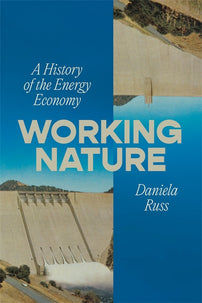
Emanuele Leonardi is Associate Professor at the University of Bologna. His work focuses on the field of economic sociology. His research interests center on political ecology, working-class environmentalism, and climate justice movements. For publisher Orthotes, he has published Lavoro Natura Valore. André Gorz tra marxismo e decrescita(2017) - forthcoming in English translation with Verso Books - and L’era della giustizia climatica (2023), with Paola Imperatore.
Lorenzo Feltrin is post-doctoral researcher at the Ca’ Foscari University of Venice, focusing on the sociology of work and political ecology. His current project examines the history and present of phosphate commodity chains— a mineral critical for agriculture and renewable energy — in the Mediterranean area. His book on working-class environmentalism Workers and the World: Fighting Ecological Crisis from Within is scheduled for release with Verso in 2026.
Adelita Husni Bey is an artist and educator whose practice intertwines art, political ecology and radical pedagogy. Through installations, performances and films, she explores the relations between infrastructure, environmental justice and collective cooperation. Her projects — often developed with workers, activists, trade-unions and research groups — challenge the production and institutional models of late capitalism, experimenting with non-competitive learning practices inspired by the Theatre of the Oppressed.
[1] COP24 was the twenty-fourth Conference of the Parties to the United Nations Framework Convention on Climate Change (UNFCCC), held in Katowice, Poland, from December 2 to 15, 2018.
[2] GKN is a historic factory producing automotive and aerospace components in Campi Bisenzio (Florence). After being acquired by the investment fund Melrose Industries in 2021 the company announced its sudden closure and the dismissal of over 400 workers via email. The workers responded by occupying the plant, forming the ex-GKN Factory Worker Collective, which promotes a reindustrialization from below based on climate justice, labour, and ecology. The struggle has become a national symbol of workers’ resistance and of the experimentation with alternative production models.
[3] Federazione Impiegati Operai Metallurgici-Confederazione Generale Italiana del Lavoro (FIOM-CGIL) is the metalworkers' federation of Italy's largest trade union confederation.
[4] Ivar Oddone (1923–2010) was a labour psychologist and physician from Turin, as well as a socialist activist, who in the 1960s collabourated with the FIOM-CGIL metalworkers’ union in Turin (Federazione Impiegati Operai Metallurgici). Oddone, together with a group of psychologists and workers, developed the concept of the “workplace as a site of knowledge,” founding what became known as the “Turin School of Work Psychology.” His work laid the foundations for the workers’ committees on occupational hazards and the broader movement for health in the workplace.
[5] Potere Operaio Veneto-Emiliano was the local operaista organization in Northeastern Italy that preceded the extra-parliamentary left-wing group Potere Operaio, founded as a national organization in 1969. Potere Operaio Veneto-Emiliano played a key role in the wave of strikes over production bonuses that shook the Porto Marghera’s Petrolchimico in July–August 1968. (centrodocumentazionemarghera.it)
[6] Lotta Continua was one of the major extra-parliamentary left-wing groups in Italy, active from 1969 until its disbandment in 1976.
[7] Il Manifesto was also an important extra-parliamentary left-wing group in Italy. Its namesake newspaper is still in publication today.
[8] https://viewpointmag.com/2021/04/01/against-noxiousness-1971/
[9] The concept of “sacrifice zones” was first theorized by journalist Steve Lerner in Sacrifice Zones: The Front Lines of Toxic Chemical Exposure in the United States (MIT Press, 2010), to describe communities disproportionately exposed to environmental harm in the name of industrial or economic development.
[10] See https://volerelaluna.it/lavoro/2024/09/18/caso-gkn-e-vero-va-cambiata-lideologia-ma-quella-neoliberista/ and https://www.dinamopress.it/news/sta-emergendo-un-immaginario-ecologista-e-di-classe-intervista-ad-alberto-manconi/
[11] Romano Alquati, sociologist and theorist of Italian operaismo, in the introduction to his book Sulla Fiat e altri scritti (Feltrinelli, 1975), reflects on the limits and potential of conricerca, emphasizing that truly egalitarian experiences between intellectuals and workers were rare but crucial for understanding and transforming the relations of production.
[12] Lotta Femminista was a radical feminist movement that emerged in Italy in the early 1970s, centered on the refusal of unwaged reproductive labour and the demand for wages for housework. Closely linked to figures such as Mariarosa Dalla Costa and Silvia Federici, it reframed domestic labour as a site of exploitation central to capitalist accumulation and to the politics of the working class.
[13] The Institute of Occupational Medicine at the University of Padua (then directed by Ivar Oddone, before his transfer to Turin) played an important role. In the 1960s, some students and young researchers from that institute — in collabouration with doctors and activists from operaista and trade-union circles — conducted investigations in Porto Marghera and other industrial areas of the Veneto region on workers’ health conditions, intertwining occupational medicine with political activism. These experiences laid the groundwork for the later emergence of Medicina Democratica and for Oddone’s “participatory” work psychology.
[14] In the 1960s, Ivar Oddone, together with Gastone Marri and other researchers from the University of Turin, developed the so-called “workers’ model” of occupational medicine, based on investigations carried out at the Fiat Mirafiori plant. This approach broke away from the technocratic and paternalistic vision of industrial medicine by placing workers’ experiential knowledge and their direct involvement at the center of risk analysis and the design of preventive measures. This participatory research method became one of the theoretical and practical foundations of Medicina Democratica and of the concept of “health as a collective right.”
[15] After earning a degree in Comparative History and Civilizations (Universities of Bologna and Paris 7), she completed a PhD in Historical Sciences between Florence and Siena with a dissertation on the Italian movement for occupational health and the work environment (1961–1978). She is a member of the research group on the Italian Communist Party at the Gramsci Foundation Emilia-Romagna and teaches Italian and history at secondary schools.
[16] SMAL (Servizi di Medicina per gli Ambienti di Lavoro), established in Lombardy between the 1970s and 1990s, emerged from workers’ and students’ struggles through collabouration between trade unions, public health professionals, and prevention technicians.They adopted a participatory approach that combined risk mapping, sectoral investigations, and workers’ active involvement. (snop.it)
[17] Franco Carnevale (1922–2018) was an occupational physician, historian of workers’ health, and one of the founders of the journal La Classe. He was a central figure in the Italian debate on health, the factory, and occupational hazards, closely connected to workers’ movements and Medicina Democratica. His work — for example, Ambiente di lavoro e salute (1979) and Il lavoro e la salute. Dalla parte dei lavoratori (2006) — was crucial in linking trade union struggles to the defense of health in the workplace, especially during the 1970s.
[18] Chiara Giorgi is a historian of public health and welfare in Italy, author of Salute per tutti. Storia della sanità in Italia dal dopoguerra a oggi (Laterza, 2024).In her studies, including Le lotte per la salute in Italia e le premesse della riforma sanitaria (1958–1978) (Studi Storici, 2019), she examines the relationship between social movements, reforms, and the creation of the National Health Service.
[19] Medicina Democratica was founded in 1976 by physician and activist Giulio A. Maccacaro, together with groups of workers, technicians, and researchers emerging from the struggles for workplace health. The movement promoted a political and collective conception of health, tied to prevention and the transformation of production processes, opposing corporate medicine and the logic of monetizing risk. Sapere, by contrast, was a journal of critical and militant science active since 1969, which became a key platform for debates on the democratization of scientific knowledge. It brought together scientists, technicians, and activists committed to exposing the complicity between scientific research, industrial interests, and military apparatuses, while advocating for a science serving workers and social movements.
[20] L’Inchiesta was a journal founded in 1971 by Rossana Rossanda and Vittorio Rieser, closely aligned with the trade-union left and workers’ movements. Created as a space for political and social analysis, it became in the 1970s an important laboratory for militant inquiry and reflection on the relationship between labor, environment, and health. In Emilia-Romagna — particularly in Bologna, Modena, and Reggio Emilia — the journal documented the most advanced experiences of the “150 hours” program: a trade-union education initiative that extended the right to study to workers, including ecological and preventive themes within an emancipatory and participatory pedagogical framework. Classe. Quaderni sulla condizione e sulla lotta operaia was a biannual journal published between 1969 and 1988, born from the collaboration of working groups and militants of the labor movement, analyzing political and theoretical issues of the left through intertwined historical, political, and socio-anthropological perspectives.
[21] Marco Marrone, Rights Against the Machines! Il lavoro digitale e le lotte dei rider, Milan, Mimesis, 2021 — an analysis of working conditions and forms of resistance among bicycle couriers in the platform economy. Giorgio Pirina, Connessioni globali: Una ricerca sul lavoro nel capitalismo delle piattaforme, Milan, Franco Angeli, 2022 — a study of new forms of labor organization and class conflict within the digital and global logistics economy.
[22] Carlotta Benvegnù and Francesco Iannuzzi (eds.), Figure del lavoro contemporaneo. Un’inchiesta sui nuovi regimi della produzione, Ombre Corte, 2018 — a collective inquiry into the new regimes of production and the transformations of contemporary labor. Carlotta Benvegnù, “Netturbini nell’era delle privatizzazioni. Ristrutturazioni del settore della raccolta dei rifiuti a Parigi,” in Sociologia del Lavoro, no. 142, 2016 — an analysis of labor restructuring in Paris’s waste collection sector in the era of privatization. Francesco Iannuzzi, Assemblare le differenze. Il lavoro nell'industria alberghiera veneziana, Milan, Guerini Scientifica, 2021.
[23] See the journal article “Sindacato e politiche industriali in transizione. Il caso di industria italiana autobus” in ECONOMIA E SOCIETÀ REGIONALE 2024-10.
[24] Ali Abdullatif Ahmida, Genocide in Libya: Shar, a Hidden Colonial History, Routledge, 2020 — reconstructs the hidden story of the genocidal colonial project by Italy in Cirenaica and describes the unity of the economic and fascist projects