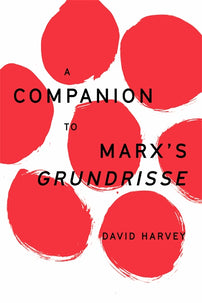
On 'Rebel Cities'
Geographer Desiree Fields continues our Harvey at 90 series with a look at Rebel Cities (2019)

Rebel Cities is a book that builds on David Harvey’s long commitment to theorizing the urban as a key site of capital’s accumulation and inevitable contradictions. This commitment dates back to Social Justice and the City, the 1973 text that announced Harvey’s—and geography’s, radical turn toward Marxist thought, and continues over subsequent decades with works like the Urbanization of Capital, The Urban Experience, and Paris, Capital of Modernity. These earlier texts offer powerful insights into capitalism’s urban dynamics, providing analytic frameworks subsequently taken up by countless students of urbanism. Harvey’s signal contribution here is the spatial fix, an idea that helps us understand how the considerable sunk costs of the urban process, which is so critical to capitalist production, offers an attractive escape valve for over-accumulated capital thus helping to delay or displace (‘fix’) capitalist crisis. But like an addiction is only temporarily cured by a fix, overaccumulation can only ever be temporarily staved off by the urban spatial fix. I regularly teach my economic geography students these ideas, which Harvey has probed for over five decades, through his 1975 Antipode article “The Geography of Capitalist Accumulation”. Where Rebel Cities makes its intervention is in Harvey’s analysis of what makes urban uprisings anti-capitalist. In a series of chapters largely adapted from previously published works, Harvey affirms that the centrality of cities to capital accumulation and the reproduction of capitalism makes the urban process itself a locus of class struggle and an engine of rebellions.
Published in the wake of Occupy Wall Street and a global wave of urban uprisings in the first decade of the 21st century, Rebel Cities also sees Harvey reconnect with the work of Henri Lefebvre, whose “urban revolution” thesis underpins his 1974 Regional Studies essay “Class Monopoly Rent, Finance Capital, and the Urban Revolution”. In Rebel Cities it is Lefebvre’s notion of the right to the city that inspires Harvey. Whereas in 1974 Harvey found Lefebvre’s proposition that urbanization was supplanting production as the key source of surplus value globally “startling” (Harvey, 1974, p. 239), by 2012 he seems to have made peace with this idea and turns to the right to the city to inform his thinking about how leftist urban movements confront its material realities.
Harvey worked on Rebel Cities in the aftermath of the 2008 financial crisis and during the 2011 occupation of lower Manhattan’s Zuccotti Park by the Occupy Wall Street movement. At this time, I was engaged in the fieldwork for my dissertation, which examined a wave of predatory private equity investment (which came to be known as “predatory equity”) in New York’s rent-stabilized housing stock. Investors who paid steeply inflated prices for portfolios of properties during the city’s mid-2000s gentrification boom found their strategy of flipping the properties or upgrading them until rent protections no longer applied was simply no longer viable as credit markets froze amid the financial crisis. In a striking parallel to the phenomenon of negative equity then affecting homeowners across the country, many private equity landlords were left holding mortgage debts that far exceeded the value (and the rental income) of their properties. Their response to being underwater (and, in several cases, in foreclosure) was to effectively abandon the buildings they had purchased. Tenants bore the costs of these financially unsustainable investments by living in increasingly deteriorated and uninhabitable conditions. In the wreckage of investors’ efforts to transform rent-regulated housing into a new vehicle for capital accumulation, tenants struggled to sustain the activities of everyday life and felt powerless and stripped of dignity.
[book-strip index="1"]
In the fall of 2011, I frequently found myself shuttling by subway between the site of Occupy Wall Street and my fieldwork sites in the northwest Bronx and central Brooklyn. Despite living just a few miles from Zuccotti Park only a few of the working-class tenants participating in my project mentioned, much less participated in the occupation. Yet they were not complacent to the destructive role finance capital had played in the process of attempting to profitably absorb surplus. Tenants accurately diagnosed the extractive dynamics of opportunistic investors seeking to profit from their communities without improving the housing stock. They also insisted they would fight collectively to stay in their homes. In short, the occupiers at Zuccotti Park and tenants affected by predatory equity may not have physically crossed paths, but both groups were challenging the class war waged by what Harvey calls “the Party of Wall Street”. What he does so effectively in Rebel Cities is demonstrate how such movements are rooted in exploitation in the realm of social reproduction via urban property markets (for example, people’s homes becoming mere fodder for a highly leveraged investment strategy) rather than at the point of production.
In the chapter dedicated to “The urban roots of capitalist crises”, Harvey insists on the centrality of the urban to Marxist theorizing, noting that both “bourgeois economics” and “Marxism generally” (p. 35) marginalize urbanists despite the well-evidenced relationship between property booms and capitalist crises. Bourgeois theory is easily dismissed as being blind to the connection between urban development and macroeconomic crises. But what about Marxist thought? Here Harvey turns to the status of the credit system in Marx’s work, flagging how Marx’s focus on “the generality of production of surplus value” (p. 36) acknowledged but didn’t adequately integrate the credit system (and thus urbanization and the production of the built environment) into his general laws of capital’s motion, thereby limiting our ability to use this theoretical apparatus to explain the relationship between urban development and capitalist crisis. The problem of credit within capitalism is thorny, as distinguishing among credit that is “necessary to the functioning of capital”, “necessarily fictitious”, and “pure excess” (p. 39) is difficult and requires a clear understanding of fictitious capital and its role in markets for land and property.
Fictitious capital is real but obscures something of the underlying social relations, namely that in most cases interest-bearing capital loaned out or leveraged to buy or build real estate does not produce value—except when real estate becomes fixed productive capital, making credit indeed necessary to the functioning of capital.[1] Otherwise, the income streams and interest payments generated by value created in production are necessarily fictitious, and their integration into “fictitious channels”, enables a whole series of purely excessive speculative movements based on the (fluctuating) underlying value of assets. The circulation of fictitious capital is at once vital to sustaining capitalism and a key lever in its periodic boom and bust cycles.
[book-strip index="2"]
This general process helps explain the prominent rise of mortgage-backed securities, which can then be incorporated into collateralized debt obligations and be hedged against with credit default swaps, which can then be incorporated into synthetic collateralized debt obligations. And as we saw in the 2008 crisis, demand for these derivative financial instruments can come to drive the supply of credit to developers and property buyers, and thus patterns and qualities of the production of housing and urban space more broadly. In the US, one way this played out as the real estate bubble grew more and more inflated was a rapid growth in the supply of new homes, accompanied by a decline in their quality due to builders cutting corners. In my research on predatory equity in New York City, fictitious capital flowed into investments that were increasingly opportunistic in nature, targeting run-down outer-borough buildings in an increasingly hot market where opportunities to circulate capital through the built environment were near saturation point. In both cases, the consequences of subsequent crash were deeply classed and racialized, and renewed conditions for capital accumulation as investors purchased foreclosed single-family homes to rent out (and developed new financial instruments backed by rental income) and speculated in distressed multifamily debt.
If urbanization is central to the survival and reproduction of capitalism, and the contradictions and crisis tendencies in this process regularly dispossess “the poor, the vulnerable, and the already underprivileged” (p. 56), why wouldn’t we see the resulting social movements in terms of anti-capitalist struggle? This question might seem contrived: when tenants insist on their right to stay in place in the face of what they have diagnosed as the extractive dynamics of finance capital, how could we see it as anything but anti-capitalist? But as Harvey observes, this view requires a more flexible interpretation of labor than has often been the case among both Marxist thinkers and working-class movements. Both have often tended to prioritize productive (largely industrial) labor in their analyses of revolution against class domination. In this view, anti-capitalist struggle is properly “about the abolition of that class relation between labor and capital in production that permits the production and appropriation of surplus labor by capital” (p. 121).
What is occluded in such an account is of course the secondary exploitation that defines the experience of everyday life. That is, “the perpetuation of class power is organized around living as well as working” (p. 129). Harvey’s observation here highlights how productive capital, commodity capital, and money capital depend on one another for their own survival and existence. Taking this reality seriously requires recognizing that discontents at the point of social reproduction are as properly anti-capitalist as discontents at the point of production. Such a position wouldn’t be news to feminist theorists or scholars of racial capitalism, who have long highlighted how hierarchies of difference serve capital’s imperatives across and between production and social reproduction. Another way of expressing this idea is to suggest that Marxist theory is always more supple and its analytic returns greater when it attends to how logics of difference animate capital’s movements. As we celebrate David’s birthday, let us thank him for his lifelong project of exploring the limits and possibilities of Marxist geographical analysis, a project that has always been alive to its own incompleteness.
[book-strip index="3"]
[1] Of course, the production of real estate does generate jobs in construction and ancillary fields and stimulate demand for products and services, contributing in real ways to economic activity.