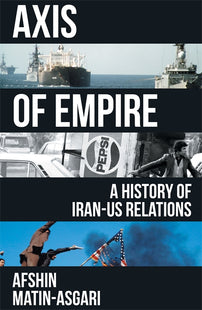
Organizing in the Heart of Empire
Salar Mohandesi on Iran, the campism debate, and the urgency of organizing in the heart of imperialism.

The situation in Iran poses a political challenge for anyone who cares about emancipation. Everyone knows that the single greatest threat to that goal on a global level is the United States and its imperial allies. And everyone also knows that there are some other states such as the Islamic Republic of Iran (IRI) that happen to oppose US imperialism, but are themselves repressive, capitalist, patriarchal, and inegalitarian.
In the last two months, we’ve seen massive demonstrations against the Islamic Republic of Iran, the Iranian government’s ferocious repression of those protests, a full-scale US-Israeli war on Iran, and the assassination of Iran’s supreme leader, Ali Khamenei.
For those of us who live in North America and Europe, what is to be done?
1
This question has sparked sharp debate. Let us be charitable and say that every leftist involved in the dispute stands against both imperialism and repressive states. But one cannot do everything, and we are now in the midst of war, so what should be prioritized?
On the one side are the so-called “campists.” Arguing that political and social questions cannot be disentangled from the imperial question, they believe that the strategic priority should be to fight US imperialism. And because the left is so weak these days, this means supporting the IRI, since it has a far greater capacity to resist US imperialism. Most campists acknowledge that the Iranian state is repressive, and they know that offering critical support amounts to tolerating or even excusing a deeply inegalitarian state that has murdered tens of thousands dissidents. But they insist that fighting the overt domination of the US-led imperial alliance is the more important task.
On the other side are the so-called “anti-campists.” Arguing that the struggle for emancipation demands a commitment to combatting all repressive states, they believe that the strategic priority should be to support those who are resisting the Islamic Republic of Iran from within – even if many of these protesters are monarchists, and some may be armed by Mossad. Although they oppose the current war on Iran, most anti-campists acknowledge that seeking to overthrow this repressive regime effectively puts them on the same side as US imperialism – as well as its monarchist and Zionist allies. And if the regime does fall, it is certain that the United States and its imperial allies – like Israel – will try their hardest to impose a new pro-US client regime or partition the country altogether. But anti-campists insist that fighting the domination of the Iranian state is the more important task.
There are also those who try to gesture to some middle path by suggesting that we should “do both,” that is, support popular uprisings against the Iranian state while also remaining steadfastly anti-imperialist. It’s at this point that the “campists” and the “anti-campists” who are usually at each other’s throats unite in agreement: they argue that it is unclear what this imagined third option means in practice. There are of course groups, collectives, organizations, feminist networks, and unions within Iran doing important work in the face of severe obstacles unimaginable to most people in North America and Europe. But for a number of reasons – the most important of which is sustained repression – there is no mass, organized, anti-imperialist left there as yet, and only a very weak internationalist left abroad to help. The middle path does not really exist.
[book-strip index="1" style="buy"]
2
As someone who has been sympathetic to imagining such an alternative, I will admit that the campist and anti-campist critics are right. But one could point out that the same criticism can be applied to their own positions. Whether you say that we should support internal attempts to overthrow the Islamic Republic of Iran, offer critical support to the IRI’s resistance to US-Israeli imperialism, or hope for some third alternative – none of it concretely matters.
There are, of course, some leftists in North America and Europe – almost all of whom are Iranians born in Iran or have lived there – who do have meaningful connections with individuals, institutions, and organizations inside the country, and so can have some sort of a direct impact. Their experiences, knowledge, linguistic competency, and especially personal connections open up different avenues for international solidarity.
But the hard truth is that there is very little that the rest of us can do to materially influence the course of events within Iran. We do not belong to some vast revolutionary international with a section in Iran, we do not have deep political links with organized protesters inside the country, and we certainly do not have a direct line to the regime. We don’t have any real say in what happens there.
One can argue that what we do have is our words, and that words matter. Political statements have an impact on what happens. But this isn’t very convincing. Our words play no role in shaping the decisions that the IRI leadership takes. The people who run the country don’t know who you are, and they don’t care about your opinion. Nor do your words have much of an impact on the struggle on the ground.
The task, then, is to determine what those of us who live in the countries that make up the US-led imperial alliance – which is now openly at war with the Islamic Republic of Iran – can do right now. What can we control?
3
Arguably, the most important thing that people in North America and Europe can do is to pressure their respective states to lift the sanctions, scale back their ongoing efforts to sabotage Iran, restrain Israel’s incessant aggression, stop the current US-Israeli war, and prevent future imperialist interventions. Foreign policy is of course one of the least accountable dimensions of the state, but it is still subject to popular pressure. Massive popular opposition has worked before, and it might be even more effective today, given that most people who live in these countries have grown tired of failed US-led interventions.
Organizing to restrain imperial intervention is not only still feasible; it also has the potential benefit of satisfying all sides in the debate about Iran. For the campists, it’s a win. The United States now has to deal with domestic antiwar opposition, which makes it more difficult to execute the sustained operation needed to overthrow the IRI. More to the point, it does precisely what the campists insist is the priority: confronting US-led imperialism.
For the anti-campists, it’s also a win. As many scholars have pointed out, continued aggression against Iran in many ways closes down the space for meaningful change. Massive economic pressure has only enlarged the state apparatuses. Sanctions have shrunk the “middle classes” that historically took the lead in reform movements, and they have made many poorer Iranians even more dependent on state subsidies for survival, and so less likely to resist. Constant imperial subversion only legitimizes the IRI’s claims that it is defending the Iranian people from destruction, and sustains a level of domestic support for the state. And while it’s impossible to know what will happen in the next couple weeks, direct imperial assaults like the one we are seeing will not necessarily inspire the Iranians to rise up against their regime. Restraining US-led imperialism can therefore increase the chances of making real change in Iran.
As for those who hope for some third option, it’s also a win. The most serious flaw in the “do both” argument is that there does not exist a mass, organized, anti-imperialist force within Iran right now. The IRI’s brutal, decades-long repression of the left, on the one hand, and the United States and Israel’s constant efforts to hijack genuine popular discontent on the other closes down the space for such a force to emerge. It’s hard to speak of a “third way” when the Islamic Republic of Iran, the United States, and Israel are all breathing down your neck. While there’s not much the left in North America and Europe can do about the IRI, putting a check on the US-led alliance might contribute to slightly cracking open that space. And there’s the off chance that diminished US intervention might prompt the IRI to slightly lighten up or even enact reforms that could create better conditions for a meaningful alternative to emerge. It is an admittedly unlikely outcome, but the question of probability has never held back the partisans of the “third way.”
[book-strip index="2" style="buy"]
4
One might object that it’s not possible to meaningfully organize when there are so many unresolved disagreements on fundamental questions. But the recent internationalist mobilizations in support of Palestinian liberation seem to suggest otherwise. Let’s not forget that these solidarity movements have also been the site of sharp disagreements, some of which are not all that dissimilar from what is being said about Iran now.
The situation in Palestine, too, is by no means straightforward, and the complexities there could have sparked enervating internecine battles. While there is general agreement on the left about Israel, there is disagreement about what to make of the Palestinian side. After all, the forces leading the anti-colonial movement are capitalist, nationalist, Islamist, patriarchal, and socially conservative. They are not fighting for universal emancipation. What does this mean for internationalism?
Although this question prompted many debates, and triggered some sectarian divisions, they have not become paralyzing, nor have they replaced organizing in North America and Europe. Most people have remained focused on building a meaningful internationalist movement – marching, educating people, organizing campaigns, constructing organizations, creating alternative news sources, planning strikes, occupying campuses, pushing unions and professional associations to take a stand, challenging institutional ties with Israel, putting pressure on the state, and so forth. The inability to “resolve” these sometimes acrimonious debates has not prevented these collective efforts from advancing the overall internationalist infrastructure in this part of the world by leaps and bounds.
Of course, Palestine is not Iran. In Palestine, the US and its allies are supporting a European settler colonial project that is trying to eradicate a colonized population that has resisted for over a century. In Iran, the US and its allies are trying to overthrow a sovereign state that has managed to resist US imperial aggression for nearly half a century, but has also regularly crushed popular democratic movements for change from within. The differences between the two contexts is certainly one key reason why these debates have become so incapacitating in the Iranian case.
But from the perspective of anti-imperialist organizing in North America and Europe, these differences should not be all that significant. And even if the situation were to radically change within Iran itself, it is not clear why this would change much for people on the left in North America and Europe. Wouldn’t they keep doing the same thing: organizing to block the US-led imperial alliance? If this alliance is in fact the greatest threat to emancipation everywhere, then wouldn’t challenging it from within be the single most effective thing that people in these countries can do?
The point is not that debates do not matter, but that they should be organized around meaningful goals, anchored to specific conjunctures, based in actual terrains of struggle, related to concrete organizing efforts on the ground, and oriented towards building power. The Palestine solidarity movement has shown that it is possible to have major internal disagreements while still prioritizing organizing, creating lasting networks that can be built on in the future, and launching durable campaigns that are relevant not just for solidarity work with Palestine but beyond.
In fact, some of the work done for Palestine can be expanded for Iran. Doesn’t overturning Orientalist narratives about the Middle East help the cause of emancipation not just in Palestine, but also in Iran? Or deepening anti-imperialist sentiment? Or exposing the links between institutions at home and imperialism abroad? Or calling on European states to end arms sales to the Israeli state? Or restraining US imperialism?
[book-strip index="3" style="buy"]
5
Focusing on organizing against imperialism from within the heartlands of the US-led imperial alliance addresses the problem at the heart of this recurring debate – the relative incapacity of the international left today. The key question is therefore: how to organize a coordinated internationalist left with the capacity to make a real difference?
This may seem like a daunting task, and it cannot fall to a single author to propose an answer. This has to be a collective effort, and it must involve finding ways to strategically adapt shared goals to highly dissimilar contexts. But it’s worth remembering that leftists have done this before.
During the Vietnam War, to take only one example, anti-imperialists did not just organize the spectacular mass marches that we remember in photographs. Many of them tried to orient these actions towards building a durable internationalist infrastructure – legal groups, GI coffeehouses, research collectives, student organizations, independent media, social centers, workplace organizing committees, antiwar religious associations, nationwide antiwar congresses, underground railroads for draft dodgers, and so on – that could sustain a protracted struggle.
What’s more, many activists in North America and Western Europe coordinated across borders to amplify their efforts. As I’ve shown elsewhere, they shared materials, attended each other’s meetings, harmonized their messaging, cooperated on shared campaigns, synchronized their actions, and pursued common goals – while tailoring their work to their specific national contexts. In West Germany, for instance, some activists tried to convince American GIs stationed there to desert; in Great Britain, they hoped to end their government’s support for Washington’s imperialist war; in the United States, they tried to undermine the US’s government’s capacity for war from within.
Vietnamese revolutionaries encouraged this approach. The best way that anti-imperialists in the North Atlantic could help, they argued, was to open “new fronts” inside their own countries. Vietnamese revolutionaries knew that they could never defeat the US military in combat, so they aimed instead to create a situation in which the US government felt compelled to cut its losses.
And anti-imperialist organizing within the North Atlantic could help increase the price of imperialism: activists convinced their neighbors to oppose the war, connected Vietnam to other issues, encouraged religious institutions to speak out, made the war into an unavoidable electoral topic, went on strike, boycotted companies, pushed institutions to divest, resisted the draft, shut down highways, made universities ungovernable, blocked troop trains, harried elected officials, obstructed military recruiters, leaked classified documents, disrupted everyday life for years, and catalyzed severe domestic crises.
By the early 1970s, everything came to a head: international opinion turned against the war, the United States became deeply isolated, its closest allies broke ranks, and domestic pressure became overwhelming. The social, cultural, economic, military, political, and ideological costs of imperialism became too high, and the United States withdrew from Vietnam without realizing any of its major objectives.
[book-strip index="4" style="buy"]
It’s also worth noting that leftists in North America and Europe contributed decisively to this outcome in spite of very sharp – and at times almost debilitating – political differences. Many leftists, for example, were quite critical of Vietnamese communism’s record of ferocious repression. The communists, after all, slaughtered their leftist rivals in their struggle for supremacy, murdered thousands of peasants in their botched land reform campaign, suppressed dissidents in their bid to consolidate power in the North, and killed civilians in their resistance to imperialism in the South.
Of course, we live in a very different historical moment, and what worked before may not work again now. But the same political problem that leftists in the past faced remains with us today. And even if their solutions did not last, some of their tactical innovations may still be repurposed. At the very least, finding a new solution to the problem of anti-imperialist solidarity today can benefit from collectively taking stock of how leftists tried to solve that problem in the past – and determining what can be reused, what is no longer appropriate, and what must be invented from scratch to succeed where they came up short.
6
Working together to pressure the US-led imperial alliance to not make things worse admittedly may not seem like much. But it can build unity, expand the left’s capacity, continue the hard work of building the internationalist infrastructure in North America and Europe, and even have a major impact at this moment: the US-Israeli war on Iran is massively unpopular internationally, and even most Americans – liberal and conservative – do not want to get tied up in yet another protracted war.
And it’s much better than wasting precious time dueling one another on Elon Musk’s website.