Constructing a Common Language: A conversation with Razmig Keucheyan
Keucheyan discusses environmental inequality, the past and present of the workers' movement, populism, and the relationship between strategy and theory.
Keucheyan discusses environmental inequality, the past and present of the workers' movement, populism, and the relationship between strategy and theory.

A conversation with Alain Supiot, a specialist in labour law and a professor at the Collège de France, about Simone Weil's wide-ranging thought.
With the publication of Que signifie "changer le monde"? [What does 'changing the world' mean?], a new book based on his seminar, Alain Badiou looks back on what attaches him revolutionary hope.
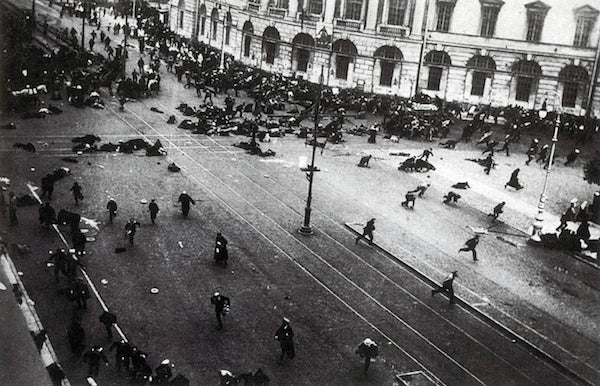
China Miéville discusses the Russian Revolution and its relevance for today with Eric Blanc, a historical sociologist and author of the forthcoming monograph Anti-Colonial Marxism: Oppression and Revolution in the Tsarist Borderlands.
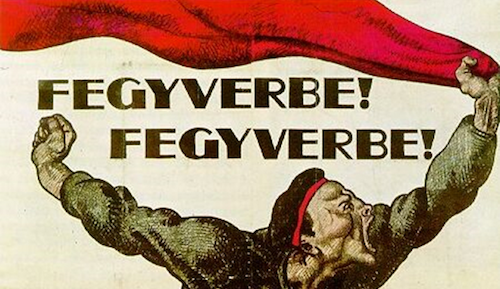
Lukács discusses his experiences during the years of World War I, the Russian Revolution, and the short-lived Hungarian Soviet Republic, for which he served as the People's Commissar for Education and Culture.
![[Video] Pablo Iglesias and Perry Anderson on the conjuncture in Spain](http://www.versobooks.com/cdn/shop/articles/Anderson-Iglesias.jpg?v=1677632107&width=612)
A wide-ranging conversation between Perry Anderson and Pablo Iglesias, on Spain's past and present, and the role of Podemos, set in the larger European context.
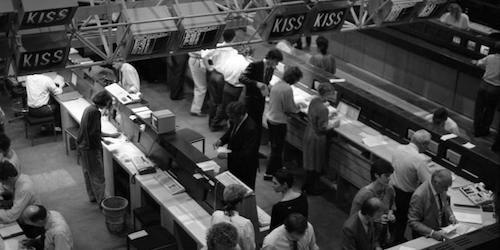
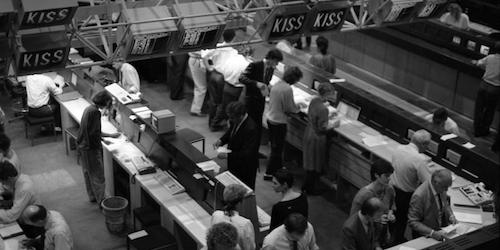
Capital could not just abolish the gains of the postwar period. It was necessary to preserve social peace. The "trick" in the 1970s consisted of using inflation to defuse the emerging conflict between labour and capital over redistribution. The money machine was used to compensate for the loss of income which resulted from the reduction in capital’s contribution to the welfare state… Evidently, that could not last. So from the late 1970s inflation was replaced with public debt, and states borrowed (rather than tax) in order to be able to keep up the level of services. Then, in the 1990s, when states began to worry about the growing weight of debt servicing as part of their budgets, and reduced their spending (and thus social services) we took recourse to private debt. In other words, we made it easier than ever for households to take on debt so that they could preserve their purchasing power, which was being cut back by these budget consolidation measures. And that led us to the 2008 catastrophe.
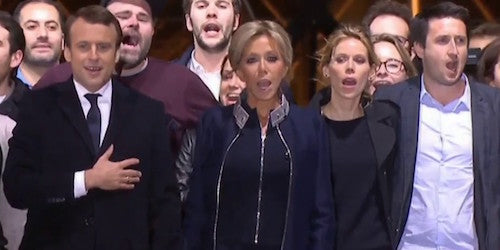

The fact that Macron adopts this position is a reflex, it is not something he has thought about doing. Everyone is the child of their own time and the circles they move in. That is the cost of his youth: for this generation has known nothing other than the hegemony of American visuals, an unconscious domination that has become like second nature. And the Finance Inspectorate, or banking is also a mental ecosystem in which the United States, the parent company, takes the code name "globalisation."
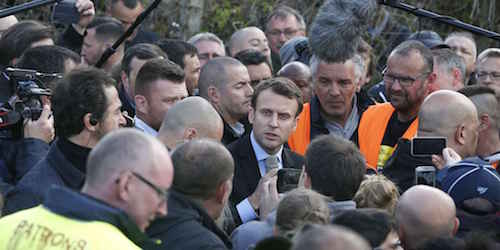
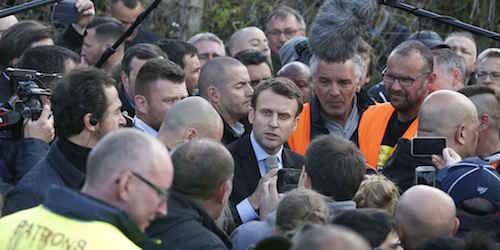
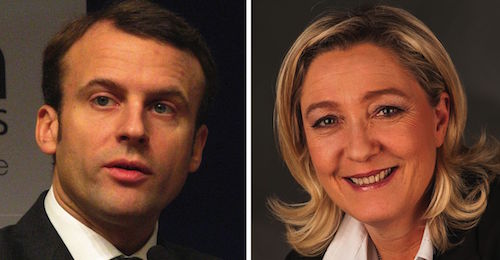
Macron is the name of a crisis of any politics that purports to "represent" political orientations in an electoral space. That clearly owes to the fact that the earthly disappearance of the communist hypothesis and its parties has little by little made the truth about parliamentarism apparent: namely, that ultimately it only "represents" small nuances in the dominant consensus around neoliberal capitalism — and not any alternative strategy. The far Right, in the brutal style of Donald Trump or the renovated Pétainism of Marine Le Pen, profits from this situation, since although it stands totally within that consensus it is alone in giving off the appearance of being on the outside.
![Image for blog post entitled [Video:] Nancy Fraser on the International Women's Strike and "feminism of the 99%"](http://www.versobooks.com/cdn/shop/articles/arton1505.png?v=1677632367&width=612)