Trump, America’s Forever Wars, and the Realist Tradition
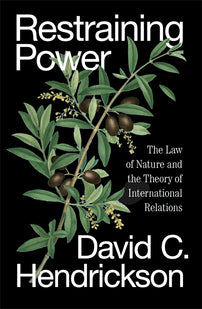
Detached from reality, or the epitome of the realist theory of international relations? The geopolitics of Trump II dissected by David Hendrickson, author of Restraining Power: The Law of Nature and the Theory of International Relations.

Social scientists like to delineate “ideal types,” conceptual models of distinctive ways of seeing and responding to the political and social world. It is a theme of my book for Verso, Restraining Power, that these ideal types mislead as often as they inform, caricaturing rather than capturing the true views of various thinkers. None of the great “realist” writers—Thucydides, Machiavelli, Hobbes, and Clausewitz—conform to the ideal type with which “realism” is often associated: that the international arena is a domain to be simply exploited and that force is the supreme remedy for everything. These writers knew the dangers of inordinate ambition, saw the uses and the limitations of force. So, too, European statesmen like Otto von Bismarck, exemplifying realpolitik or reason of state, do not conform to the stereotype: there are “internationalist” as well as “realist” elements in their diplomacy.
Imagine my surprise, then, that a world historical figure should emerge that should conform almost exactly to the caricature. In many of his words and actions, Donald Trump is the living, breathing exemplar of a host of malign realist tropes: he embraces a doctrine of competitive nationalism. He disdains previous agreements and treaties. He deploys extreme threats of force, extending even to the use of nuclear weapons, the greatest of crimes. He relishes bullying tactics against friend and foe alike. He whimsically compares himself to Napoleon and other outsized figures like Caesar and Alexander, as if megalomania and vainglory had decided to team up and make a baby.
[book-strip index="1"]
But Trump also said that his fondest aspiration was to be a peacemaker, and he was a public critic of Washington’s bipartisan “forever wars” in the Middle East. This curious admixture inspired hope among the doves that he would be restrained, fear among the hawks that the tough talk was all for show. The tough talk turned out not to be for show. The administration has unblushingly avowed and acted on the principle that power was right, with good faith in the gutter, honesty to the four winds, diplomatic negotiation used treacherously as a means of assassination, obscene threats to deal destruction upon millions of people. Presidential assistant Stephen Miller could not have said it better: “we live in a world . . . that is governed by strength, that is governed by force, that is governed by power. These are the iron laws of the world.”
Whether such a course of supremely egotistical conduct will prevail is one of the oldest questions in political thought. The consensus of the learned writers is that it won’t. Its precepts are contrary to many precious values. In practice we find the reverse of what is aimed for, with ambition blindly laboring for the destruction of the conqueror. I try to show these liabilities in my book, which has a long dialogue with and critique of these precepts of hard realism. (There are softer varieties of realism, it must be emphasized, that do not partake in these hallucinations).
Is it an indictment of hard realism that it should have deeply informed Trump’s worldview? Yes, of course. At the same time, Trump’s understanding of the enemy was so detached from reality as to put him in a class by himself. He thought he would provoke a popular revolution by bombing Iran. He thought that assassinating Iran’s Ayatollah Khamenei would accord him the ability to choose the successor. He didn’t think the enemy would fight back if attacked. After he lost, he kept saying he’d won. The great commanders of history were never so clueless.
[book-strip index="2"]
We have been here before, though. American leaders pride themselves on the idea that US global leadership “has underpinned the longest drought of great power conflict in human history,” but America’s long record of war-making, culminating in the egregiously aggressive US–Israeli war against Iran, gives the lie to this proposition. The interventions in Afghanistan, Iraq, Libya, and Syria were not only informed by a radical misunderstanding of the limitations of military power; they were also, in their totality, a crime against the international order. The great and commanding lesson from two decades of war in the Greater Middle East is that the ways in which US leaders thought they could go beyond the law have been shown in every instance to have carried with them great and evil consequences. The failure of US military interventions has been imputed to many factors, but a neglected and vital factor is that their violation of international right played a big role in their going awry. They struck at national independence; then national independence—hatred of the foreigner, sustained by anger at the sheer injustice of his claim to rule—roared back.
Conducting forever wars in the Greater Middle East while threatening war across the globe, all in the name of peace, is a US shtick that frightens more than it persuades. It is contrary to both utility and justice. US pretensions cannot fail to produce a revolt from the remainder of international society.
It is customary to hold expediency or self-interest in opposition to law, and international history features many spectacular episodes, some recent, in which power defied law and spit at its injunctions. It is also true, however, that the most important legal and ethical rules for statecraft are themselves prudential in character. They were birthed in some previous misfortune of the human race. The subsequent command of the law at a basic level simply registers the lessons of experience. Such were the origins of rules of religious toleration agreed upon in the Peace of Westphalia, which ended a century of destructive religious wars. From a similarly grim experience in the twentieth century arose the rule condemning aggression in the League of Nations Covenant and the UN Charter.
[book-strip index="3"]
This correspondence between the moral and legal on the one hand, and the prudential on the other, has important implications. Seen in this light, a determination to conduct statecraft within the limits marked out by international law may be seen not so much as idealism as a kind of second-generation realism. The legal and moral principle—don’t fight preventive wars, which are wars of aggression in international law—is simply the decision-rule suggested by accumulated experience. Realist strategists who disdain international law in theory come to the same conclusion in practice. We are obliged, in effect, to pay attention to justice not simply because justice is a fundamental good, but also because unjust acts, in the cunning of human affairs, often come back to haunt their authors.
***
David Hendrickson is emeritus professor of political science at Colorado College. He is the author of eleven books, including Restraining Power: The Law of Nature and the Theory of International Relations (Verso, 2026). His website is davidhendrickson.org.