
The Rhetoric of Climate ‘Awareness’
Jean-Baptiste Fressoz explores how capitalists deploy a rhetoric of "newness" and "awareness" to help mask the imminence of climate disaster and stifle urgent calls to action
Jean-Baptiste Fressoz explores how capitalists deploy a rhetoric of "newness" and "awareness" to help mask the imminence of climate disaster and stifle urgent calls to action

Andrew Anastasi remembers the radical sociologist Stanley Aronowitz

Shortly after the US invasion of Afghanistan, Tariq Ali exchanged a series of letters with Mike O'Brien, the UK Minister of Trade. The correspondence is a fascinating window into the imperial fantasies of the New Labour government in the early days of that doomed adventure.
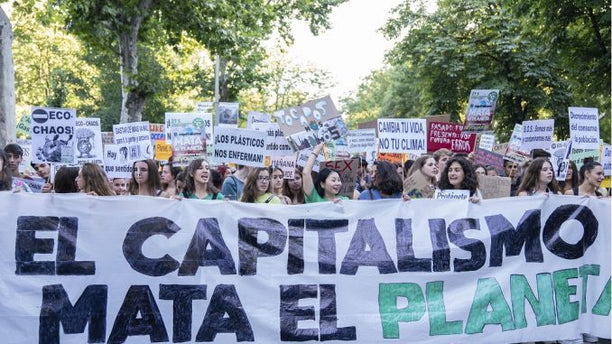
In this interview, Verso author Andreas Malm talks climate politics, the state, and revolution, arguing that the left must politicise the climate crisis in order to effectively fight its driving forces.
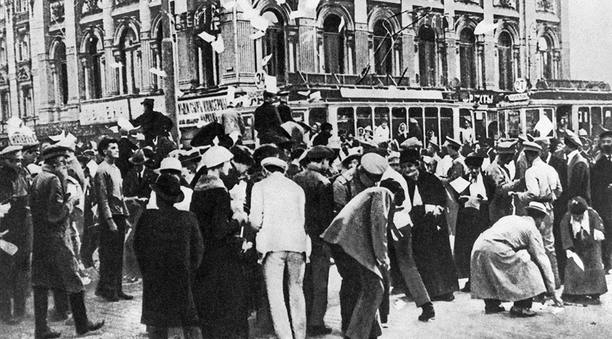
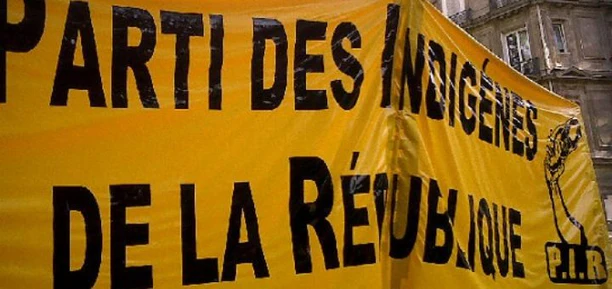
Houria Bouteldja and Youssef Boussoumah, co-founders of the Parti des Indigènes de la République in France, detail the party's history, the French anti-racist and anti-imperialist movement, and their own experiences engaging in anti-racist politics over the last fifteen years.

How can the left build power in times of crisis?

Ayça Çubukçu outlines the logic of humanitarian intervention that has dominated the US approach to international affairs for the last thirty years and asks whether the US withdrawal from Afghanistan marks the end of this paradigm.

How can Paulo Freire, who would have turned 100 this week, help us think the limits that Occupy encountered ten years ago?

Shifting demographic trends across the West, driven in part by new global migration and refugee movements, are creating both new discourses about race and forms of racism. In this essay, Etienne Balibar argues that today's analyses must examine anti-Semitism and Islamophobia together, as parallel manifestations of contemporary racism.

Lorenzo Veracini traces Black nationalism and conversations on displacement and diaspora in the era of Reconstruction and its aftermath.

The Shadow of the Mine by Huw Beynon and Ray Hudson describes the experience of coalmining communities over the long twentieth century. But what is a coalfield, and what does it become after the last coalmines have closed?